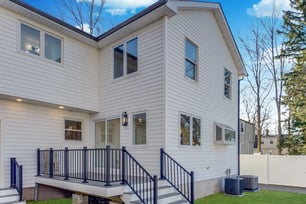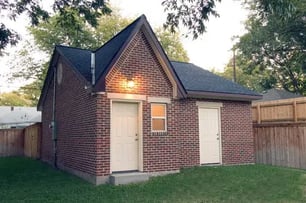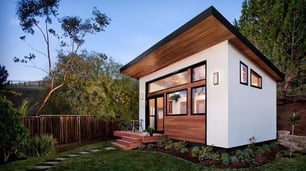



New Jersey has no statewide law that permits accessory dwelling units (ADUs) on every residential lot. Each municipality sets its own rules. Towns like Montclair, Maplewood, Princeton, and Bradley Beach have adopted local ADU rules with specific size, setback, and occupancy standards.
A2Z Construction Management, a licensed general contractor serving NJ and NY, regularly works with homeowners navigating these town-by-town requirements. Before you plan an ADU project, confirm what your town allows.
Keytakeaways
- Selecting the most skim-friendly, non-repetitive facts.
- Key Takeaways
- New Jersey has no statewide ADU law, so rules vary entirely by municipality; towns like Montclair, Maplewood, Princeton, and Jersey City explicitly permit ADUs, but most others have not adopted ordinances.
- Most NJ towns that allow ADUs require owner-occupancy in either the main house or the accessory unit, preventing the property from operating as a two-unit rental.
- ADU size is typically capped between 600 and 1,000 square feet or 25% to 40% of the primary dwelling, and construction costs range from $150 to $400 per square foot in New Jersey.
- If your town isn't explicitly listed, contact your local zoning officer to confirm whether ADUs are permitted as a conditional use or require a variance.
Towns That Currently Allow ADUs in NJ
A handful of New Jersey municipalities have passed ADU ordinances that spell out size, placement, and use. The rules differ from one town to the next, so what works in Montclair may not apply two towns over. Check your specific ordinance first.
Montclair and Maplewood ADU Rules
Montclair allows one ADU per lot in its R-1 through R-4 zoning districts, attached or detached. Size is capped at 800 square feet or 40% of the primary dwelling, with a 300-square-foot minimum. Owner-occupancy is required, and short-term rentals are not permitted.
Maplewood caps units at the same 800 square feet or 40% of the primary dwelling, with a 300-square-foot minimum. No more than two bedrooms and three occupants are allowed, and the unit must match the main house's color and materials.
Princeton and Bradley Beach ADU Rules
Princeton permits ADUs in zones R-A through R-H, capped at 800 square feet or 25% of the primary dwelling's floor area. A two-room detached ADU needs no additional parking, but three-plus room units require one off-street space.
Bradley Beach allows accessory apartments on the second floor of a two-car garage in single-family zones, capped at 600 square feet including the staircase. Two additional off-street parking spaces are required, and corner lots are excluded.
Other NJ Towns With ADU Ordinances
East Orange permits ADUs as a conditional use in its R-1 district, capped at 25% of the principal building's area. Jersey City allows accessory dwelling units in its R-1, R-2, RH-1, and RH-2 zoning districts, with a height limit of 18 feet or two stories. South Orange and Newark have adopted similar ordinances as well, each with its own limits.
Newark and South Orange ADU Overview
Newark allows one ADU per property under its local ordinance, with unit sizes set between 400 and 600 square feet, or up to 25% of the principal dwelling. Owner occupancy is required in either the main house or the ADU.
South Orange adopted its ADU ordinance in 2023, following a multi-year review process, and permits accessory units in residential zones subject to standard setback and design-matching rules. Both towns treat ADUs as a tool for adding housing without changing single-family zoning at its core.
ADU Status in Other NJ Counties
No New Jersey county grants ADUs a blanket, county-wide allowance. Regulation happens entirely at the municipal level, so a county's overall "status" really means how many of its towns have adopted rules.
Bergen, Burlington, Camden, Cumberland, Gloucester, Hunterdon, Middlesex, Morris, and Ocean Counties all follow this pattern: no county ordinance, but individual towns within each may permit ADUs under standard accessory-building rules, typically requiring a 7,500- to 20,000-square-foot minimum lot size depending on the zone.
Atlantic, Cape May, Passaic, and Union Counties have at least one municipality with an explicit ADU ordinance: Atlantic City, Cape May, the City of Passaic, and Union Township, though approval elsewhere in these counties may require a variance.
Salem, Somerset, Sussex, and Warren Counties are the least defined: local zoning codes in these areas generally don't list ADUs as a permitted use outright, so homeowners there are more likely to need a variance or conditional use approval regardless of which town they're in.
| Town | Min Sq Ft | Max Sq Ft / Cap | Parking Required | Owner-Occupancy | Key Restriction |
|---|---|---|---|---|---|
| Montclair | 300 | 800 or 40% of primary | None | Yes | No short term rentals; must match primary exterior |
| Maplewood | 300 | 800 or 40% of primary | None | Yes | Max 2 bedrooms, 3 occupants; no separate street-facing entrance |
| Princeton | N/A | 800 or 25% of primary | 1 space for 3+ room units | Yes | 5% size bonus if handicap accessible |
| Bradley Beach | N/A | 600 (incl. staircase) | 2 additional spaces | Yes | Second floor of two-car garage only; no corner lots |
| East Orange | N/A | 25% of principal building | 1 space + 0.5 per extra bedroom | N/A | Conditional use; requires Planning Board approval |
| Jersey City | N/A | Varies by zone | Varies by zone | Varies | Max 18 ft / 2 stories for detached units |
ADU Laws and Requirements in NJ
State and local rules together govern every accessory dwelling unit NJ homeowners want to build. The state sets construction standards through the building code, while your municipality controls zoning, size, and placement.
What Is an ADU? (Attached, Detached, Conversion)
An accessory dwelling unit (ADU) is a smaller, self-contained living space on the same lot as a primary home, with its own entrance, kitchen, bathroom, and sleeping area. ADUs can be attached to the main house, built as a detached structure, or converted from an existing garage, attic, or basement.
Some homeowners call a detached unit a backyard cottage. It must function independently while remaining secondary to the primary residence.
Why New Jersey Has No Statewide ADU Law
New Jersey leaves ADU regulation to individual municipalities. No single state law requires towns to permit accessory dwelling units on residential lots. A proposed bill, S345, would require every municipality to allow one ADU per single-family lot to support affordable housing goals, but it has not passed as of this writing. Until it does, ADU development depends on your town's zoning code.
Square Footage and Setback Rules
Requirements for ADUs vary by town, but common patterns exist across NJ municipalities. Most cap ADU size between 600 and 1,000 square feet, with setbacks of 7 to 10 feet from the rear property line and 3 to 5 feet from side boundaries. The proposed statewide bill would cap all ADUs at 60% of the primary dwelling's size. Check your local zoning code for exact standards before designing.
Owner-Occupancy and Parking Rules
Most NJ towns with local ADU rules require the owner to live in either the main house or the ADU, which keeps the lot from operating as a two-unit rental property. Parking rules vary by municipality, and the parking required often depends on unit size. Montclair and Princeton waive it entirely for smaller units, while other towns require one or two additional off-street spaces.
Building an ADU in New Jersey
Permits You Need Before You Start
Before you build an ADU, you need both zoning approval and a building permit. The permit application process starts with a call to your local zoning officer to confirm the ADU is allowed in your district; then site plans and construction documents follow. Inspections cover foundation, electrical, plumbing, and fire safety before you receive a certificate of occupancy.
How Much Does It Cost To Build an ADU?
ADU construction in New Jersey typically runs $150 to $400 per square foot, depending on scope and finish level. A 600-square-foot detached unit might cost between $90,000 and $240,000. NJ and NY markets run 15 to 25% above national averages due to labor rates, permit fees, and older housing stock, and foundation or utility work pushes costs toward the upper end.
Can You Put a Tiny Home in Your Backyard?
New Jersey adopted Appendix Q of the International Residential Code, which sets standards for dwellings of 400 square feet or less. A tiny home on a permanent foundation can qualify as an ADU if your town's ordinance allows it. Tiny homes on wheels are classified as recreational vehicles and are generally not permitted as permanent living spaces. Confirm with your local zoning office before starting construction.
Are ADUs Worth the Investment?
ADUs can generate rental income, increase property value, and create flexible housing for family members. In high-demand NJ markets, a well-built accessory unit adds usable square footage without the cost of a second property. The upfront cost is real, but steady rental demand supports long-term returns. David Haziza, Owner and Master of Construction at A2Z Construction Management, notes that an ADU project works best when homeowners understand their local rules before committing to design.
ADU Incentives and Grants in New Jersey
New Jersey offers some financial support for ADU construction, though it rarely advertises it as a direct grant. Certain municipalities participate in affordable housing or workforce housing programs that offer low-interest loans, reduced permit fees, or tax incentives when the ADU is rented at an affordable rate.
State-level programs tied to housing accessibility, aging in place, or energy efficiency may also apply, depending on how the unit is built and used.
Availability changes by location, so homeowners should check with their local housing or planning office before assuming a program applies to their project. A proposed statewide ADU bill would also standardize some of these incentives if it passes, which could simplify access across municipalities that currently offer nothing.
How to Confirm ADU Rules for Your Town
Steps to Contact Your Zoning Office
Start by looking up your municipality's zoning code online, searching terms like "accessory dwelling unit ADU," "accessory dwelling units ADUs," or "accessory apartment." If the language is unclear, call your town's zoning department. Bring your property survey and a basic description of what you want to build.
Ask the zoning officer whether ADUs are permitted in your district, what size and setback limits apply, and whether a variance is needed.
Official NJ ADU Resources
Homeowners can verify local requirements directly through official municipal and county sources rather than relying on secondhand summaries. The following links go to zoning departments, planning boards, and legislative records referenced throughout this article:
- Bergen County Department of Planning and Engineering
- Essex County Division of Planning
- Montclair Township ADU Ordinance
- Maplewood Township ADU Code
- Princeton Zoning Regulations
- Bradley Beach Zoning Ordinance
- East Orange City Code
- Jersey City Residential Zoning Guidance
- New Jersey Senate Bill S345 (Statewide ADU Legislation)