


Eco-friendly home remodeling means updating a house to cut energy use, water use, and material waste while improving comfort and indoor air quality. The upgrades that matter most are usually air sealing, insulation, better windows and doors, high-performance heating and cooling, and low-flow fixtures.
An energy audit shows you where to start, so your budget goes to the biggest sources of waste first.
Key Takeaways
- Eco-friendly home remodeling focuses on lowering energy use, water waste, and material waste while improving comfort, durability, and indoor air quality.
- The most effective upgrades often start with insulation, air sealing, better windows and doors, efficient heating and cooling systems, and low-flow fixtures.
- A strong plan usually begins with an energy audit so homeowners can identify the biggest sources of waste before choosing products or making layout changes.
- Sustainable materials, recycled products, and low-VOC finishes can support long-term performance while also reducing waste and limiting indoor air concerns.
- Budget decisions should balance upfront costs, long-term savings, rebates, and the home's specific condition, rather than focusing on a single upgrade.
What Are the Best Eco-Friendly Home Improvements?
The best upgrades target the parts of a house that waste the most energy or water. This list runs roughly in the order most projects should tackle them, starting with the building shell.
- Air sealing and insulation. Leaks and thin insulation drive energy loss in many houses. EPA estimates that sealing air leaks and adding insulation saves homeowners an average of 15% on heating and cooling costs (Energy Star). It also cuts drafts and uneven room temperatures.
- Better windows and doors. Heat gain and loss through windows account for 25% to 30% of residential heating and cooling energy use (U.S. Department of Energy). Replace failing units with Energy Star-certified models, and reseal the ones that are still in good shape.
- Heat pumps and upgraded heating and cooling. Where a house heats with electric resistance, a heat pump can cut electricity use by about half (U.S. Department of Energy). Newer air conditioning and upgraded systems also lower energy consumption and improve comfort.
- Water heating. Water heating accounts for about 18% of home energy use and is typically the second largest energy expense (U.S. Department of Energy). Insulating the tank and pipes, using less hot water, and choosing a better-matched water heater all reduce it.
- Smart controls. Adding smart controls and smart home upgrades lets you schedule heating, cooling, and lighting around how you actually live.
- Solar and other renewable energy. Solar often makes sense after the building shell is improved. See the incentives section below before you set a budget.
- Low-flow fixtures and WaterSense toilets. Replacing old toilets with WaterSense-labeled models can reduce water used for flushing by 20% to 60% (EPA). Low-flow faucets and showerheads cut daily use with little effect on comfort, and they are easy to add during a kitchen or bath remodel.
- Energy Star appliances and LED lighting. Both are simple to add during a remodel and lower daily energy use.
- Low-VOC finishes and reused materials. Low-emission paints, adhesives, and sealants improve indoor air, and reclaimed wood or recycled tile cuts waste. The materials section below has the details.

What Makes a Remodel Eco-Friendly
A remodel becomes eco-friendly when it lowers resource use and reduces harm during and after construction. That usually means a better layout, durable products, less waste, and better energy and water performance.
No single product makes a house green; the shell, systems, and materials have to work together. Sustainable home remodeling often uses recycled materials, low-emission finishes, and products that last longer and need less replacement.
Good planning also lowers a project’s carbon footprint by limiting demolition and keeping usable items in place. This is one reason sustainable home renovation planning starts before any work begins.
Health matters too. Paints, flooring, adhesives, and cabinets can affect indoor air quality, especially in tightly sealed houses. EPA reports that concentrations of many volatile organic compounds (VOCs) run consistently higher indoors than outdoors, up to ten times higher, and paints and varnishes contain organic solvents (EPA).
Low-VOC materials and better ventilation make a remodeled house more comfortable and safer to live in. Plan air sealing, ventilation, and material choices together in eco-friendly home remodeling.
Advantages of Eco-Friendly Home Remodeling
- Lower operating costs. A sealed, insulated house with better equipment uses less energy and water every month.
- Better comfort. Sealing and insulating reduce drafts and outside noise and improve humidity control (Energy Star).
- Healthier indoor air. Fewer chemical emissions and better moisture control.
- Longer-lasting materials. Durable surfaces and well-chosen products need fewer repairs and replacements.
- Less waste. Fewer replaced materials means less demolition debris.
- Possible rebates. Utility and state programs may offset part of the cost, as covered in the incentives section below.
Eco-Friendly Home Renovation Ideas and Tips by Room
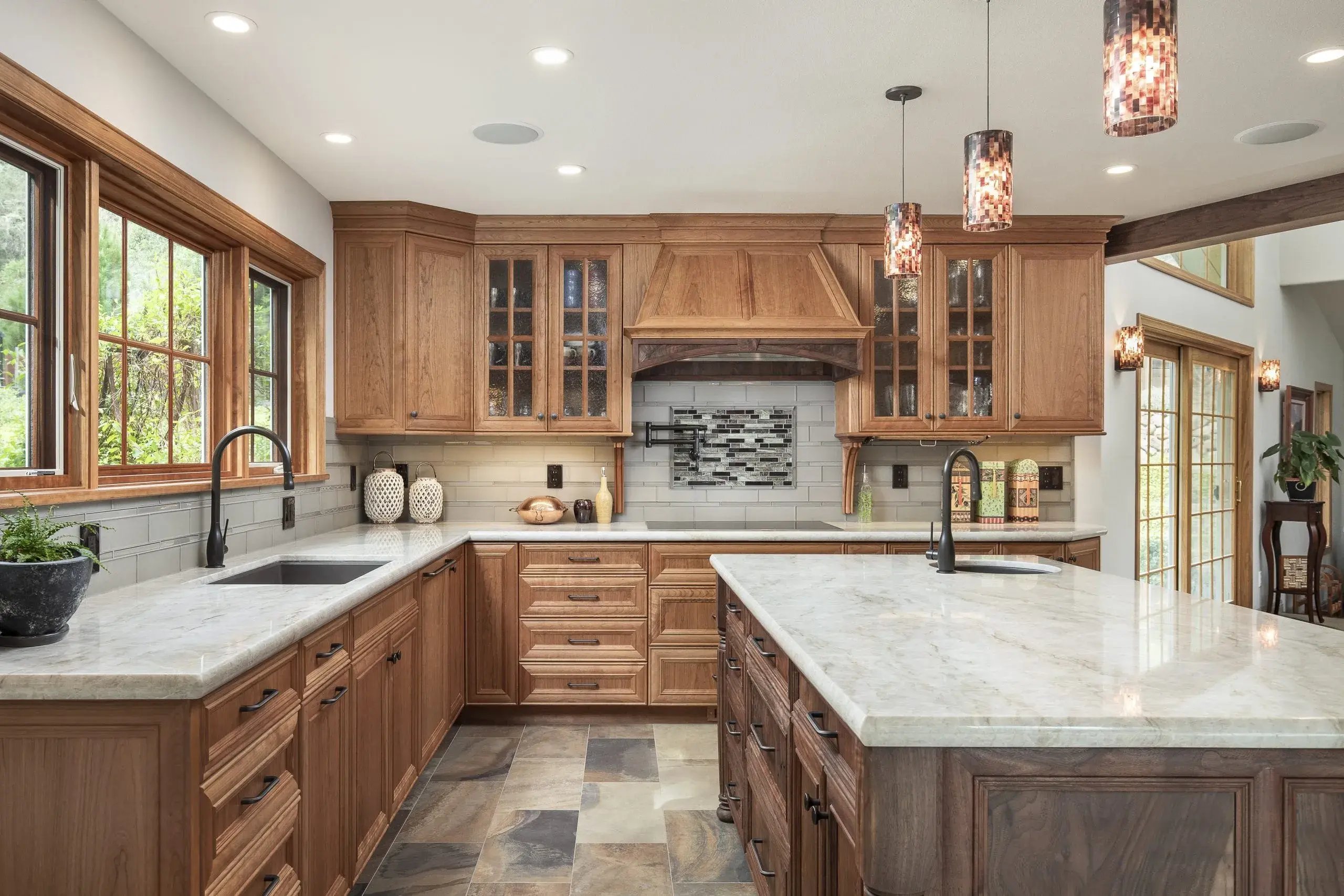
In kitchens and living areas, better insulation and draft control reduce waste and improve comfort. Durable counters, cabinets, and flooring also hold up to heavy use and last longer.
Bathrooms are one of the easiest places to add water-saving updates. Eco-friendly bathroom remodeling tips often include low-flow toilets, better ventilation, tile with recycled content, and moisture-resistant finishes. These changes reduce waste and lower the risk of moisture damage.
Outdoor and whole-house upgrades support the same goals. Shading, drainage planning, and landscape choices reduce heat gain and protect the building shell. Roof or attic work can also prepare a house for future solar. Apply these eco-friendly home renovation tips first in the room with the most drafts or the highest water use.
Sustainable Home Renovation Products and Materials
Products shape durability, maintenance, and long-term performance. Many eco-friendly remodeling products focus on low emissions, recycled content, or strong energy ratings. Labels such as Energy Star and WaterSense help you compare appliances, fans, fixtures, and plumbing with more confidence.
Material choices should reflect how a space is used. Reclaimed wood, recycled tile, low-VOC paint, and durable flooring support a sustainable home renovation without limiting the design. Choose materials that last, perform well, and create less waste.
When Reuse Beats Replacement
Not every sustainable choice means buying something new. Keeping solid cabinets, refinishing wood floors, or reusing quality fixtures often creates less waste than full replacement. It can also lower the project’s carbon footprint and control costs.
Replacement makes more sense when an existing item wastes energy, causes moisture problems, or has reached the end of its service life. Reuse makes more sense when the structure is sound, and the update is mostly cosmetic.
How to Make Eco-Friendly Renovations in the Right Order
Shell work comes before systems, because a tighter, better-insulated house needs smaller heating and cooling equipment.
- Get an energy audit. Have a professional assess the house before you spend anything.
- Set priorities and a budget. Rank fixes by impact, and check utility and state rebates before you order materials.
- Seal and insulate. Close air leaks, then bring the attic, walls, and crawl spaces up to the right insulation level.
- Upgrade windows, doors, and systems. Start with the items the audit flagged. Mechanical, electrical, and structural changes usually require permits and inspections, and structural changes may also need an engineer’s review.
- Plan ventilation. A tighter house needs fresh air and moisture control built in.
- Finish with fixtures and materials. Add water-saving fixtures during kitchen and bath work, then choose low-VOC paint, durable flooring, and reused or recycled products.
Why an Energy Audit Comes First
A professional audit can reveal air leaks, weak insulation, poor ventilation, or underperforming heating and cooling, so the budget goes to the highest-impact areas first. These audits often include a blower door test and a thermographic scan (U.S. Department of Energy).
Comfort problems often start behind the walls, in the attic, or around windows and doors. A drafty room, uneven temperatures, or an overworked system usually points to a deeper performance issue. Fixing it early improves comfort and prevents spending on the wrong solution.
Sustainable Home Renovation Cost and Budget Priorities
Remodel costs below reflect New Jersey and New York project pricing. Costs for individual upgrades are U.S. national averages, because they do not depend on one market.
New Jersey and New York markets typically run 15% to 25% above national averages because of higher labor rates, permit costs, and older housing stock. Expect quotes in those markets to land above the national averages below.
The shower is one cost driver inside a bathroom budget; this shower remodel cost guide breaks that piece out.
The 30% rule suggests keeping renovation spending under 30% of a home’s value. For a $500,000 home, that sets a rough budget cap of $150,000. It works as a planning guideline, not a strict limit.
A $50,000 budget may support partial updates or a single-room project. A $100,000 budget may support larger remodeling across several areas, including layout changes and system upgrades. Final scope depends on the home’s condition and permit needs.
A strong plan puts performance upgrades first, then major systems, then finishes. Sustainable home renovation cost should be weighed against both savings and daily use, including comfort, durability, indoor air quality, and home improvements that add value.
Rebates, Tax Credits, and Incentives
As of 2026, the federal Energy Efficient Home Improvement Credit and the Residential Clean Energy Credit no longer apply to property placed in service, or expenditures made, after December 31, 2025 (IRS). That includes credits for insulation, windows, heat pumps, and solar.
Savings programs still exist, but they vary by location. Utilities and state energy offices run rebates for items such as heat pumps, insulation, and Energy Star appliances, and availability changes often. Confirm each program’s rules before you order materials.
To find current programs, use the Energy Star Rebate Finder and the DSIRE database, and check with your utility.
Eco-Friendly Home Construction vs Remodeling
New construction and remodeling share goals but work under different limits. Eco-friendly home construction lets designers plan the structure, orientation, insulation, and systems from the start.
Eco-friendly remodeling within an existing building means decisions must account for the existing framing, ductwork, and finishes. Open walls during a remodel make insulation upgrades easier; old framing and ductwork can make them harder.
In larger projects, general contractor coordination by a licensed contractor covers trades, scheduling, permits, and inspections.
How Passive Design Lowers Energy Use
Passive design uses a house’s layout, insulation, shade, and natural light to control heat gain and heat loss. It reduces the need for mechanical heating and cooling by helping the house perform better on its own, even before major equipment changes.
Simple examples include exterior shading, attic insulation, sealed draft points, and window placements or coverings that manage sun exposure. In a remodel, passive design does not always require a full redesign. Small layout and shell choices still cut energy use year-round.
Eco-friendly home construction cost depends on land, design, labor, and system choices, while remodeling cost depends more on existing conditions and the extent of demolition. The same shell-first ideas can guide eco-friendly home renovations in older houses.
Common Eco-Friendly Home Renovation Mistakes
The first mistake is choosing looks over performance. A project can look modern and still waste energy if it ignores insulation, air leaks, and system sizing. The second is replacing items that minor repairs or refinishing could save.
The third is sizing heating and cooling equipment before sealing and insulating. The fourth is skipping ventilation after major shell work.
Good results come from sound planning, not from a single isolated product choice.