


Low-maintenance flooring holds up to daily wear, resists stains and water, and needs only basic cleaning. The best options include luxury vinyl plank, porcelain tile, laminate, sealed hardwood, and select carpet or concrete finishes. Each handles different rooms, budgets, and lifestyles differently.
A2Z Construction Management, a licensed general contractor serving New Jersey and New York, works with homeowners on flooring projects that factor in subfloor conditions, room use, and long-term care.
Key Takeaways
- Luxury vinyl plank and laminate offer the best balance of low cost and long lifespan for most homeowners, though the best choice depends on your room's moisture level and foot traffic. In New Jersey and New York, expect material and labor costs to run 15 to 25% above national averages.
- Before comparing prices, check four product specs: wear layer thickness (6 to 12 mils for residential use), core type (rigid SPC cores resist dents better), waterproof vs. water-resistant claims, and warranty coverage. These details predict how a floor will actually perform.
- If indoor air quality matters, look for third-party certifications like FloorScore or UL GREENGUARD Gold, which test for low VOC emissions. Laminate and vinyl can off-gas when new, especially formaldehyde, though emissions decrease over time.
- Low-maintenance does not mean no maintenance: remove grit weekly with a microfiber mop, mop monthly with a pH-neutral cleaner, and inspect seams and grout yearly. Grit causes more damage than foot traffic, so a mat at every entry and felt pads under furniture cut scratches effectively.
- Professional installation matters most for tile, hardwood, and any project involving subfloor leveling. Uneven or damp subfloors cause planks to separate, tiles to crack, and void warranties, so moisture testing and proper preparation come before any flooring goes down.
What Is the Best Low-Maintenance Flooring?
The answer depends on your room, your budget, and what the floor needs to handle. Here is how the top flooring types compare.
Luxury Vinyl Plank
Luxury vinyl plank (LVP) is fully waterproof, scratch-resistant, and available in a wide range of wood and stone looks. Most products feature a rigid SPC core and a wear layer rated for residential use. You clean it with a damp mop and a pH-neutral cleaner. No sanding, staining, or sealing required.
Porcelain Tile
Porcelain tile flooring handles heat, moisture, and heavy foot traffic without fading or cracking. It does not need sealing and resists stains on contact. The one tradeoff: grout lines need periodic cleaning or resealing to prevent discoloration. Large-format tiles reduce the number of grout lines and simplify upkeep.
Laminate
Laminate flooring uses a compressed wood core topped with a printed image layer and an aluminum-oxide wear layer. Modern laminate resists scratches better than hardwood and costs less per square foot. It is not fully waterproof, so choose a product with tight click-lock joints for rooms where spills happen. Sweep or vacuum regularly and wipe spills fast.
Sealed Hardwood
Hardwood flooring adds warmth and resale value, but it needs more care than vinyl or tile. Engineered hardwood is more stable than solid wood and handles humidity changes better. A factory-applied finish protects against scratches and light moisture. You can refinish engineered hardwood one to three times, depending on the veneer thickness. It is not the lowest-effort choice, but it holds up well when sealed properly.
Carpet and Polished Concrete
Triexta carpet has stain resistance built into the fiber itself, not sprayed on top. It works well in bedrooms and playrooms where comfort matters more than water resistance. Polished concrete offers a seamless, easy-to-clean surface for basements and modern kitchens. Once sealed, it resists spills and daily wear with minimal effort.
Vinyl vs. Laminate
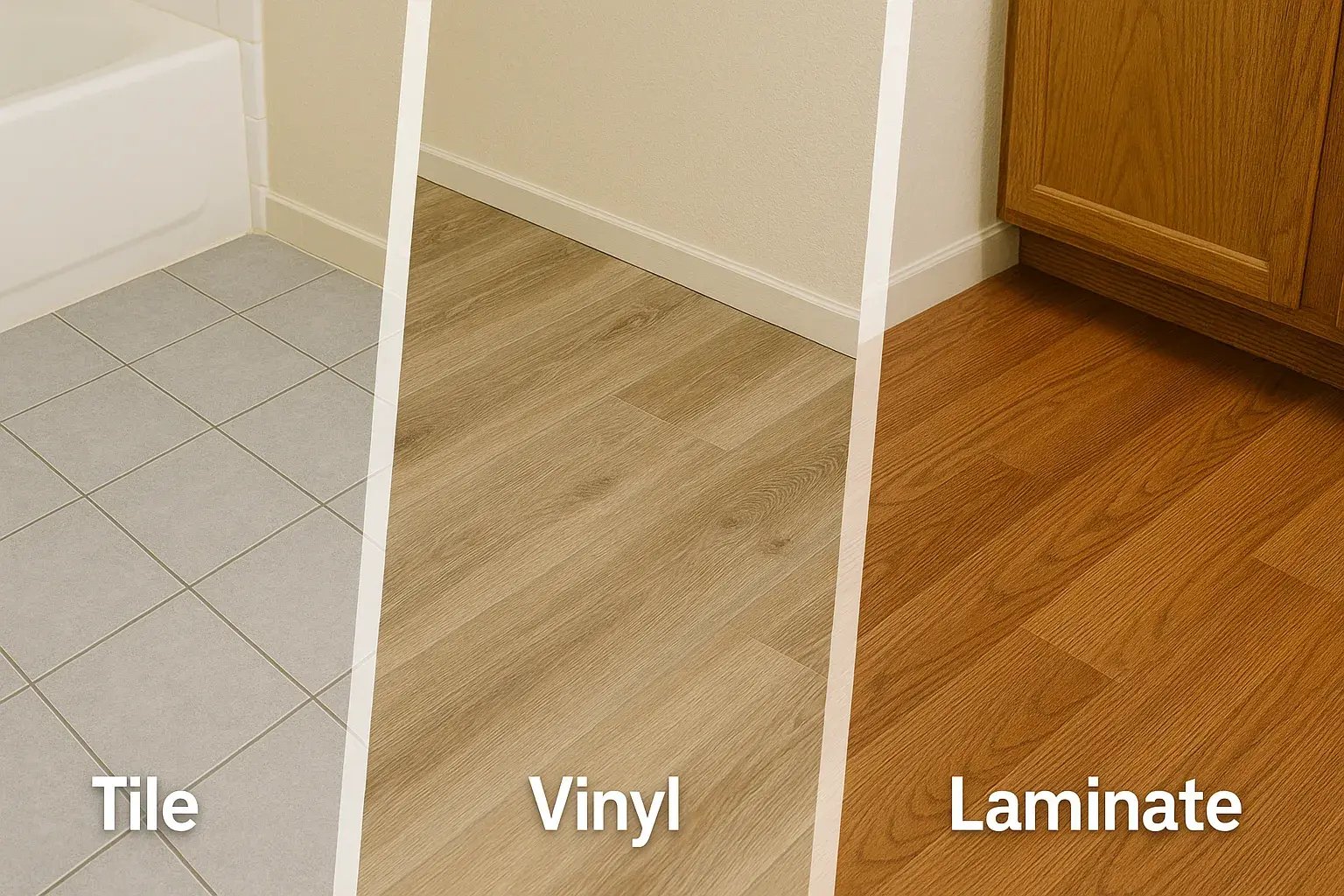
Both are affordable and straightforward to install. LVP wins on moisture resistance – it is fully waterproof and safe for kitchens, bathrooms, and basements. Laminate wins on scratch resistance and often feels more rigid underfoot. For wet rooms, such as when you redo a bathroom floor, choose vinyl. For dry, high traffic areas like hallways and living rooms, laminate performs well at a lower price point.
Which Flooring Is Easiest to Clean?
Easy-to-clean floors share three traits: smooth surfaces, stain resistance, and no special products needed. Here is how common flooring materials rank from lowest to highest maintenance:
- Luxury vinyl plank – damp mop only
- Porcelain tile – damp mop, periodic grout care
- Polished concrete – damp mop, reseal every few years
- Laminate – sweep or vacuum, wipe spills fast
- Engineered hardwood – sweep, occasional wood-safe cleaner
- Carpet – vacuum regularly, spot clean stains
Stick to pH-neutral cleaners on hard surfaces. Avoid bleach on laminate and steam mops on vinyl or hardwood. Both damage the finish or adhesive over time.
What Is the Cheapest, Most Durable Flooring?
In New Jersey and New York, material and labor costs typically run 15 to 25% above national averages due to higher labor rates and older housing stock. Factor in permit costs and subfloor conditions when budgeting. LVP and laminate offer the best balance of low cost and long lifespan for most homeowners.
How to Read Flooring Specs Before You Buy
Product labels carry more detail than the marketing on the box. Four specs predict how a floor will hold up: the top layer, the core, the water claim, and the warranty. Check all four before you compare prices.
Wear Layer Thickness
The wear layer is the clear coating on top of vinyl and laminate planks. It takes the scratches, scuffs, and foot traffic. Manufacturers measure it in mils, and one mil equals 0.001 inch. Residential planks commonly fall between 6 and 12 mil, and heavy-use planks go higher. Ask for the number in writing, because a plank with no listed thickness tells you very little.
Core Type
Rigid core vinyl often uses a stone polymer composite (SPC) core made from limestone powder and stabilizers. This dense core resists dents from furniture and generally holds its shape better than softer cores. Laminate uses a compressed wood-fiber core, which swells when water reaches it. Engineered wood uses layered plies under a wood veneer.
The Resilient Floor Covering Institute runs an ASSURE Certified program for rigid core products. It sets shared requirements for performance, indoor air quality, heavy metals, and ortho-phthalates. A product with this label has met the same baseline as other certified brands.
Waterproof vs. Water-Resistant
Water-resistant means the surface sheds spills for a limited time. Waterproof means the planks themselves do not absorb water. Neither term protects the subfloor if water reaches the seams or edges. Brands define these words differently, so read the warranty to see what it covers: spills, standing water, or flooding.
Warranty Fine Print
A warranty shows how long a maker expects the floor to perform. Compare the length, the wear-through coverage, and any moisture limits. Many warranties require a flat, dry subfloor and void coverage when installers skip those steps. Keep the product label and installation records in one folder.
Best Low-Maintenance Flooring by Room and Lifestyle
Not every flooring option fits every room. Moisture levels, foot traffic, and daily use should drive the decision.
Low-Maintenance Kitchen Flooring
Kitchens need floors that handle water, grease, and dropped cookware. LVP and porcelain tile are the strongest picks here. Both offer full water resistance and clean up fast with a damp mop. Avoid solid hardwood in kitchens unless you commit to wiping every spill immediately.
Low-Maintenance Flooring for Living Rooms
Living rooms see steady foot traffic but far less moisture than kitchens or bathrooms. Laminate and engineered hardwood both work well in this setting. Laminate resists scratches from furniture legs and shoe traffic. Engineered hardwood gives you the look and feel of real wood with better dimensional stability than solid planks.
Easy Clean Flooring for Pets
Pets test every floor with claws, accidents, and fur. LVP handles all three. Its waterproof core and scratch-resistant wear layer make it the top flooring option for pet owners. Porcelain tile is another strong choice, though it feels harder underfoot. Avoid high-gloss laminate in homes with dogs – it shows scratches more than textured or matte finishes.
What Is the Healthiest Flooring for Your Home?
Healthy flooring means low emissions of volatile organic compounds (VOCs), the gases some products release into indoor air. The U.S. Environmental Protection Agency reports that many VOCs run up to ten times higher indoors than outdoors. New products release the most. EPA notes that formaldehyde emissions from composite wood are highest when products are new and typically decrease over time.
Formaldehyde is the VOC to watch in laminate and engineered wood, because some resins in the core contain it. Federal rules cap formaldehyde emissions from composite wood products, including the cores used in flooring. Tile, solid wood, and polished concrete carry little or no formaldehyde in the material itself. Their finishes, sealers, and adhesives can still emit VOCs.
Certifications to Look For
Third-party labels confirm that a lab tested the finished product. FloorScore, developed by SCS Global Services with the Resilient Floor Covering Institute, tests hard surface flooring for 35 individual VOCs, including formaldehyde. UL GREENGUARD Gold sets stricter limits and gives extra protection for sensitive groups, such as children. For carpet, look for the Carpet and Rug Institute's Green Label Plus program.
Check the certificate, not just the logo. FloorScore lists certified products in the SCS Green Products Guide, and UL keeps its own certified product databases. Open windows and run fans during and after installation, as EPA advises for any product that emits VOCs. Anyone with asthma or chemical sensitivities should also talk to a doctor before choosing materials.
Flooring Choices Homeowners Regret Most
High-gloss hardwood shows every scratch and dust particle. Dark laminate in sunny rooms fades faster than expected. Cheap LVP with a thin wear layer dents under heavy furniture within a year. White grout in kitchens stains fast without a quality sealer.
The pattern is the same: choosing based on looks alone, without matching the product to the room's demands, leads to early replacement or constant upkeep.
Weekly, Monthly, and Yearly Upkeep
Low-maintenance does not mean no maintenance. Every hard floor needs a short routine, and the routine changes by material. Grit does more damage than foot traffic, so removing it matters most.
- Daily to weekly: Remove grit with a microfiber dust mop, or vacuum with the beater bar turned off. Wipe spills right away.
- Monthly: Mop lightly with a pH-neutral cleaner made for your floor type. Check mats, felt pads, and chair glides for trapped grit.
- Yearly: Inspect grout, caulk, and plank seams for gaps. Reseal grout on the sealer maker's schedule. Look for finish wear in hallways and near doors.
Skip steam mops on laminate, vinyl, and wood floors. Heat and moisture can loosen adhesives and swell cores. Put mats at every entry and felt pads under furniture. These two habits cut scratches more than any cleaner will.
Installation and Subfloor Preparation
Moisture Testing
Every flooring project should start with a moisture test. Concrete slabs in basements and ground floors often hold hidden moisture that damages vinyl, laminate, and hardwood from below. A calcium chloride test or relative humidity probe gives you a clear baseline before any flooring goes down. Skipping this step is one of the most common and costly mistakes homeowners make.
Wood floors need one more check. The National Wood Flooring Association publishes installation guidelines that limit the moisture difference between the flooring and the subfloor. Published figures from those guidelines allow a difference of no more than 2% for boards 3 inches and wider, and 4% for narrower strips. Installing over a subfloor outside those limits can cause buckling or gaps.
When a Licensed Contractor Helps
Professional installation matters most for tile, hardwood, and any project that involves subfloor leveling or underlayment. Uneven subfloors cause planks to separate, tiles to crack, and warranty claims to get denied.
David Haziza, Owner and Master of Construction at A2Z Construction Management, manages flooring projects in New Jersey and New York with over 30 years of experience, ensuring subfloor prep, material selection, and installation sequencing are handled correctly from the start.