


There are 15 common types of kitchen countertops, and installed, they run from about $20 per square foot for laminate to $225 for stainless steel. The full comparison is below, but most decisions come down to three questions: how much heat the surface will take, whether you're willing to seal it, and what you're prepared to spend. Quartz wins on convenience. Granite wins on heat. Laminate wins on price. Everything else is a variation on those three trade-offs.
Key takeaways
-
Cheapest installed: laminate at $20–$50 per square foot. Most expensive: stainless steel and Dekton, up to $225.
- Easiest to live with: quartz and solid surface. Neither is ever sealed.
- The one thing quartz can't do: take a hot pan. Its resin binder discolors and can crack from thermal shock.
- A typical 40 sq ft kitchen lands between $800 and $9,000 installed, depending entirely on material.
Countertop Comparison Chart
Top Types of Countertop Materials Explained
Quartz Countertops
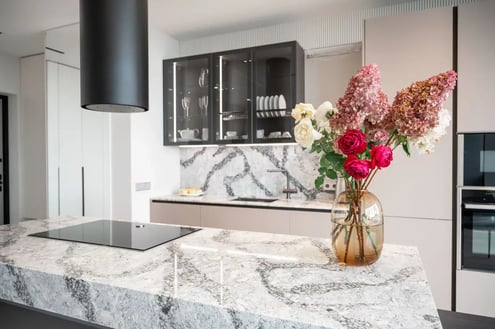
Quartz is an engineered stone, composed of roughly 90% ground natural quartz bound with resin, which makes it non-porous. The pattern is consistent across slabs, so matching an island to a perimeter run is straightforward in a way it never is with granite. Color range is wide, from solid whites to veining that mimics marble.
Watch out for: heat, and not just from a pan you set down. On installs near a range without enough clearance, we've seen the heat off an open oven door cause the same discoloration over time, no direct contact needed. The resin binder is quartz's real weak point. A pan straight off the burner can cause discoloration or thermal shock cracking, and that damage doesn't come out. Quartz also isn't rated for outdoor use since UV yellows the resin over time.
Granite Countertops
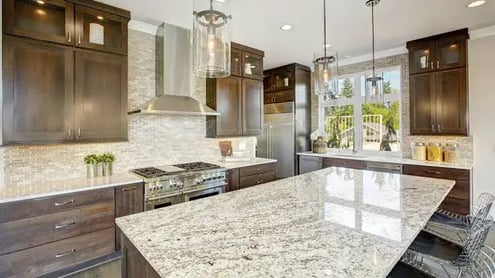
Granite is a natural stone quarried into slabs, so no two pieces look alike. It handles direct heat without a problem and, once sealed, resists scratching better than almost anything else on this list. Color and pattern range from tight speckled grays to dramatic movement in reds and golds.
Watch out for: the seal, and don't trust the water-bead test as far as most people do. We've pulled granite that beaded water perfectly in the showroom and still stained within six months, because the sealer wears unevenly around the sink and cooktop first. Granite is porous until treated, and the seal needs renewing every 1 to 3 years, depending on the stone's density. Skip it, and the surface will eventually stain from oil and wine.
Marble Countertops
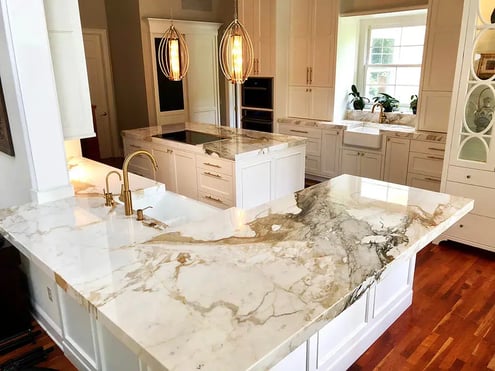
Marble is the material people picture when they think "luxury kitchen." The white varieties, Calacatta and Carrara, are the most requested, but marble comes in a full range of colors. It stays cool to the touch, which makes it a favorite for bakers rolling out dough.
Watch out for: etching, and it shows differently depending on the finish. On the honed marble kitchens we've installed, etching is nearly invisible since the matte surface already looks soft; on polished marble, the same lemon-juice mark stands out under kitchen lighting within a day. Marble reacts to acid, so lemon juice or a splash of wine leaves a dull mark even when it hasn't technically stained. Most people call this staining. It isn't, and it can't be cleaned off, only polished out by a pro.
Quartzite Countertops
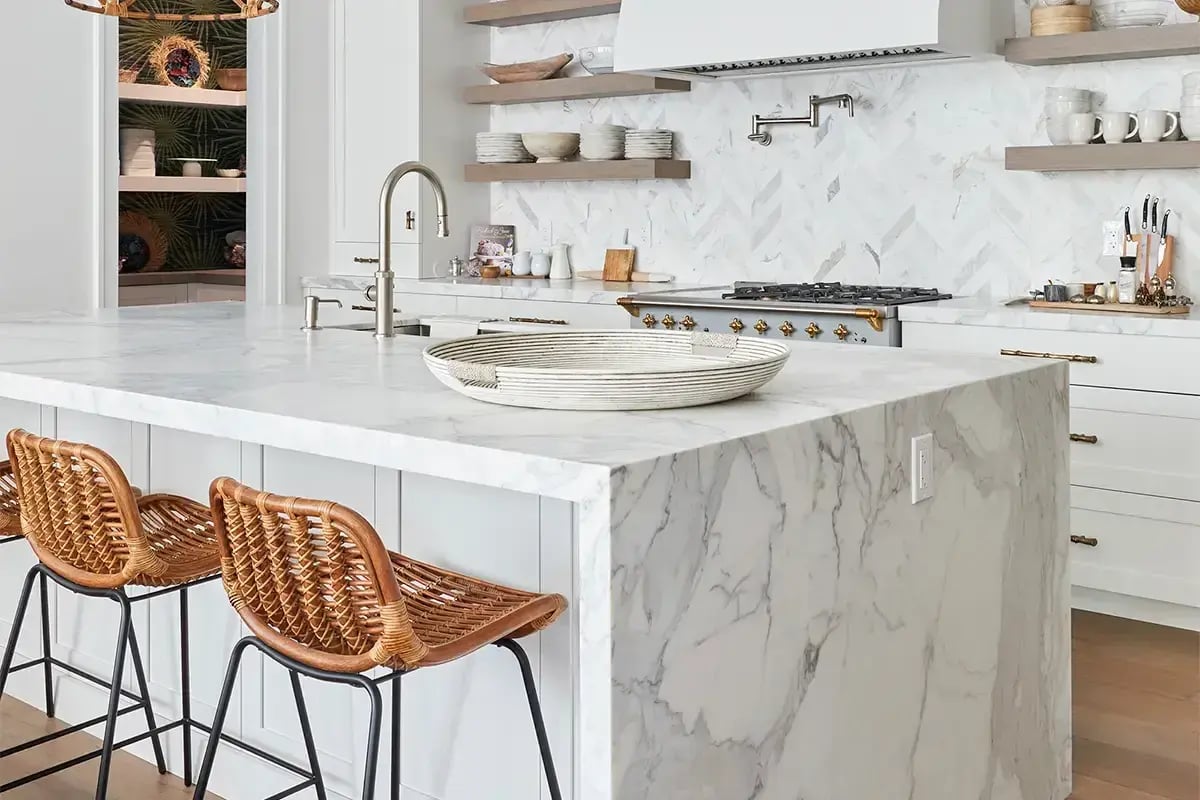
Quartzite is natural stone, not to be confused with quartz, which is engineered. It's one of the hardest stones available and gives you the marble look, soft grays and veined whites, without marble's fragility.
Watch out for: sealing and cost. Quartzite needs a sealer applied about as often as granite, and true quartzite (as opposed to marble sold under the name) commands a premium because it's harder to cut and fabricate.
Soapstone Countertops
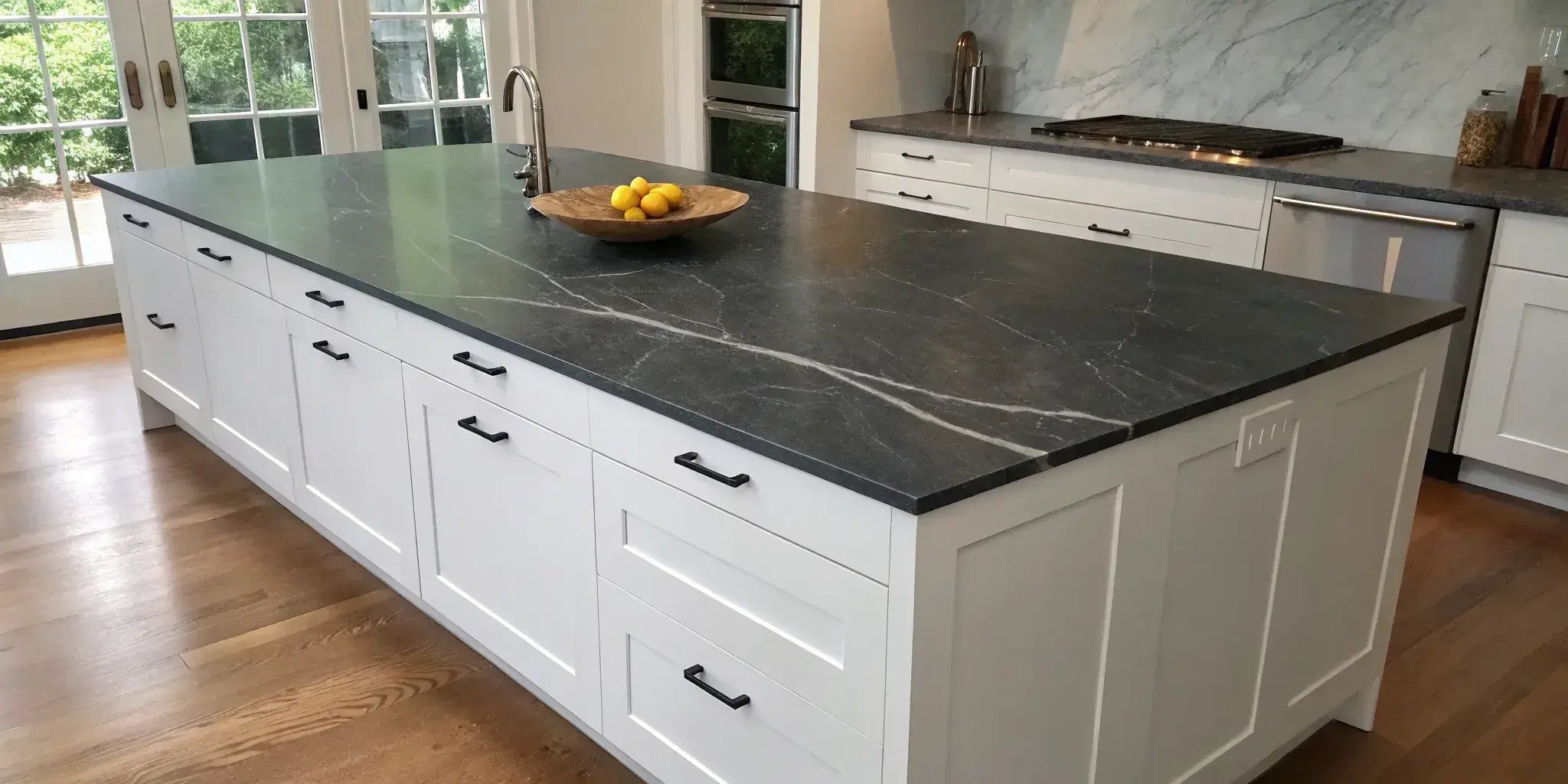
Soapstone is quarried stone with a smooth, almost soft-to-the-touch surface. Talc content gives it that feel and also makes it far easier to cut than granite. Colors run from milky gray to deep charcoal, sometimes with veining, sometimes without.
Watch out for: softness. Soapstone scratches more easily than granite or quartz, though the scratches can be sanded out by hand. It also darkens with use unless you oil it evenly from day one, which most owners treat as part of the look rather than a flaw.
Travertine Countertops
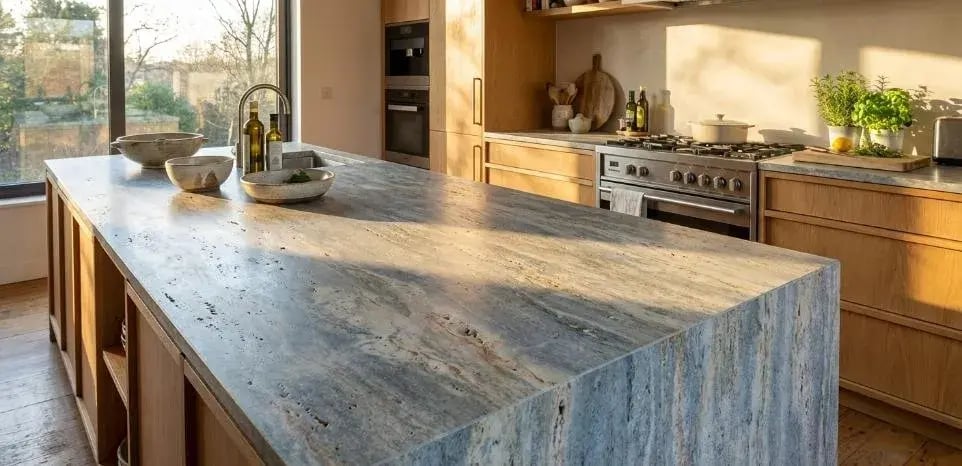
Travertine is a close relative of marble and limestone, with a more limited palette of earth tones and a naturally pitted texture. It suits Mediterranean and rustic kitchen styles particularly well.
Watch out for: everything marble struggles with, at a similar level. Travertine etches from acid and stains if not sealed. It's a stronger fit for a bathroom vanity or a low-traffic prep counter than a primary cooking surface.
Concrete Countertops
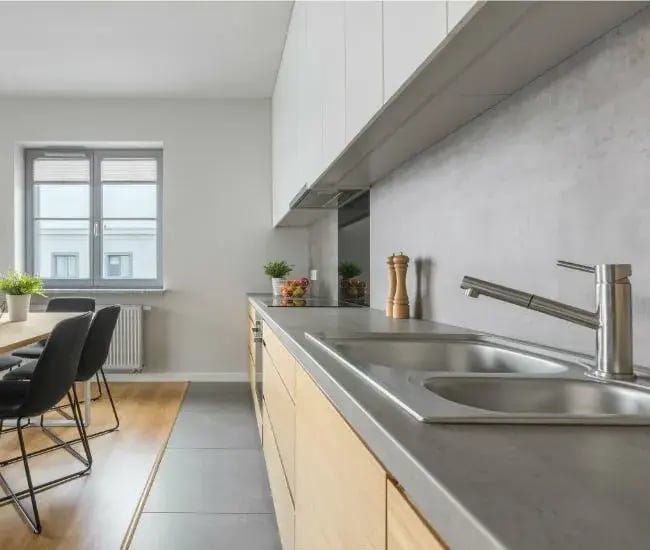
Concrete is poured and cured on-site or precast, allowing it to take almost any shape, curve, or embedded object you want. It's genuinely custom in a way stone slabs aren't.
Watch out for: hairline cracking over time, which is close to unavoidable with a poured material, and staining, since concrete is porous. A quality sealer and regular waxing keep both in check, but neither is optional.
Butcher Block Countertops
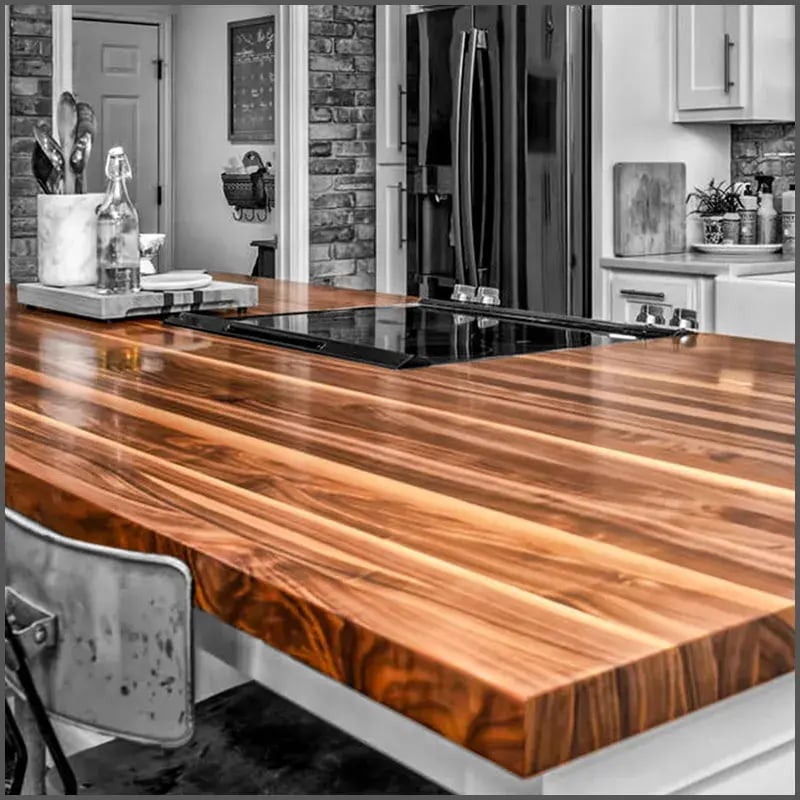
Butcher block is strips of wood, commonly maple, oak, cherry, or walnut, glued into a solid slab. It brings warmth that no stone or engineered surface replicates, and scratches sand out rather than staying forever.
Watch out for: water and heat, and in North Jersey specifically, the swing between summer humidity and a dry winter with the heat running. We've seen butcher block seams open slightly every winter and close again by spring, which isn't a defect, just the wood moving. Wood needs oil every one to three months to resist moisture, and a hot pan set down directly will scorch it. Most owners keep one section as a working cutting surface and accept the wear there.
Laminate Countertops
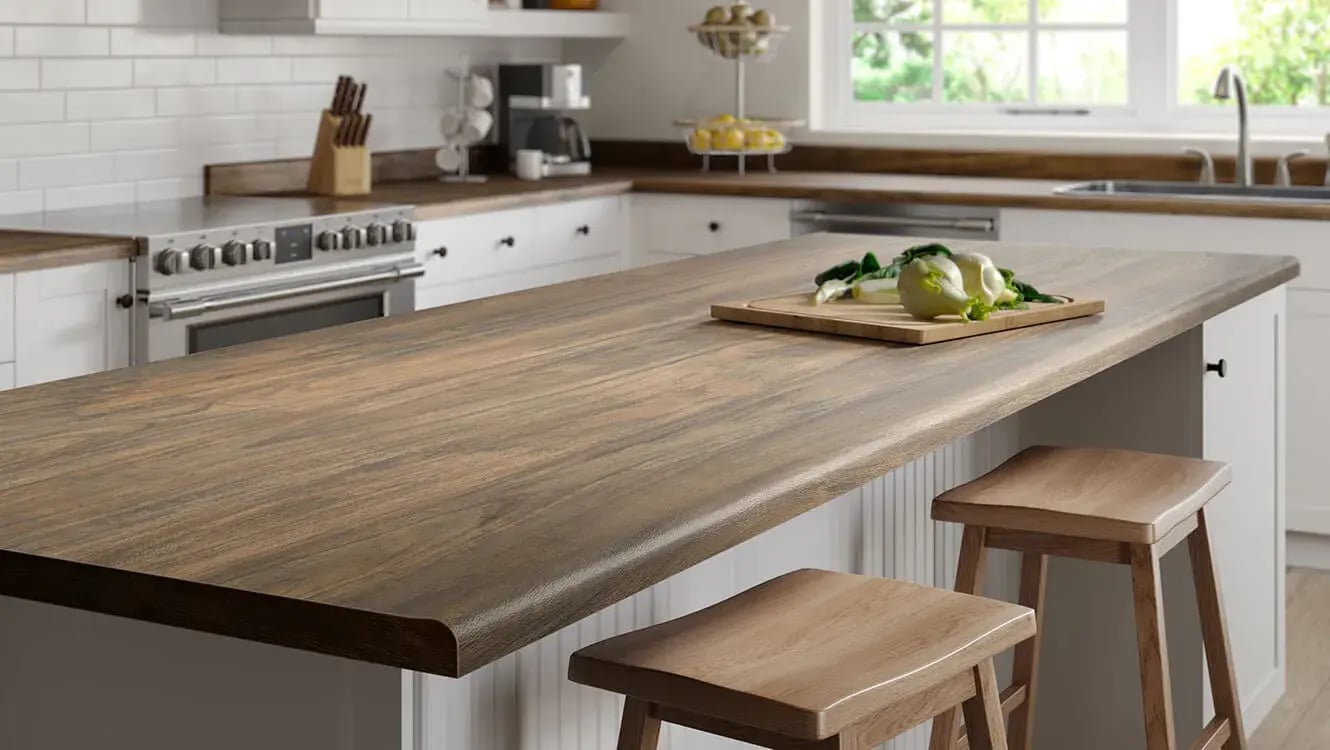
Laminate is a synthetic surface bonded to a substrate, available in effectively any color or pattern, including convincing stone and wood look-alikes. It's the lightest material on this list and the easiest to install yourself.
Watch out for: heat and impact. Laminate scorches and can chip along the edge from a dropped pan. It also has the shortest realistic lifespan of anything covered here, typically 10 to 20 years before edges start to lift or discolor.
Solid Surface Countertops (Corian)
.webp?width=842&height=617&name=Corian%20(Solid%20Surface%20Countertops).webp)
Solid surface is a blend of acrylic and mineral fill, molded rather than cut from slab. That means countertop and integrated sink can be joined with no visible seam, and any scratch or minor scorch can be sanded and buffed out.
Watch out for: heat and knives. Direct heat can scorch it and a knife used directly on the surface will cut it, so both trivets and cutting boards are non-negotiable, more so than with quartz.
Ceramic and Porcelain Tile Countertops
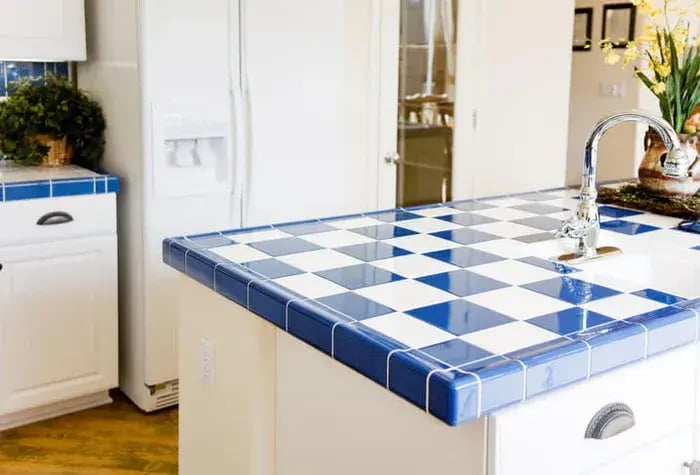
Tile countertops use the same material as floor tile, set on a substrate with grout lines between pieces. That gives you nearly unlimited pattern and color options at one of the lowest price points on this list.
Watch out for: the grout, not the tile. Individual tiles resist heat and stains well when glazed, but grout lines collect dirt and can need bleach to clean, which means gloves and ventilation. A cracked tile is a simple swap, not a full replacement.
Porcelain Slab Countertops
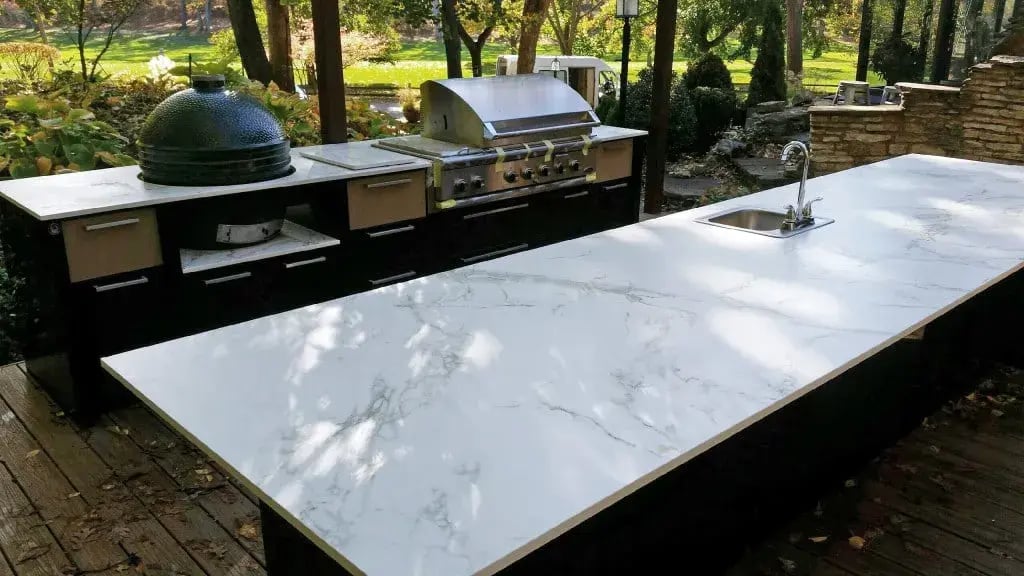
Porcelain slab is clay fired at extreme temperatures into a single large sheet, rather than individual tiles. It's newer to kitchens than porcelain flooring but built on the same technology, and it's available in finishes that closely mimic Carrara marble.
Watch out for: edges and impact. The surface itself resists heat, scratching, and staining about as well as anything on this list, but a heavy dropped object can chip or crack an edge, and repair requires a specialist.
Stainless Steel Countertops
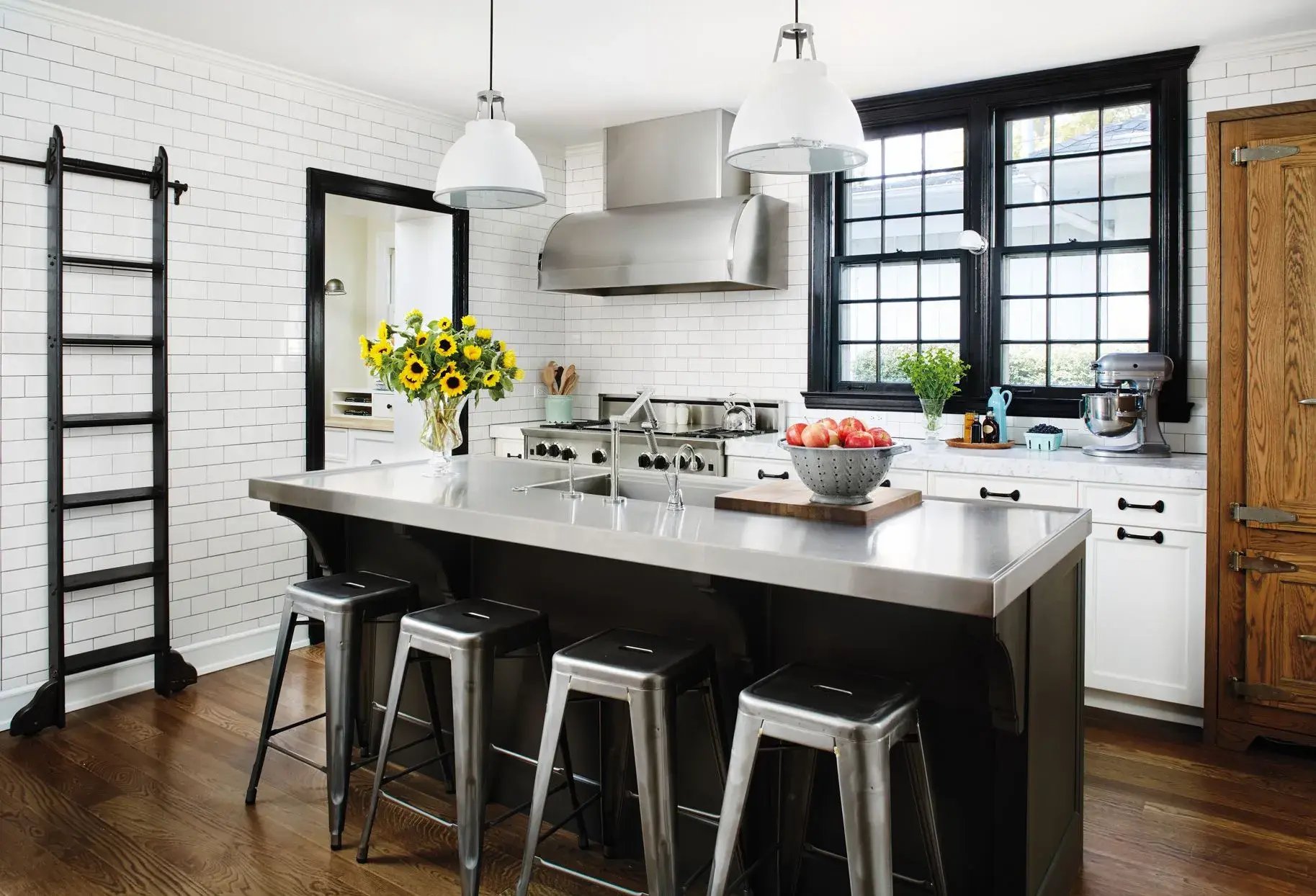
Stainless steel is the surface you see in every restaurant kitchen, now installed in home kitchens that want the same hygiene and heat tolerance. It's non-porous, takes any heat you put on it, and can be fabricated without seams.
Watch out for: scratches, dents, and noise. Everyday use, knives, pots, dropped utensils, leaves visible marks that only buff out partially, and the metal is louder than stone when something is set down on it.
Dekton and Ultra-Compact Countertops
Dekton and Neolith are ultra-compact surfaces, manufactured with a mix of the raw materials used in glass, porcelain, and quartz. The result resists heat, staining, and scratching about as well as any material available, without ever needing a seal.
Watch out for: edge impact and availability. A dropped heavy object can chip or crack the surface, particularly at an edge, and few fabricators are trained to work with it, which can mean a longer lead time and higher labor cost.
Recycled Glass Countertops
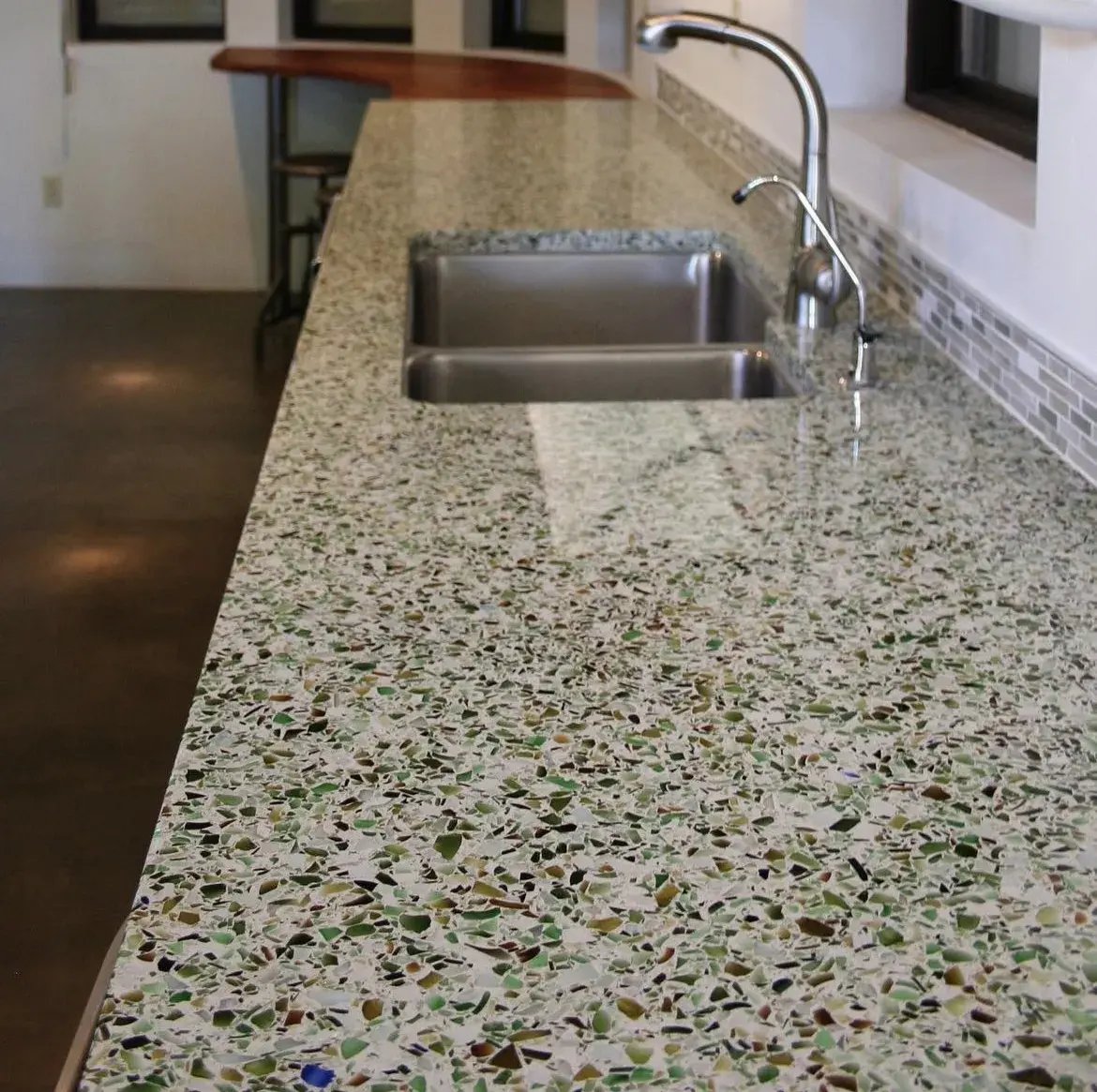
Recycled glass countertops embed shards of glass in a cement or resin base, creating a mosaic effect that can be tuned to almost any color. It's one of the few genuinely eco-conscious options on this list.
Watch out for: which base it uses. Cement-based versions need sealing and can etch from acid, the same as concrete. Resin-based versions skip the sealing but can discolor from certain household chemicals. Either way, sourcing and installation take longer than with a stocked material.
Countertop Prices and Value
Types of Countertops by Price
Countertop pricing is driven by the material, the grade of the slab, and how complicated the fabrication is. A straight run costs far less than the same stone cut with a waterfall edge and three sink cutouts.
What Is Cheaper, Granite or Quartz?
Granite usually starts cheaper. Quartz costs more upfront but removes sealing from your life entirely, so the price gap narrows over a decade of ownership.
High-End vs Budget Options
Across countertop types and prices, the gap between the cheapest and most expensive option on this list is roughly ten times, and most of that difference buys durability rather than looks. Laminate can convincingly imitate marble, but it can't take a hot pan or last thirty years.
The materials at the top of the range, marble, quartzite, Dekton, and stainless steel, also carry costs that don't show up on a per-square-foot quote: longer lead times and specialist fabricators.
If you're weighing a countertop upgrade against other renovation work, our breakdown of how much it costs to remodel a kitchen shows where the rest of that budget typically goes, and the price ranges above give you a real number to plan around rather than a rough tier.
Pros, Cons, and Maintenance
What Is the Easiest Countertop to Maintain?
Quartz and solid surface, without qualification. Both are non-porous, so nothing soaks in, and neither is ever sealed. Mild soap and water is the entire routine. The trade-off with both: they're the two materials least tolerant of heat, so trivets aren't optional. If you want a surface that's genuinely low-maintenance and takes a hot pan, soapstone and porcelain slab are the only two that do both.
Durability, Cleaning, and Longevity
Most countertop materials, sealed or not, will outlast the kitchen around them if you keep up with the maintenance they ask for. The materials that fail early almost always fail because the seal or oil schedule got skipped, not because the material itself wore out.
Styles, Trends, and Appearance
Counter Top Styles and Design Trends
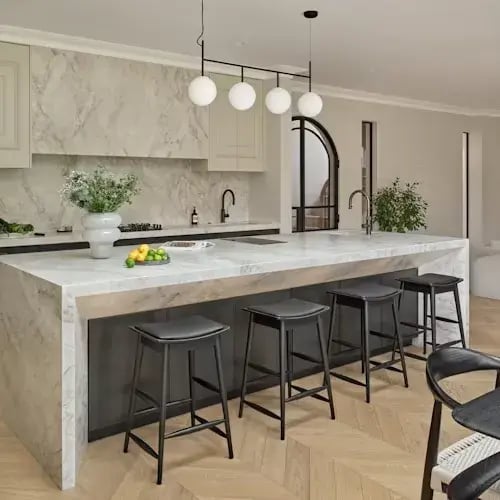
Finish options run from matte to high gloss, and the edge profile changes the whole feel of a slab. Beveled and bullnose edges soften a kitchen; a square-cut or mitered waterfall edge, where the countertop appears to fold straight down the side of the cabinet, reads as modern and architectural.
Bold color is back in circulation too, particularly in concrete, recycled glass, and porcelain slabs, where a single-statement island can carry a neutral kitchen around it. Waterfall edges most often appear in open kitchen designs, where there's no upper cabinetry to break the sightline and the counter itself becomes the visual anchor.
What Is the Newest Countertop Material?
Porcelain slab and ultra-compact surfaces like Dekton are the newest entrants, and both are gaining ground fast because they combine the durability of engineered stone with a finish that convincingly mimics marble. Recycled materials are trending for the same reason sustainable building generally is: buyers increasingly ask about it directly, not just accept it as a nice-to-have.
Choosing the Right Countertop
How to Choose a Countertop That Fits Your Needs
Pick the two rows above that describe your kitchen and take the material that shows up in both. That narrows fifteen kitchen countertop options down to one before you ever look at a sample.
DIY or Professional Installation?
The honest answer is that most countertop materials aren't DIY projects, and the ones that are tend to be the cheaper ones. What separates a DIY job from a professional one usually isn't the installation itself, it's the templating, and it's the part homeowners underestimate most.
We still get called in to fix DIY laminate jobs where the seam was cut a sixteenth of an inch too wide, and no amount of caulk hides it.
A slab cut a quarter-inch off is scrap, and on a quartz top that runs a few thousand dollars, that mistake erases whatever you were trying to save. Laminate, butcher block, and tile are genuinely doable in a weekend.
Anything that needs a seam usually isn't, and for context on where that fits into the bigger picture, how long a kitchen remodel takes is usually measured in weeks, with templating and fabrication alone accounting for one to three of them.
Apartment and Rental-Friendly Countertops
If you're upgrading a rental, a condo, or a unit you don't plan to keep long, the calculation changes. You want the visual improvement without the permanent investment.
Laminate is the obvious answer: it's the cheapest material on this list, it's DIY-installable, it comes in convincing stone and wood patterns, and peel-and-stick versions can go over an existing counter with no demolition at all.
Butcher block is the next step up and works particularly well in small galley kitchens, where warmth matters more than square footage. Natural stone is worth skipping here. The weight can be an issue in older buildings, and it's unlikely you'll recover the cost before you move.
Matching Your Lifestyle and Kitchen Design
Coordinate your countertop with cabinet finishes, flooring, and appliances rather than choosing it in isolation. Dark counters against light cabinetry read as contrast and depth.
Matching tones across counters, cabinets, and floor create a calmer, more minimalist look. Neither is more correct, but the two effects are genuinely different, so it's worth deciding which one you want before you order a slab. If you're rethinking the whole space rather than just the counter, our guide to upscale kitchen ideas covers how layout and material choices work together beyond the countertop.
Long-Term Use and Resale Impact
Quartz and granite are the two surfaces buyers most often expect to see in a renovated kitchen, which makes them the safer choice if resale is on your mind within the next five to ten years.
According to Remodeling magazine's Cost vs. Value report, minor kitchen remodels consistently recover a higher share of their cost than most other renovation categories, though countertop material alone isn't broken out separately in that data.
If you're planning a full kitchen renovation and weighing countertops against cabinet or layout upgrades, it's worth reading our guide to kitchen remodeling in NJ to see how the pieces work together.