


The cost to turn a basement into an apartment is usually between $40,000 and $90,000. This cost depends on size, layout, utilities, and permits needed.
Smaller projects in an existing finished basement sit at the lower end, while full builds in an unfinished basement cost more. Factors like plumbing, egress windows, and proper ventilation shape the final price. The sections below explain each cost driver in detail so you can plan with confidence.
Average Cost to Turn a Basement Into an Apartment
This range mentioned above covers framing, electrical work, plumbing, insulation, drywall, flooring, and basic fixtures. Projects that include a full kitchen and bathroom push the total higher. Smaller layouts with limited plumbing fall closer to the low end of the range.
Labor and materials make up most of the budget. Utility upgrades and code compliance often add unexpected expenses. Costs also change by square footage and ceiling height. A clear site inspection helps narrow your true budget early.

Cost to Turn Unfinished Basement Into Apartment
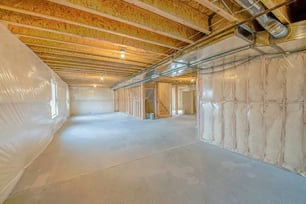
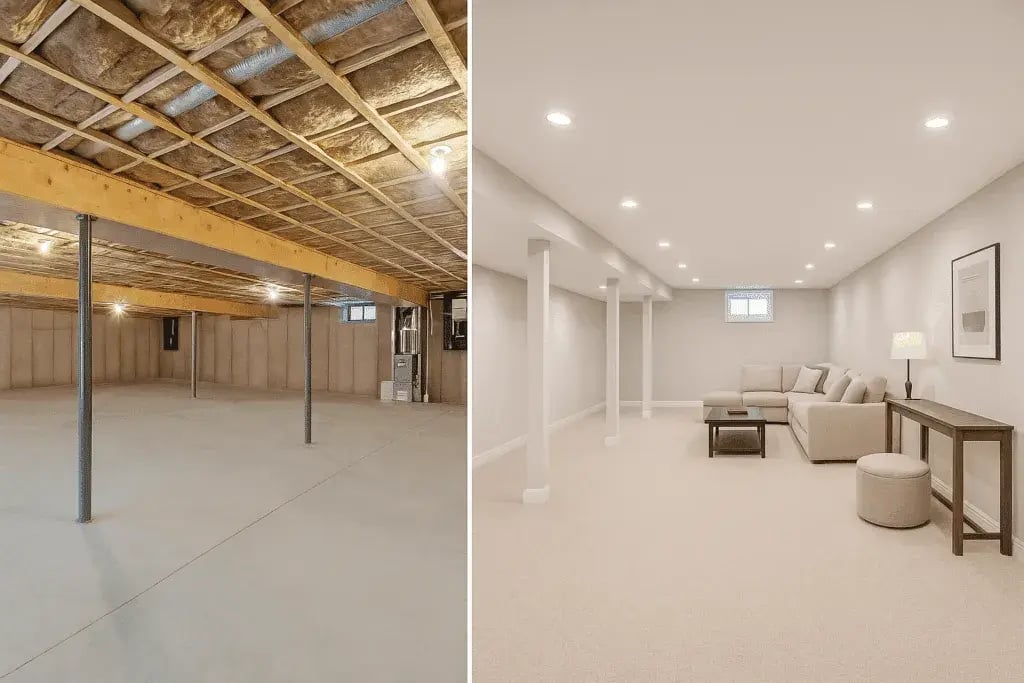
An unfinished basement requires more structural and mechanical work before it becomes livable. Builders must install insulation, electrical wiring, and, in some cases, moisture-control systems. Plumbers often need to cut plumbing lines into the slab to add kitchens or bathrooms. These steps raise the cost to turn the basement into an apartment by $15,000 to $30,000 compared to an already finished space.
Concrete moisture, ceiling height limits, and existing utility access affect labor time. Older homes may need panel upgrades or new venting systems. Each of these items adds cost but protects safety and long-term performance. A thorough inspection helps avoid change orders during construction.
What Affects Basement Apartment Renovation Cost
Size and ceiling height
Larger basement space increases material and labor costs in direct proportion to square footage. Low ceilings may require structural changes to meet habitable standards. Dig-down work adds significant expense but may be necessary for code approval. Each added foot of height raises the project cost.
Plumbing, electrical, and HVAC
Adding bathrooms, kitchens, or laundry lines requires new drain and supply lines. Electrical service may need to be expanded to support appliances and separate meters. HVAC upgrades are standard to ensure proper heating and cooling. Adequate ventilation is required in all sleeping and cooking areas.
Permits and zoning rules
Every legal apartment must meet local building code rules for fire safety, exits, and utilities. Permit fees vary by town and project scope. Some areas require zoning approval for rental use. Delays or redesigns increase cost and timeline.
Materials and finish level
Basic vinyl floors and stock cabinets cost less than hardwood and custom millwork. Tile, stone, and wall-mounted fixtures raise both labor and material expenses. Finish choices shape both comfort and total budget. Early selections prevent mid-project price jumps.
Cost by Basement Size and Layout
How Much Does It Cost to Finish a 1,500 Sq Ft Basement
For a 1,500 square foot basement, the total conversion cost often ranges from $70,000 to $110,000. This assumes complete framing, insulation, drywall, a bathroom, and a small kitchen area. Adding multiple rooms or a laundry area raises both labor and material needs. Larger layouts also require more planning for lighting and airflow.
Studio vs one-bedroom layouts
Studio apartments cost less due to simpler plumbing and fewer partitions. A full one-bedroom layout increases wall framing, door installation, and HVAC zoning. Storage space, closets, and defined living rooms improve rent value but add cost. Layout choice directly balances budget and income potential.
How to Convert a Basement Into Living Space
Learning how to convert a basement into living space starts with a structural and moisture inspection. Builders first address water control, insulation, and structural framing. Next comes electrical rough-in, plumbing, and HVAC lines. Drywall, flooring, and trim follow.
Key steps in most basement conversions include:
- Moisture sealing and insulation
- Framing walls and room divisions
- Electrical and plumbing installation
- Flooring, trim, and fixture placement
This sequence protects the home and speeds approval. Skipping steps often leads to failed inspections and rework.
How to Make a Basement a Legal Apartment
A legal unit must meet fire safety, access, and airflow standards. Most codes require at least one exterior exit and one set of egress windows in sleeping areas. Ceiling height minimums often range from 7 to 7.5 feet after finishing. Kitchens and bathrooms must meet plumbing and venting rules.
Separate heating controls and smoke detection systems are standard requirements. Zoning laws decide whether law suites or rental apartments can exist. Permit reviews verify compliance before construction and again at final inspection. Legal approval protects both safety and property value.
Can You Finish a Basement and Rent It Out
You can rent a finished unit only if it meets all zoning and safety laws. Many towns allow rental use when the unit has legal exits, fire separation, and code-approved utilities. Illegal rentals expose owners to fines, insurance denial, and forced removal. Legal status also affects mortgage and resale conditions.
Rental-ready finished basements often generate steady monthly income. Tenants expect privacy, sound control, and full utilities. Builders usually add separate entry doors and meters to improve marketability. The legal setup protects both the owner and the tenant.
Basement Into Apartment Ideas
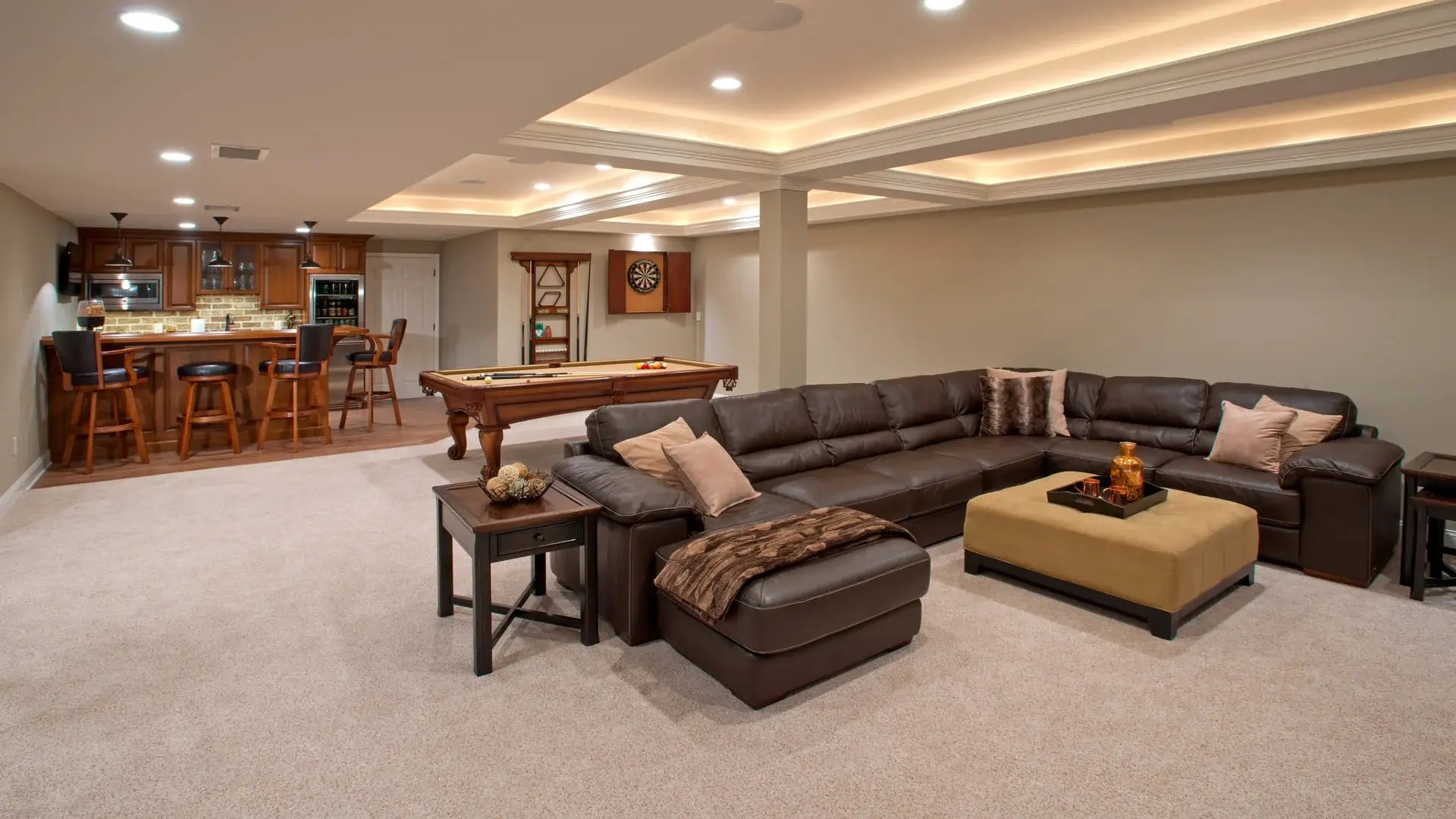
Smart design can turn a limited basement space into a bright and functional unit, especially when planning a modern basement layout that maximizes light and flow. Open layouts near the main entrance increase usable living spaces. Light finishes reflect natural light from window wells. Storage built under stairs or along perimeter walls adds efficiency.
Popular basement remodel ideas include:
- Open kitchen and living room layout
- Wall-mounted shelving to save floor area
- Glass shower enclosures for light flow
- Multi-use rooms for work and sleep
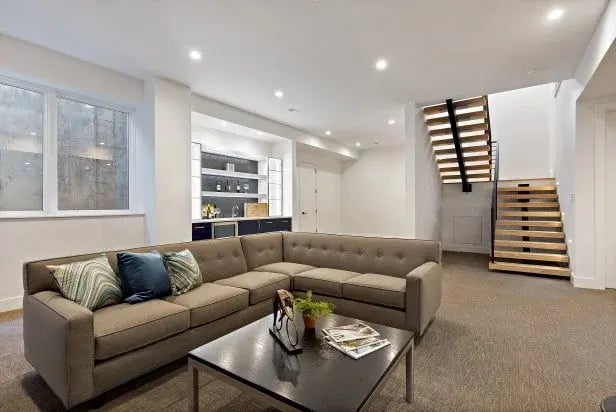
The design should align with both the budget and the expected tenant profile. Good layout increases long-term value.
Hidden Costs Homeowners Miss
Many homeowners plan only for visible construction items, while costs such as the cost to drywall a basement often appear later in the project. Hidden expenses often appear during demolition and framing. Old wiring, poor soil drainage, and issues that require solving how to waterproof my basement often create delays and redesign expenses. Each discovery adds cost and time.
Common hidden costs include:
- Electrical panel upgrades
- Foundation moisture treatment
- Structural beam reinforcement
- Extra fire-rated assemblies
Contingency planning protects budget stability. A reserve of 10 to 15 percent is standard for most renovation project budgets.
Is a Basement Conversion Worth It, and Are Basement Apartments a Good Idea
For many homeowners, a basement apartment is a good idea when zoning allows it. Rental income often offsets construction costs within five to eight years. Adding legal living units also raises property value, and the added flexibility benefits multi-generational households.
However, conversion is not always the best choice. High water tables, zoning bans, or low ceilings may limit returns. Market rent in your area affects long-term earnings. Financial analysis should include insurance, maintenance, and vacancy risks.
How to Reduce Basement Apartment Renovation Costs
Cost control begins with early planning and simple design. Smaller kitchens and single-bath layouts reduce plumbing expense: stock cabinetry and standard fixtures lower material costs. Using the existing mechanical layout avoids major rerouting.
Cost-saving strategies include:
- Retaining current utility locations
- Using durable but budget materials
- Phasing upgrades over time
- Limiting structural changes
Open communication with your contractor reduces the need for change orders. A fixed scope keeps pricing predictable.
When a Basement Apartment Is Not Feasible
Some basements cannot safely support residential use. Chronic flooding, weak foundations, and extreme ceiling limitations make conversion risky. Zoning bans and historical protections also block rental approval. In these cases, storage or recreation use is safer.
Basements without safe exit paths or code-compliant ventilation often fail inspection. High structural modification costs may outweigh rental value. Alternative uses like home gyms or media rooms may offer better long-term value. Safety and legality always come first.
A2Z Construction Management plans and executes basement remodels with full code compliance and long-term durability in mind. Each basement conversions project begins with inspection, design review, and permit coordination. At the close of each build, the team delivers every unit ready for safe occupancy.
David Haziza, the Owner and Master of Construction, checks project standards himself. He makes sure each conversion meets quality and safety requirements.