


simple forms, open surfaces, and a neutral color palette. Cabinets, counters, and appliances blend into the layout instead of competing for attention. The result is a kitchen that feels organized, calm, and easy to maintain.
How to Make a Kitchen Minimalist
Creating a minimalist kitchen starts with daily habits and layout decisions. The process works best when homeowners think about how they use their kitchen every day. Storage, prep space, and movement patterns matter more than decorative features.
Decluttering and daily function
- Remove items that are rarely used.
- Keep only essential tools on counters.
- Store items such as paper towel holders or mixing bowls inside cabinets when possible.
Choosing fewer, better elements
- Select durable finishes that last.
- Avoid extra trims or decorative hardware.
- Focus on storage solutions that hide items out of sight.
This approach helps create a minimalist kitchen that supports everyday cooking without feeling empty or cold.
Minimal Kitchen Design vs Simple Kitchen Design
Minimal design reduces a kitchen to its essential elements, emphasizing clean lines and minimal visual clutter. Simple kitchen design, on the other hand, prioritizes ease of use and familiar layouts.
Minimalist design prioritizes visual calm, while simple kitchens may still include decorative features. Homeowners should consider how much structure and visual control they want in the space. An interior designer or an experienced contractor can help determine which approach best fits the home.
Here's an example of a simple kitchen: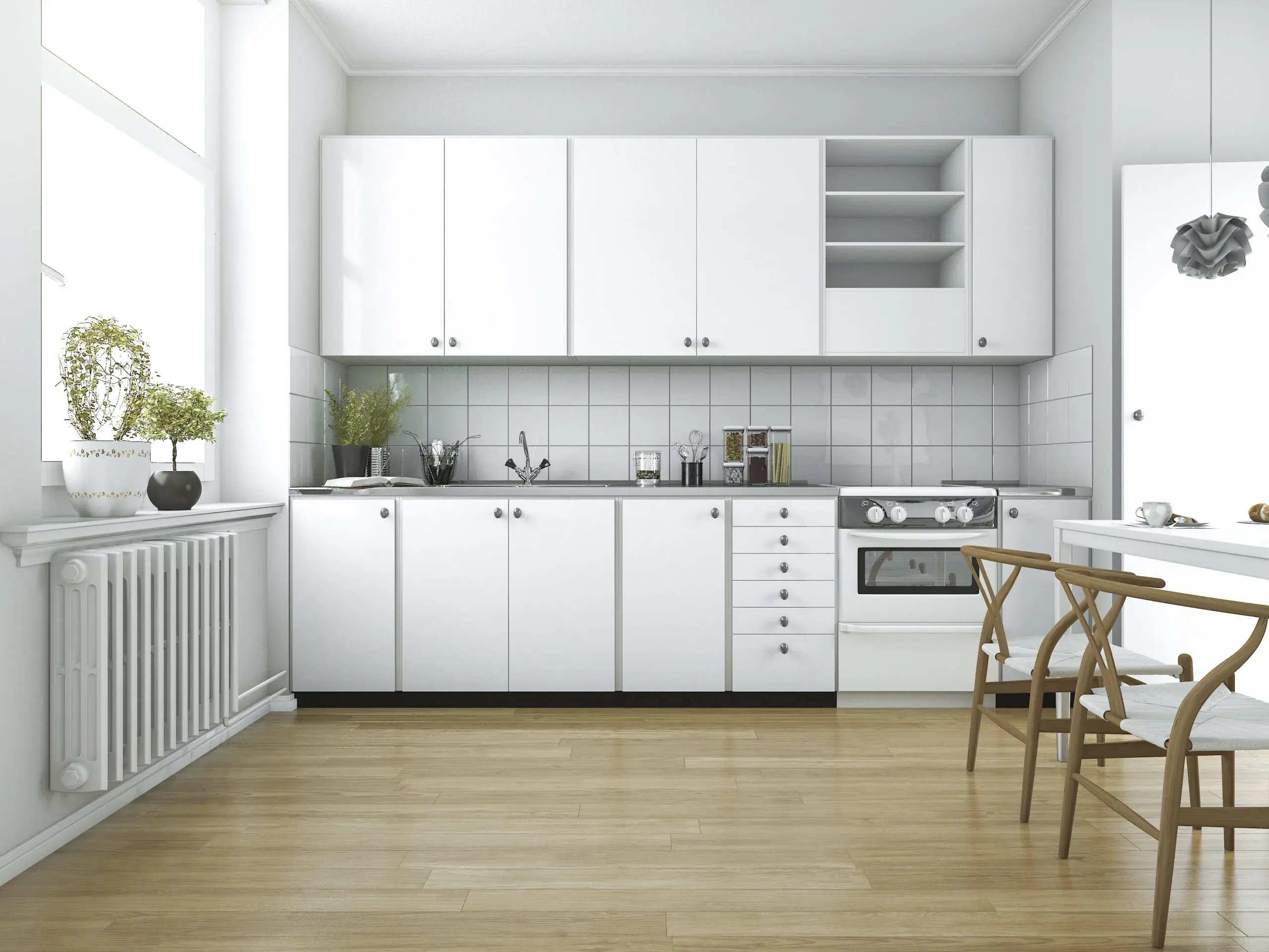
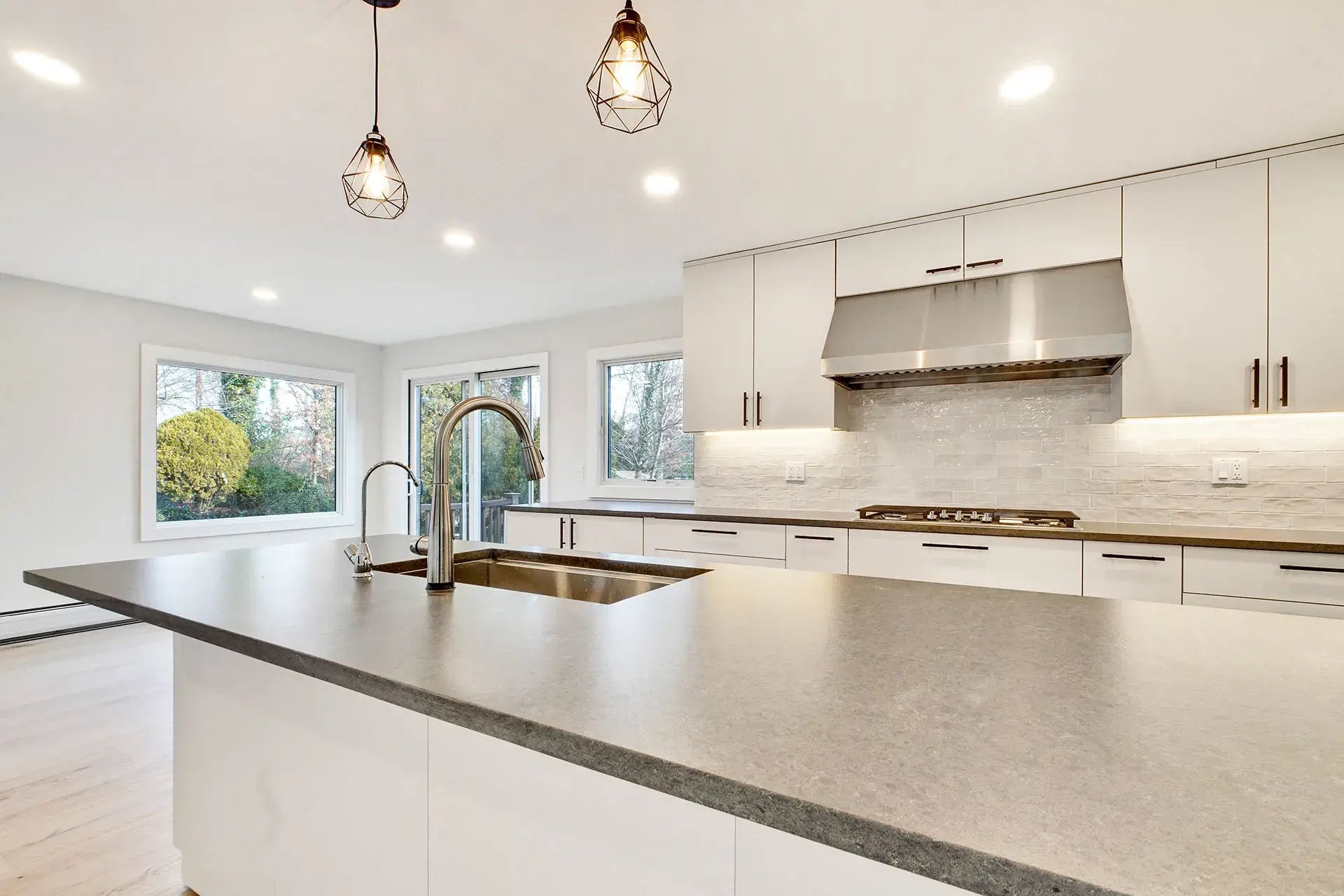
And here is a minimalist kitchen: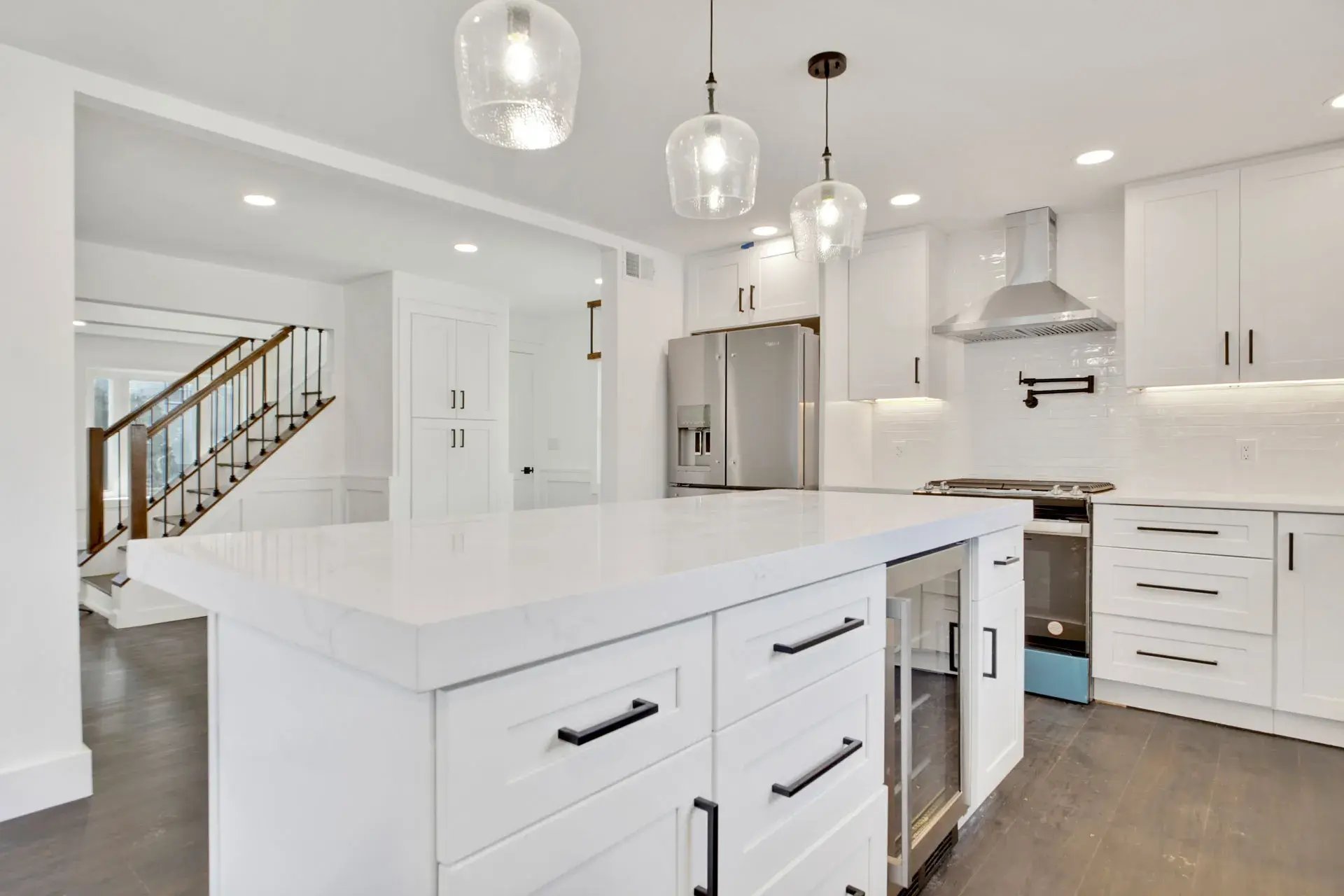
Modern Minimalist Kitchen Layouts
Layout plays a significant role in how a modern minimalist kitchen functions, as shown in the kitchen remodeling projects completed by A2Z Construction. The proper layout improves flow and reduces wasted movement. Clean layouts also help maintain a sleek modern appearance.
Common layouts include:
- Galley kitchens for efficient use of narrow spaces
- Single-wall kitchens for open floor plans
- Open layouts that connect the kitchen to living areas
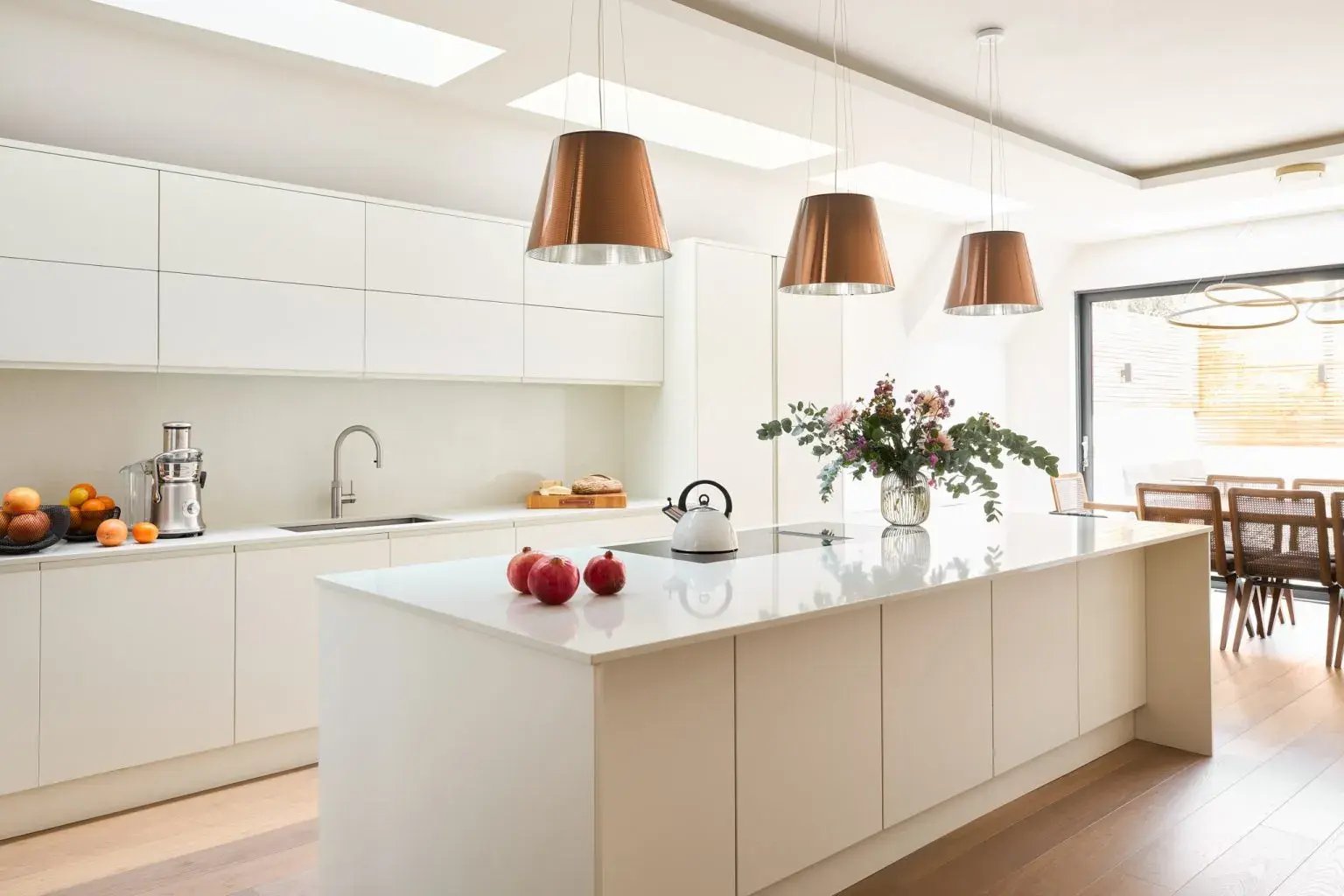
A kitchen island can work well in minimalist spaces when it serves multiple functions. Islands often provide prep space, storage, and seating without cluttering the kitchen. Careful planning ensures the island supports function rather than disrupting flow.
Small Minimalist Kitchen Design
A small kitchen minimalist approach focuses on efficiency and scale. Limited square footage makes design choices more important. Each element must earn its place.
Storage without clutter
- Use full-height kitchen cabinets.
- Add pull-out drawers and hidden compartments.
- Keep counters clear to improve the space feel.
Light, color, and scale
- Use a neutral color to reflect light.
- Choose finishes that do not overwhelm the room.
- Keep hardware consistent and straightforward.
The 3x4 kitchen rule
When planning a small kitchen, spacing is key. The 3x4 kitchen rule recommends keeping at least three feet of clear walking space and placing main work areas within a compact four-foot range. This helps balance storage, prep space, and appliances without crowding the layout.
By following this guideline, cabinets can open fully, movement stays safe, and daily tasks remain close together. It also prevents designs that look clean but feel tight in everyday use.
Minimalist Kitchen Cabinets, Colors, and Materials
Cabinet design defines much of a minimalist kitchen’s appearance. Flat-front cabinets with minimal hardware help maintain clean lines. Hidden handles or touch-latch systems reduce visual noise.
Minimalist kitchen colors often rely on white, soft gray, or warm wood tones. These choices support natural light and make the kitchen feel open. Countertops and finishes should be durable, easy to clean, and visually simple to support daily use.
Lighting for Minimalist Kitchens
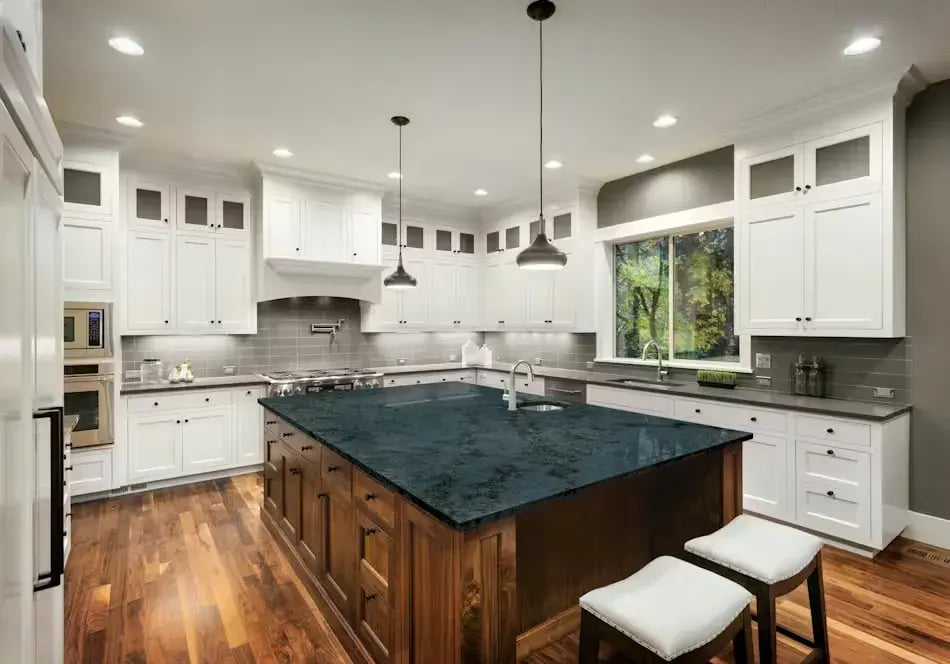
Lighting supports both function and comfort in minimalist kitchens. Natural light should be used as much as possible through windows or open layouts. Task lighting ensures work areas stay safe and usable.
Recessed fixtures and under-cabinet lighting provide even coverage without drawing attention. The goal is consistent illumination that supports cooking, cleaning, and gathering without adding visual clutter.
Minimalist Kitchen Design Ideas That Work
Practical minimalist kitchen ideas focus on real use rather than trends. Design choices should simplify routines and reduce maintenance. Homeowners should not be afraid to prioritize function over decoration.
Practical kitchen ideas include:
- Built-in storage for small appliances
- Consistent materials across surfaces
- Clear zones for prep, cooking, and cleanup
Kitchen designers often recommend testing layouts on paper before construction begins. This step helps avoid costly changes later.
Common Minimalist Kitchen Mistakes
Mistakes can undermine the benefits of minimalist design. One common issue is removing too much storage, which forces clutter onto counters. Another is choosing finishes that show wear too quickly.
Other mistakes include:
- Ignoring daily habits
- Overusing open shelving
- Selecting style over function
Avoiding these issues helps ensure the kitchen remains practical and comfortable in the long term.
Is Minimalist Kitchen Design Right for Your Home
Minimalist kitchen design is best suited to homeowners who value order, efficiency, and long-term usability. It suits both new construction and renovation projects when planning starts early. Families who cook often may benefit from organized layouts and smart storage when working with an experienced general contractor.
At A2Z Construction, each project is carefully planned with attention to structure, workflow, and materials, and homeowners can request free estimates to plan next steps with confidence.
David Haziza, Owner and Master of Construction, brings decades of experience to kitchen renovations that balance design with real-life use. This expertise ensures each kitchen supports both style and daily life, supported by consistent client reviews.