---
title: Englewood Kitchen Remodel Services for New Jersey Homes
description: Englewood kitchen remodel services cover design coordination, permits, inspections, and full project oversight for homeowners planning a kitchen renovation
image: https://a2zconstructionmgmt.com/hubfs/kitchen-a2z-5.webp
---
[](https://a2zconstructionmgmt.com)


- Remodeling
Show submenu for Remodeling
- [Home Additions](https://a2zconstructionmgmt.com/home-addition-contractor-in-bergen-county-nj)
- [Kitchen Remodeling](https://a2zconstructionmgmt.com/kitchen-remodeling-nj)
- [Bathroom Remodeling](https://a2zconstructionmgmt.com/bathroom-remodel-bergen-county-nj)
- [Basement Remodeling](https://a2zconstructionmgmt.com/basement-remodel-bergen-county-nj)
- [Full Home Remodeling](https://a2zconstructionmgmt.com/home-remodeling-contractors-near-me)
- Construction
Show submenu for Construction
- [General Contractors](https://a2zconstructionmgmt.com/north-jersey-contractors)
- [New Construction](https://a2zconstructionmgmt.com/new-construction-bergen-county)
- [Commercial Construction](https://a2zconstructionmgmt.com/commercial-general-contractors-in-nj)
- [Smart Home](https://a2zconstructionmgmt.com/smart-home-bergen-county-installation-company)
- Exterior & Outdoor
Show submenu for Exterior & Outdoor
- [Roofing](https://a2zconstructionmgmt.com/roofers-bergen-county-nj)
- [Siding](https://a2zconstructionmgmt.com/siding-contractor-bergen-county)
- [Flooring](https://a2zconstructionmgmt.com/flooring-contractors-nj)
- [Driveway Paving](https://a2zconstructionmgmt.com/driveway-pavers)
- [Decks & Patios](https://a2zconstructionmgmt.com/patio-renovations)
- [House Painting](https://a2zconstructionmgmt.com/residential-painting-services)
- Service Areas
Show submenu for Service Areas
- [Bergen County](https://a2zconstructionmgmt.com/home-remodeling-bergen-county)
- [Tenafly](https://a2zconstructionmgmt.com/home-improvement-contractor-in-tenafly-nj)
- [Paramus](https://a2zconstructionmgmt.com/general-contractor-paramus-nj)
- [Englewood](https://a2zconstructionmgmt.com/home-remodeling-contractor-englewood-nj)
- [Fort Lee](https://a2zconstructionmgmt.com/home-renovation-contractors-of-fort-lee-nj)
- Guides
Show submenu for Guides
- [Blog](https://a2zconstructionmgmt.com/home-renovation-blog)
- [Home Remodeling Guide](https://a2zconstructionmgmt.com/home-renovation-blog/home-remodeling)
- [About](https://a2zconstructionmgmt.com/a2z-construction-team)
Show submenu for About
- [Portfolio](https://a2zconstructionmgmt.com/contractor-portfolio)
- [Contact](https://a2zconstructionmgmt.com/contractors-near-me-free-estimates)
- Remodeling
Show submenu for Remodeling
- [Home Additions](https://a2zconstructionmgmt.com/home-addition-contractor-in-bergen-county-nj)
- [Kitchen Remodeling](https://a2zconstructionmgmt.com/kitchen-remodeling-nj)
- [Bathroom Remodeling](https://a2zconstructionmgmt.com/bathroom-remodel-bergen-county-nj)
- [Basement Remodeling](https://a2zconstructionmgmt.com/basement-remodel-bergen-county-nj)
- [Full Home Remodeling](https://a2zconstructionmgmt.com/home-remodeling-contractors-near-me)
- Construction
Show submenu for Construction
- [General Contractors](https://a2zconstructionmgmt.com/north-jersey-contractors)
- [New Construction](https://a2zconstructionmgmt.com/new-construction-bergen-county)
- [Commercial Construction](https://a2zconstructionmgmt.com/commercial-general-contractors-in-nj)
- [Smart Home](https://a2zconstructionmgmt.com/smart-home-bergen-county-installation-company)
- Exterior & Outdoor
Show submenu for Exterior & Outdoor
- [Roofing](https://a2zconstructionmgmt.com/roofers-bergen-county-nj)
- [Siding](https://a2zconstructionmgmt.com/siding-contractor-bergen-county)
- [Flooring](https://a2zconstructionmgmt.com/flooring-contractors-nj)
- [Driveway Paving](https://a2zconstructionmgmt.com/driveway-pavers)
- [Decks & Patios](https://a2zconstructionmgmt.com/patio-renovations)
- [House Painting](https://a2zconstructionmgmt.com/residential-painting-services)
- Service Areas
Show submenu for Service Areas
- [Bergen County](https://a2zconstructionmgmt.com/home-remodeling-bergen-county)
- [Tenafly](https://a2zconstructionmgmt.com/home-improvement-contractor-in-tenafly-nj)
- [Paramus](https://a2zconstructionmgmt.com/general-contractor-paramus-nj)
- [Englewood](https://a2zconstructionmgmt.com/home-remodeling-contractor-englewood-nj)
- [Fort Lee](https://a2zconstructionmgmt.com/home-renovation-contractors-of-fort-lee-nj)
- Guides
Show submenu for Guides
- [Blog](https://a2zconstructionmgmt.com/home-renovation-blog)
- [Home Remodeling Guide](https://a2zconstructionmgmt.com/home-renovation-blog/home-remodeling)
- [About](https://a2zconstructionmgmt.com/a2z-construction-team)
Show submenu for About
- [Portfolio](https://a2zconstructionmgmt.com/contractor-portfolio)
- [Contact](https://a2zconstructionmgmt.com/contractors-near-me-free-estimates)
# Englewood Kitchen Remodel and Renovation Experts
A2Z Construction, a[general contractor in Bergen County](https://a2zconstructionmgmt.com/bergen-county-general-contractor), offers complete kitchen remodeling services for homeowners in Englewood. We provide clear guidance from start to finish. This remodeling service is for owners who want a single point of contact. We will handle design, permits, trades, inspections, and construction.
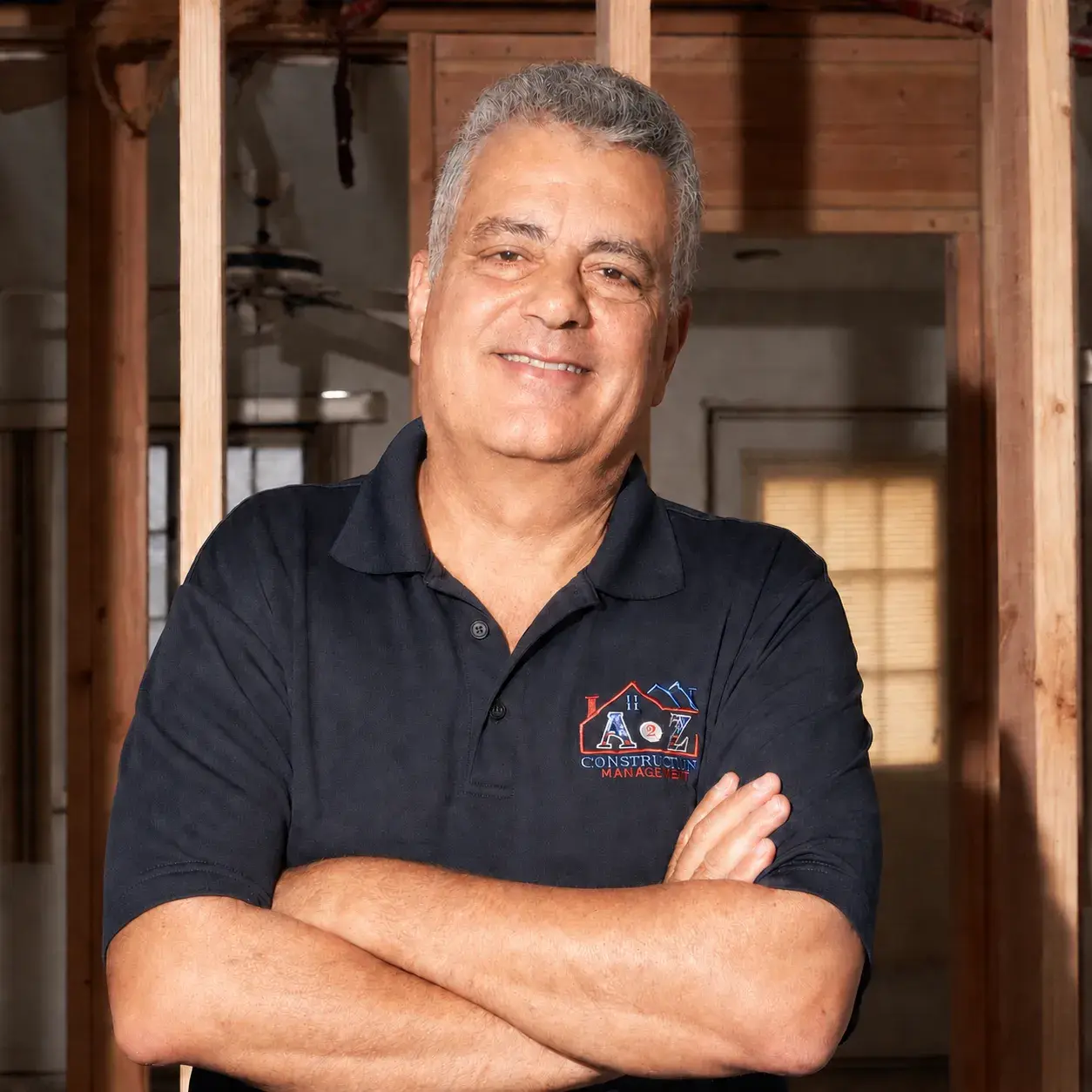
David Haziza, Owner and Master of Construction, is responsible for project oversight, scheduling, and code compliance. The work supports both partial updates and full kitchen renovations in Englewood. These projects can include layout changes, system upgrades, and final installation.
## Get a Free Quote
## What an Englewood Kitchen Remodel Includes
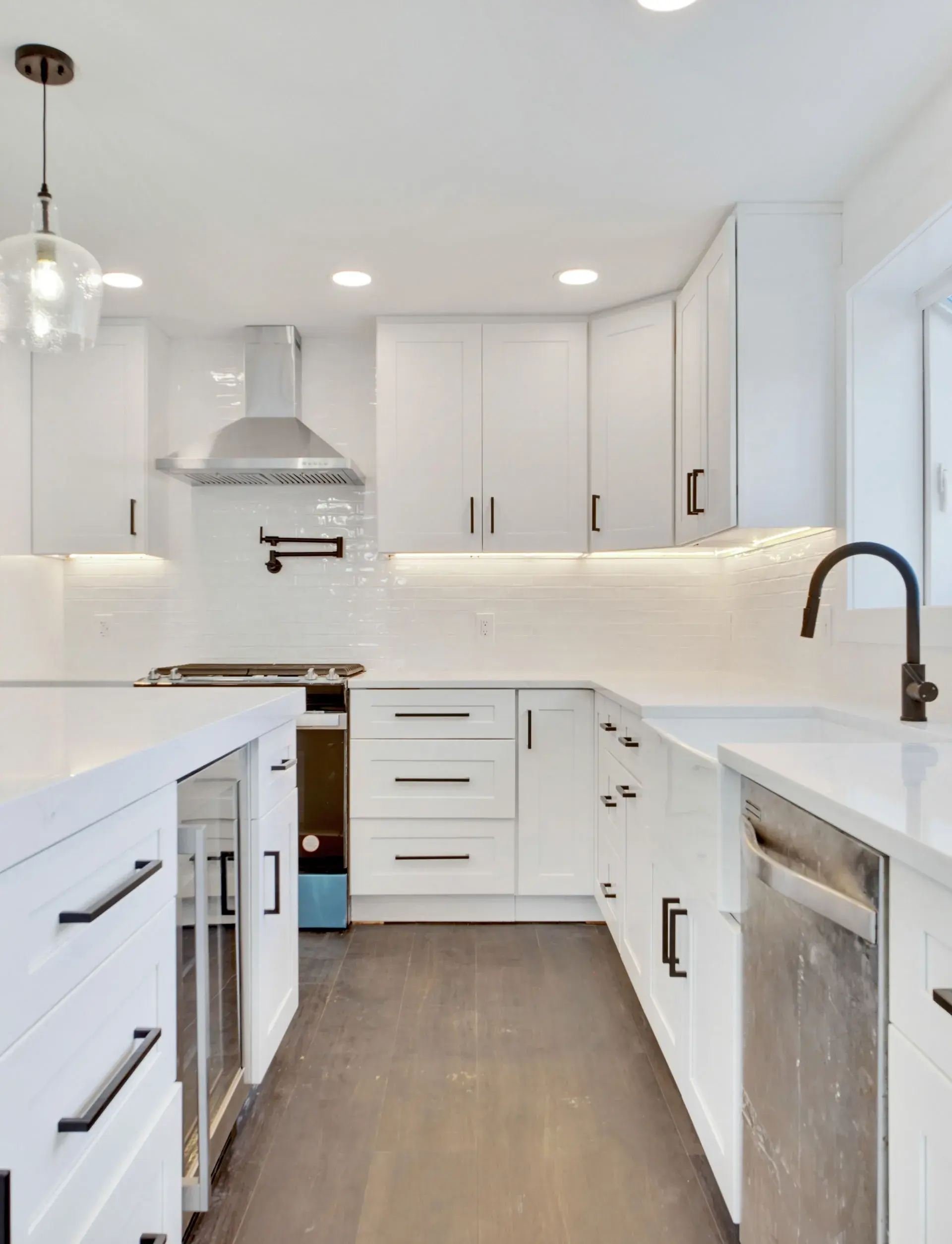
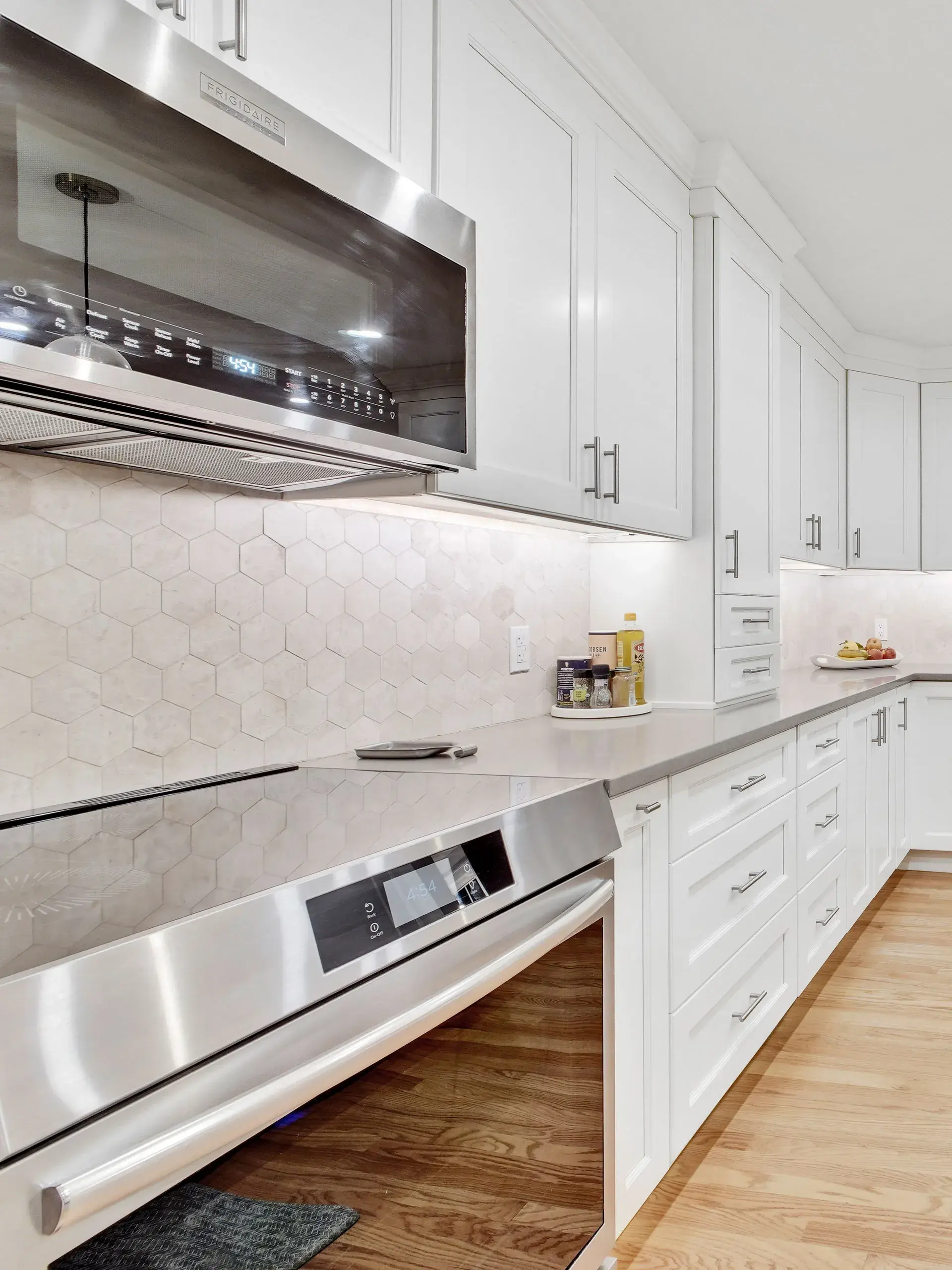
A kitchen remodel can involve many tasks. These include demolition, layout changes, and cabinet installation. You may also need new countertops, flooring, and lighting. Electrical and plumbing work is often required as well. This is similar to what is needed for a[bathroom remodel](https://a2zconstructionmgmt.com/bathroom-remodel-englewood).
Some remodeling project scopes require removing walls or relocating utilities to support a new layout. The team sets each scope based on site conditions and the planned level of change. The team sequences the work to reduce disruption to the rest of the home.
Project planning starts before construction begins. David Haziza, Owner and Master of Construction, reviews the scope, trade orders, and inspection requirements before work begins. We schedule trades and inspections to avoid delays. Homeowners can expect clear phases and defined responsibilities throughout the kitchen remodel.




Client Reviews
## What homeowners say about A2Z Construction
60+
Five-Star Reviews
on Google
Verified on Google
MB
Mollie Bashan
1 month ago
"We worked with A2Z on a full home renovation after buying a fixer-upper. David Haziza and his crew managed everything – new floors, cabinets, and electrical updates. The transformation is unbelievable."
Flooring · Home renovation · Electrical
TC
Tomer or Chen
1 month ago
"Hiring A2Z was the best decision we made. David and his team were professional, transparent, and on time. New flooring, drywall, electrical, paint, cabinet installation – everything came out flawless."
Kitchen remodel · Flooring · Drywall
JL
Jon Lopez
1 month ago
"This is the fourth project we've done with A2Z, and David continues to impress. They converted our old powder room into a beautiful custom bathroom. Communication was excellent, and David always provided helpful design suggestions."
Bathroom remodel · Tile work · Flooring
MP
Mahesh R Patel
3 months ago
"They completely transformed our first floor. David Haziza was personally involved from start to finish – always accessible, attentive, and quick to respond. The craftsmanship and attention to detail are exceptional."
Kitchen · Living space · Full renovation
SC
Sergio Cesar
4 months ago
"I'm beyond grateful to A2Z for turning my kitchen dream into reality. The entire team, led by David H., communicated clearly throughout and made sure every detail was perfect. The new layout, cabinets, and flooring look amazing."
Kitchen remodel · Flooring · Cabinets
BK
Bayley Keaney
7 months ago
"We're so happy with the full remodel of our primary bedroom suite. The crew was respectful, punctual, and kept the job site clean every day. David made sure everything stayed on schedule, and the results exceeded our expectations."
Tile · Bathroom remodel · Drywall
DR
David Rosenberg
8 months ago
"David, Edhan and the team helped us with a complete renovation. Super professional, always listened and gave recommendations. We felt we had a true partner we could trust. Always available to meet and discuss any concern."
Full renovation · Bathroom · Basement
FC
Fabian Carrion
8 months ago
"A2Z did an incredible job transforming our kitchen. The team was professional, detail-oriented, and helped us choose high-quality materials for a modern design. On time and within budget, with great communication throughout."
Kitchen remodel · Construction management
TJ
Tayah Jordan
5 days ago
"I recently worked with David Haziza and the A2Z team on my home renovations, and I couldn't be happier. From the initial consultation to the final touches, they were professional, attentive, and genuinely committed to the project."
General contracting
AS
Ana Sofia Rodríguez
6 days ago
"We recently hired A2Z to remodel my daughter's kitchen, and the experience was incredible. David Haziza and the team were simply amazing from start to finish. The craftsmanship was phenomenal, and they executed every detail perfectly. They really listened to…"
Kitchen remodel
ML
Maria Lleras Lizcano
1 week ago
"Working with A2Z was a great experience. They did an awesome job on my kitchen, three bathrooms, flooring, and patio. They're a great team to work with to make your dreams come true. Special thanks to David Haziza for supporting…"
Kitchen remodel · Bathroom remodel · Deck & patio
KJ
Kiana Jade
1 week ago
"A2Z is an incredible company with amazing staff who truly care about each client. They make sure every job meets the highest quality standards. I had the privilege of having them work on my mother's home, and they helped bring…"
General contracting
NS
Nallely Silva
1 week ago
"A2Z is a great company to work with. Their communication was always timely, which gave me peace of mind, especially since finding a reliable contractor can be so tough. They also used an incremental payment structure, so I always felt…"
Construction management · General construction
MS
Miguel Silva
2 weeks ago
"I found A2Z online and reached out for a quote. David Haziza got back to me promptly and provided a quote right away. I didn't have to wait weeks, as I did with another contractor. The team showed up on…"
General contracting
SK
Sarina Kauffman
3 weeks ago
"A2Z Construction Management truly lives up to its name. As first-time homeowners navigating our first renovation, Edahn and David patiently answered every question we had. Their communication was excellent, and they even finished the job ahead of schedule. I highly…"
General contracting
KL
Kypros Lachanaris
5 weeks ago
"A2Z Construction Management added a new deck and patio to our home. The craftsmanship is outstanding, and everything feels sturdy and well-built. The crew was respectful and finished on schedule. David Haziza personally checked every detail before final approval."
General construction
AT
Architect Tka
5 weeks ago
"As an architect, I've worked with many contractors over the years, and A2Z definitely one of the best. Reliable, responsible, and trustworthy. A2Z takes their work seriously and always follows through."
General contracting
KS
Kristin Silva
5 weeks ago
"I contacted A2Z Construction Management for drywall repair and painting after a leak. They arrived on time, fixed the damage, and matched the paint perfectly. It's hard to tell where the repair even was. I'll definitely call David Haziza again…"
Paint indoors · Drywall repair
GD
Gustavo Deveze
3 months ago
"A2Z Construction Management replaced our old roof and repaired damaged siding. They worked fast and did an incredible job. David Haziza kept in touch every day, which made us feel confident throughout the project. The house looks amazing now, and…"
Construction management · General construction · Tile work installation
AR
Aaron RAM
4 months ago
"David completed an extension on my house. He completed the job on time and on budget. I certainly would recommend."
Home addition
AK
Avi Kopman
4 months ago
"A2Z Construction Management replaced our flooring after flood damage. The results are beautiful, and the installation was done fast. David Haziza made sure everything was done correctly from start to finish. They truly take pride in their work. Will definitely…"
General construction · Tile work installation · Install flooring
AB
Asaf Bord
5 months ago
"Did whole home renovation. David and his crew were great from start to finish. Good quality work, great work ethics, highly communicative. We're also very helpfully opinionated on design choices. They even helped us when we had a major flood…"
Construction management · General construction · Demolition
SA
Shanni Alon
5 months ago
"Highly recommended, very reliable and honest and get things done quickly efficiently."
Construction management · General construction
HA
Harlevben
5 months ago
"We needed a general contractor for a full home renovation, and A2Z Construction Management exceeded expectations. Every room feels fresh and modern. The attention to detail and quality of materials are top-notch. David Haziza truly cares about the finished product."
General construction
AT
Aleida Torres
6 months ago
"We just finished a kitchen renovation with A2Z Contractors, and we're thrilled with the outcome. The cabinets, flooring, and lighting came together perfectly. David is detail-oriented and honest about costs and timelines. Everything turned out exactly as planned."
Kitchen remodeling · Flooring · Cabinet installation
CC
Carolyn C
6 months ago
"Finding a reliable contractor can be tough, but A2Z Construction Management made the process easy. They started and finished the job on time and kept me updated with photos along the way. Everything was done efficiently and professionally. I'm already…"
Drywall repair · Paint · Window installation
RP
Rochelle Petti
6 months ago
"Another fantastic job by A2Z! They repaired our damaged soffit and it looks brand new. Over the past 15 years, David Haziza and his family have handled several home improvement projects for us always delivering top-quality results. It's great working…"
General contracting
OT
Olivia Tirello
7 months ago
"We needed a general contractor for a full home renovation, and A2Z Construction Management exceeded expectations. Every room feels fresh and modern. The attention to detail and quality of materials are top-notch. David and Edahn truly cares about the finished…"
Home renovations · Bathroom remodeling · Kitchen remodeling
TT
Tracy Tellis
7 months ago
"We had water damage in the ceiling and needed fast repairs. A2Z Construction Management responded immediately to my call and fixed it within a few days. The drywall and paint is flawless. They treated my home with respect and left…"
Construction management · General construction
Read all reviews on Google [View on Google](https://share.google/6nX71IPfeQCNXD6vI)
## **Kitchen Remodel Costs in Englewood**
**A typical kitchen renovation price range: $25,000 to $75,000+**
Kitchen remodel costs in Englewood depend on scope, layout changes, system work, material choices, and permitting requirements, similar to the factors that affect [the cost to remodel a home](https://a2zconstructionmgmt.com/home-renovation-blog/how-much-to-remodel-a-home).
Projects with structural changes or major utility updates require more coordination than surface-level work. The remodel service scope includes labor planning, inspection timing, and material delivery. Pricing reflects the requirements needed to complete the work correctly and to pass inspection.
Cost control depends on clear planning and change management. David Haziza, the Owner and Master of Construction, assesses how changes affect the schedule and scope.
This happens as the remodeling project progresses. Homeowners should expect clear explanations when site conditions require adjustments. This approach avoids guesswork during construction.

## Kitchen Budget Rules Explained
Budget planning focuses on scope rather than formulas. A kitchen remodel that keeps the current systems is different from a full kitchen renovation. The latter changes the structure or utilities.
Understanding this difference helps homeowners review proposals with more confidence. Scope clarity supports better decisions early.
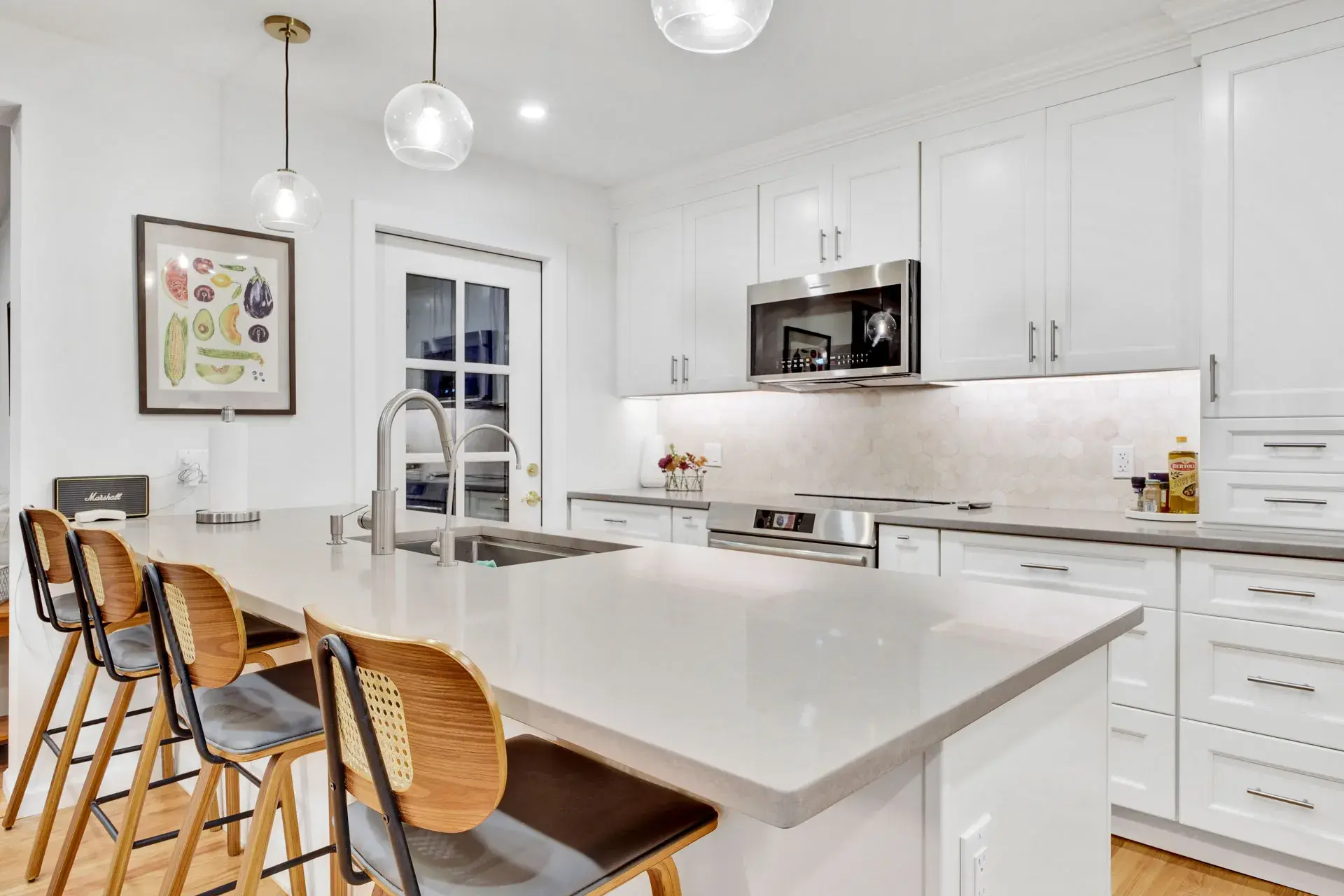
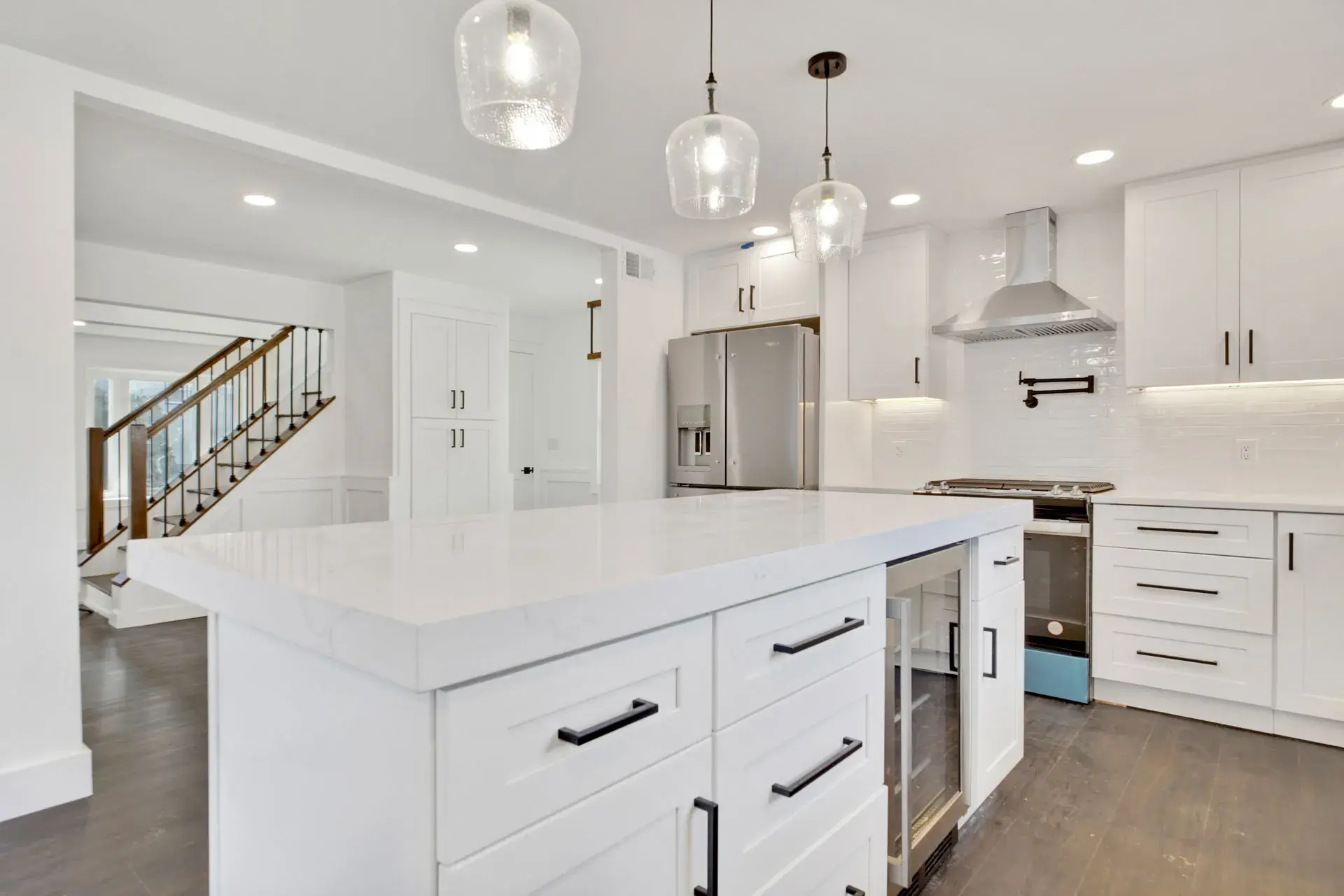
Design choices affect labor and coordination, especially when homeowners consider[minimalist kitchen designs](https://a2zconstructionmgmt.com/home-renovation-blog/minimalist-kitchen-design). Cabinet layout, appliance placement, and lighting plans shape trade sequencing. Early decisions help limit mid-project changes. The team plans the remodeling project to match design goals with build needs.
## **Englewood Kitchen Remodel Reviews and Contractor Trust**
[Online reviews](https://share.google/4QRTTPgF42tqHFN2X) help show how contractors manage schedules, inspections, and job issues. Homeowners should look for patterns tied to permits, communication, and follow-through. An Englewood kitchen remodel involves several trades, so coordination problems often appear in reviews. This helps owners assess risk before hiring.
[Schedule a Free Estimate](https://a2zconstructionmgmt.com/englewood-kitchen-remodel#form-hero)
## Kitchen Renovation Timeline
Timeline planning depends on scope, permits, and inspection order. Projects with structural or utility work require coordination with Englewood departments. Inspections occur at set stages to ensure compliance with code requirements. Delays often come from planning gaps, not labor speed.
Construction follows a set order to avoid rework. The team schedules demolition, rough work, inspections, and finishes in sequence. David Haziza, Owner and Master of Construction, monitors progress and resolves timing issues. Homeowners should expect staged work, not constant activity.
## **How to Choose a Kitchen Remodel Contractor in Englewood**
Contractor selection should focus on licensing, insurance, and permit experience. A kitchen remodel requires steady coordination with inspectors and trades. Homeowners should confirm who is responsible for daily work and who approves changes. Clear roles reduce delays and errors.
Local experience matters for code and inspection standards. An Englewood kitchen remodel benefits from familiarity with local building codes and processes. Reviewing similar project types helps confirm fit. This protects the homeowner during the remodeling project.
## **How to Start Your Englewood Kitchen Renovation**
Starting an Englewood kitchen renovation begins with site review and scope planning. The team reviews existing systems, access, and layout limits before setting the work. This process defines realistic timelines and coordination needs. Homeowners should plan for some disruption during construction.
Project setup includes obtaining permits, scheduling trades, and material planning. The remodel service manages these steps to keep work organized and compliant. Clear setup reduces changes once work begins. This supports a controlled kitchen remodel from planning through completion.
## Englewood kitchen remodel FAQs
What is the 30% rule in remodeling?
The 30% rule suggests keeping renovation spending under 30% of a home’s value. For a $500,000 home, this sets a rough budget cap of $150,000. Homeowners use it as a planning reference, not a hard limit. Actual scope, permits, and system upgrades often matter more than the percentage.
What is the 60 30 10 rule for kitchens?
The 60/30/10 rule helps guide the balance of design in a kitchen remodel. About 60% of the space uses a main color or finish, 30% uses a secondary tone, and 10% is reserved for accents. This approach supports visual balance without overcomplicating finish choices. Contractors apply it during cabinet, surface, and lighting selection.
How much does it cost to hire someone to remodel a kitchen?
In New Jersey, full renovations often range from $150 to $400 per square foot. A 2,000 square foot home can fall between $300,000 and $500,000 or more. Costs rise with structural changes, permit requirements, labor rates, and material selections. Kitchen-only projects vary based on layout changes and system work.
##### CONTACT US
## SCHEDULE A FREE CONSULTATION
We are the #1 Home Remodeler in Bergen County, NJ. **Backed By Over 30 Years of Experience.** Register on the form to the right and we will reach out to schedule having a look at your project.
[Discover our history](https://a2zconstructionmgmt.com/a2z-construction-team)
[Call US](tel:2017075648)
[](https://a2zconstructionmgmt.com/)
[201-707-5648](tel:+12017075648) [info@a2zconstructionmgmt.com](mailto:info@a2zconstructionmgmt.com) 120 County Rd, Tenafly, NJ 07670
**License:** 13VH09585600 [Book a Free Estimate](https://a2zconstructionmgmt.com/contractors-near-me-free-estimates)
###### Services
- [Kitchen Remodeling](https://a2zconstructionmgmt.com/kitchen-remodeling-nj)
- [Bathroom Remodeling](https://a2zconstructionmgmt.com/bathroom-remodeling-nj)
- [Basement Remodeling](https://a2zconstructionmgmt.com/basement-remodel-nj)
- [Home Additions](https://a2zconstructionmgmt.com/home-addition-contractor-in-bergen-county-nj)
- [Commercial Construction](https://a2zconstructionmgmt.com/commercial-general-contractors-in-nj)
- [Roofing](https://a2zconstructionmgmt.com/roofers-bergen-county-nj)
- [Siding](https://a2zconstructionmgmt.com/siding-contractor-bergen-county)
- [Flooring](https://a2zconstructionmgmt.com/flooring-contractors-nj)
###### Service Areas
- [Bergen County](https://a2zconstructionmgmt.com/home-remodeling-bergen-county)
- [Tenafly](https://a2zconstructionmgmt.com/home-improvement-contractor-in-tenafly-nj)
- [Paramus](https://a2zconstructionmgmt.com/general-contractor-paramus-nj)
- [Teaneck](https://a2zconstructionmgmt.com/general-contractor-teaneck-nj)
- [Englewood](https://a2zconstructionmgmt.com/home-remodeling-contractor-englewood-nj)
- [Fort Lee](https://a2zconstructionmgmt.com/home-renovation-contractors-of-fort-lee-nj)
- All Service Areas
###### Guides
- [Home Remodeling Guide](https://a2zconstructionmgmt.com/home-renovation-blog/home-remodeling)
- Cost Guides
- [Master Suite Addition Cost](https://a2zconstructionmgmt.com/home-renovation-blog/master-suite-addition-cost)
- [Cost to Gut & Renovate](https://a2zconstructionmgmt.com/home-renovation-blog/cost-to-gut-and-renovate-a-house-a2z-construction)
- [Blog](https://a2zconstructionmgmt.com/home-renovation-blog)
###### Company
- [About A2Z](https://a2zconstructionmgmt.com/a2z-construction-team)
- [Portfolio](https://a2zconstructionmgmt.com/contractor-portfolio)
- [Financing](https://a2zconstructionmgmt.com/contractor-financing)
- [Free Estimate](https://a2zconstructionmgmt.com/contractors-near-me-free-estimates)
---
Copyright © A2Z Construction Management. All Rights Reserved.
- [Privacy Policy](https://a2zconstructionmgmt.com/privacy-policy)
- Terms of Service
- [Sitemap](https://a2zconstructionmgmt.com/sitemap.xml)
```json
{
"@context" : "https://schema.org",
"@id" : "https://a2zconstructionmgmt.com/#person-david-haziza",
"@type" : "Person",
"jobTitle" : "Owner and Master of Construction",
"knowsAbout" : [ "Home Remodeling", "General Contracting", "New Construction", "Home Additions", "Kitchen Remodeling", "Bathroom Remodeling" ],
"name" : "David Haziza",
"url" : "https://a2zconstructionmgmt.com/home-renovation-bergen-county",
"worksFor" : {
"@id" : "https://a2zconstructionmgmt.com/#organization"
}
}
```
```json
{
"@context" : "https://schema.org",
"@id" : "https://a2zconstructionmgmt.com/#website",
"@type" : "WebSite",
"inLanguage" : "en-US",
"name" : "A2Z Construction Management",
"potentialAction" : {
"@type" : "SearchAction",
"query-input" : "required name=search_term_string",
"target" : {
"@type" : "EntryPoint",
"urlTemplate" : "https://a2zconstructionmgmt.com/?s={search_term_string}"
}
},
"publisher" : {
"@id" : "https://a2zconstructionmgmt.com/#organization"
},
"url" : "https://a2zconstructionmgmt.com/"
}
```
```json
{
"@context" : "https://schema.org",
"@id" : "https://a2zconstructionmgmt.com/#organization",
"@type" : [ "LocalBusiness", "HomeAndConstructionBusiness" ],
"additionalProperty" : {
"@type" : "PropertyValue",
"name" : "NJ Contractor License",
"value" : "13VH09585600"
},
"address" : {
"@type" : "PostalAddress",
"addressCountry" : "US",
"addressLocality" : "Tenafly",
"addressRegion" : "NJ",
"postalCode" : "07670",
"streetAddress" : "120 County Rd"
},
"areaServed" : [ {
"@type" : "Place",
"name" : "Bergen County"
}, {
"@type" : "Place",
"name" : "North Jersey"
}, {
"@type" : "Place",
"name" : "Tenafly"
}, {
"@type" : "Place",
"name" : "Teaneck"
}, {
"@type" : "Place",
"name" : "Paramus"
}, {
"@type" : "Place",
"name" : "Allendale"
}, {
"@type" : "Place",
"name" : "Englewood"
}, {
"@type" : "Place",
"name" : "Englewood Cliffs"
}, {
"@type" : "Place",
"name" : "Fort Lee"
}, {
"@type" : "Place",
"name" : "Edgewater"
}, {
"@type" : "Place",
"name" : "Ridgewood"
}, {
"@type" : "Place",
"name" : "Upper Saddle River"
}, {
"@type" : "Place",
"name" : "Closter"
}, {
"@type" : "Place",
"name" : "Fair Lawn"
}, {
"@type" : "Place",
"name" : "Bergenfield"
}, {
"@type" : "Place",
"name" : "Cliffside Park"
}, {
"@type" : "Place",
"name" : "Hillsdale"
}, {
"@type" : "Place",
"name" : "Palisades Park"
}, {
"@type" : "Place",
"name" : "Park Ridge"
}, {
"@type" : "Place",
"name" : "Fairview"
}, {
"@type" : "Place",
"name" : "Alpine"
}, {
"@type" : "Place",
"name" : "Montvale"
} ],
"contactPoint" : {
"@type" : "ContactPoint",
"availableLanguage" : "English",
"contactType" : "Customer Service",
"telephone" : "+1-201-707-5648"
},
"description" : "A2Z Construction Management, led by Master of Construction David Haziza, delivers full-service residential and commercial construction across Bergen County and North Jersey with over 30 years of experience.",
"email" : "info@a2zconstructionmgmt.com",
"geo" : {
"@type" : "GeoCoordinates",
"latitude" : 40.9282578,
"longitude" : -73.9614689
},
"image" : "https://a2zconstructionmgmt.com/hubfs/_MIR8034-HDR_60%25.jpg",
"logo" : "https://a2zconstructionmgmt.com/hubfs/Recurso%201.png",
"name" : "A2Z Construction Management",
"openingHoursSpecification" : {
"@type" : "OpeningHoursSpecification",
"closes" : "17:00",
"dayOfWeek" : [ "http://schema.org/Monday", "http://schema.org/Tuesday", "http://schema.org/Wednesday", "http://schema.org/Thursday", "http://schema.org/Friday" ],
"opens" : "09:00"
},
"priceRange" : "$$$",
"sameAs" : [ "https://www.facebook.com/a2zconstructionmgmt", "https://www.instagram.com/a2zconstructionmgmt", "https://www.linkedin.com/company/a2z-construction-mgmt" ],
"telephone" : "+1-201-707-5648",
"url" : "https://a2zconstructionmgmt.com/"
}
```
```json
{
"@context" : "https://schema.org",
"@id" : "https://a2zconstructionmgmt.com/englewood-kitchen-remodel/#service",
"@type" : "Service",
"areaServed" : [ {
"@type" : "Place",
"name" : "Englewood"
}, {
"@type" : "Place",
"name" : "Bergen County"
} ],
"availableChannel" : {
"@type" : "ServiceChannel",
"availableLanguage" : [ "en" ],
"servicePhone" : {
"@type" : "ContactPoint",
"contactType" : "Customer Service",
"telephone" : "+1-201-707-5648"
},
"serviceUrl" : "https://a2zconstructionmgmt.com/englewood-kitchen-remodel/"
},
"category" : "GeneralContractor",
"description" : "A2Z Construction offers complete kitchen remodeling services for homeowners in Englewood, providing a single point of contact for design, permits, trades, inspections, and construction under the oversight of Owner and Master of Construction David Haziza.",
"name" : "Englewood Kitchen Remodel and Renovation Experts",
"offers" : {
"@type" : "Offer",
"priceSpecification" : {
"@type" : "PriceSpecification",
"description" : "$25,000 to $75,000+",
"priceCurrency" : "USD"
}
},
"potentialAction" : {
"@type" : "ScheduleAction",
"name" : "Get a Free Quote",
"target" : "https://a2zconstructionmgmt.com/englewood-kitchen-remodel/"
},
"provider" : {
"@id" : "https://a2zconstructionmgmt.com/#organization"
},
"serviceType" : "Kitchen Remodeling",
"url" : "https://a2zconstructionmgmt.com/englewood-kitchen-remodel/"
}
```
```json
{
"@context" : "https://schema.org",
"@type" : [ "LocalBusiness", "HomeAndConstructionBusiness" ],
"address" : {
"@type" : "PostalAddress",
"addressCountry" : "US",
"addressLocality" : "Tenafly",
"addressRegion" : "NJ",
"postalCode" : "07670",
"streetAddress" : "120 County Rd"
},
"contactPoint" : {
"@type" : "ContactPoint",
"availableLanguage" : [ "English" ],
"contactType" : "customer service",
"telephone" : "+1-201-707-5648"
},
"description" : "A2Z Construction Management provides full-service residential and commercial construction solutions across New Jersey.",
"image" : "https://a2zconstructionmgmt.com/hubfs/_MIR8034-HDR_60%25.jpg",
"logo" : "https://a2zconstructionmgmt.com/hubfs/Recurso%201.png",
"name" : "A2Z Construction Management",
"openingHoursSpecification" : [ {
"@type" : "OpeningHoursSpecification",
"closes" : "17:00",
"dayOfWeek" : [ "Monday", "Tuesday", "Wednesday", "Thursday", "Friday" ],
"opens" : "09:00"
} ],
"priceRange" : "$$",
"sameAs" : [ "https://www.facebook.com/a2zconstructionmgmt", "https://www.instagram.com/a2zconstructionmgmt", "https://www.linkedin.com/company/a2z-construction-mgmt" ],
"telephone" : "+1-201-707-5648",
"url" : "https://a2zconstructionmgmt.com/"
}
```