


A split level remodel updates a multi-level home built between the 1950s and 1980s, fixing the layout problems that come with staggered floors and short stair flights between them. Most projects in Bergen County run between $50,000 and $150,000, though full structural rework can push past $200,000.
This guide covers what each scope of work costs, how to handle the layout quirks that make split levels frustrating, and which design moves give you the biggest payoff.
A2Z Construction Management has remodeled split level homes across northern New Jersey for over two decades, and the guidance here reflects what works on real projects, not generic remodeling advice.
Understanding Split-Level Homes
Types of Split-Level Homes
A split level home stacks three or more living areas at half-floor offsets, connected by short flights of stairs instead of a single full staircase. The layout was popular in postwar suburbs because it fit more square footage onto smaller or sloped lots without the cost of a full second story. Five configurations cover almost every split level you'll find in northern New Jersey.
Knowing which type you have matters before any wall comes down. A side split has different structural constraints than a raised ranch, and the cost to open up the main level changes accordingly.
Common Split-Level Remodel Challenges and Fixes
Split-level homes share a recognizable set of problems. Most of them come down to how the original builders prioritized square footage over flow, light, and circulation. Here's what comes up on almost every project, why it happens, and what it costs to fix.
A few of these deserve extra context. Load-bearing walls in split levels often run perpendicular to the staircase, which means opening the main level usually requires a structural engineer's stamp and a steel or LVL beam. In Bergen County, that work needs a permit and inspection, and skipping that step can void your homeowner's insurance and tank your resale value.
David Haziza, Owner and Master of Construction at A2Z, sees roughly half of all split level remodel inquiries underestimate this cost by $15,000 or more.
Lower-level egress is the second issue homeowners miss. New Jersey's residential code requires an egress window in any below-grade bedroom, and adding one means cutting the foundation. Plan for that early, not after framing.
Planning a Successful Renovation
How Much Does a Split-Level Remodel Cost?
A split-level remodel in Bergen County typically costs between $50,000 and $150,000, with full structural projects running to $200,000 or more. The final number depends on whether you're refreshing finishes, opening up the layout, or restructuring the home. The two tables below break down what each tier includes and what individual rooms or work areas cost on their own.
Costs run higher in northern New Jersey and NJ than the national average for two reasons: the cost of living, and most split-level homes are old enough that you'll find surprises behind the walls. Knob-and-tube wiring, asbestos-containing insulation, and undersized electrical panels all add cost once they're uncovered. A2Z builds a contingency of 10 to 15 percent into every quote for this reason.
To get the best estimate, talk to professional contractors like A2Z Construction Management, which specializes in split-level house remodel projects.
How to Budget for a Split-Level Remodel
A clear budget makes the renovation process easier. Follow these steps:
- Decide what's essential first. A new kitchen plus opened-up sightlines beats five smaller upgrades spread across the house.
- Get three quotes from licensed New Jersey contractors. Compare line items, not just totals. The lowest bid often skips structural work or uses cheaper finishes.
- Set aside 15 percent for surprises. Older split levels almost always reveal hidden conditions once demo starts.
Hiring professionals with experience in split-level home renovations ensures better results and helps avoid expensive mistakes.
Key Design Decisions Specific to Split Levels
Most renovation guides tell you to think about flow and natural light. That advice applies to any home. For a split level, four decisions actually matter more than the rest.
- Sightlines between half-levels. Decide which rooms should be visible from each other and which should feel separate. Removing a half-wall between the main level and sunken living room opens both, but it also means you'll see the sofa from the kitchen.
- Railings versus pony walls. Railings preserve light and openness. Pony walls (low solid walls) define rooms and hide clutter. Pick based on which problem matters more in your house.
- Where to widen the staircase. A wider main staircase makes the entry feel like a real foyer. It costs more than a railing swap but changes how the whole house reads.
- Where to gain natural light. Lower levels are usually the darkest. Skylights over the staircase, larger egress windows, or glass doors to the back yard fix this better than added recessed lighting.
How to Make a Split Level House Look Better
Most split-level homes look dated for a few specific reasons: a small or missing entryway, exposed 1970s railings, dark lower levels, and a front facade dominated by a single large window with mismatched siding. Fix those four things, and the house looks 30 years younger without changing the footprint.
Carve Out a Real Entryway
The most common complaint about split-level homes is that the front door opens onto a tiny landing with stairs going up and stairs going down. A real foyer doesn't exist. The fix doesn't require an addition. Most main-level entries have enough wall space to add a built-in bench, hooks, paneling, and a defined floor surface, like tile or stone, that signals where the entry ends and the living space begins.
Replace the Railings or Convert to Pony Walls
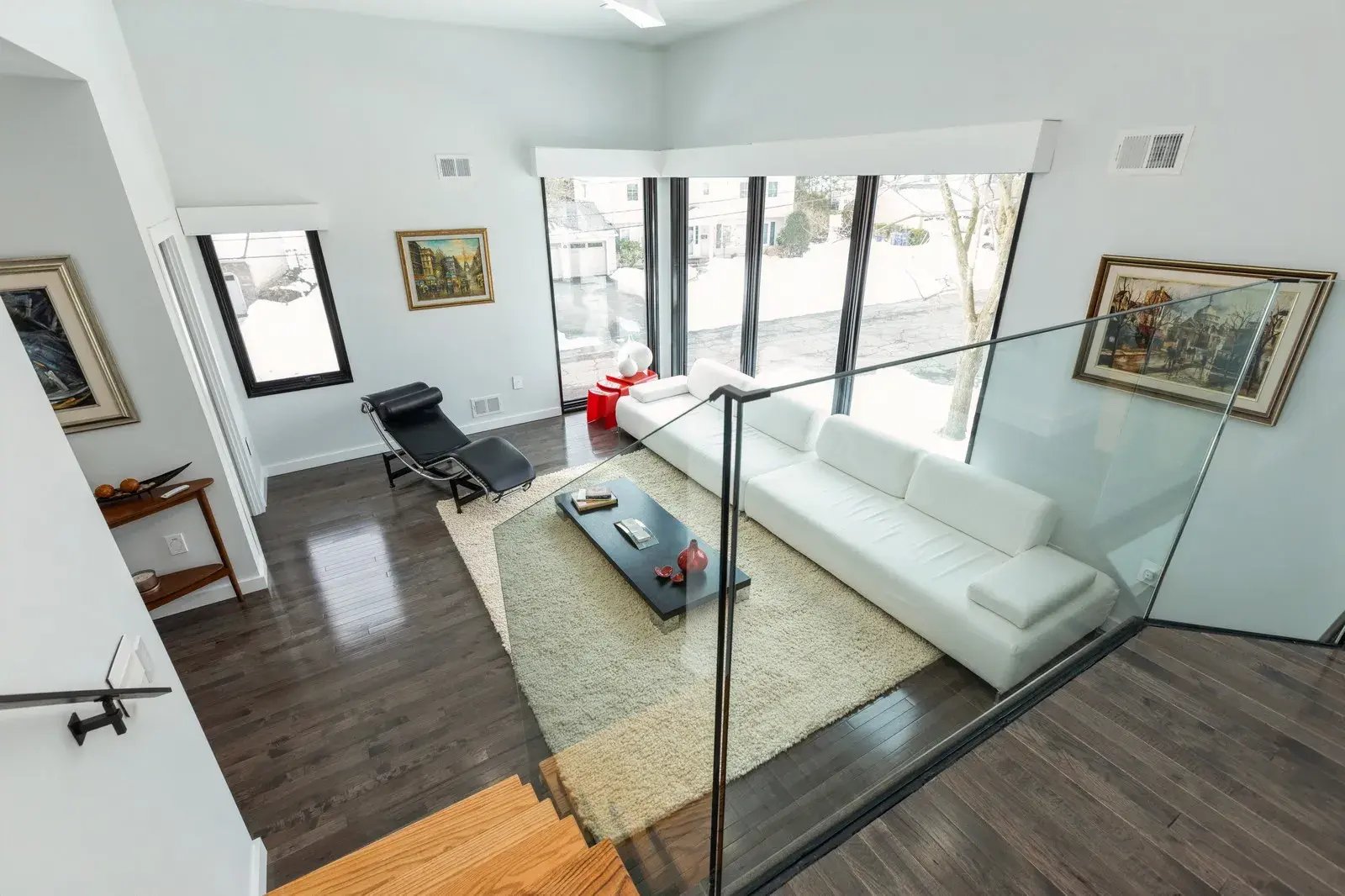
Original split-level railings are usually wood spindles painted white, sometimes with carpet running over the stair edges. Both date the house immediately. Cable rail, glass panels, or modern metal spindles update the look for $5,000 to $15,000, depending on linear footage. If you'd rather close off the sightline between levels, build a pony wall in the same place for a similar cost.
Update the Staircase
The main staircase is the most visible architectural feature on the main level. Replacing carpeted treads with hardwood, painting the risers white, and swapping the railing turns the stairs from an eyesore into a focal point. This is one of the highest-impact, lowest-cost moves in the entire remodel.
Bring Cohesion Across Levels
Because you can see two or three rooms from any single spot in a split-level home, mismatched paint colors, flooring, and fixtures stand out more than they would in a traditional home. Pick one flooring material for all visible levels, one paint palette of two or three colors max, and one finish family for all the metal hardware. The house will read as designed instead of dated.
Modernize the Front Facade
Most split levels have a low-pitched roof, a single large picture window, and two or three different cladding materials on the front. Re-cladding one of those materials, painting the front door a contrasting color, and replacing the original aluminum garage door make the most dramatic difference for the lowest cost. Plan for $10,000 to $25,000 for a mid-range update, more if you re-clad the entire facade.
Add Light Where the Layout Steals It
Split-level blocks their own light. The lower level is usually below grade; the staircase walls block light from the upper windows, and the half-walls between rooms shade everything below them. Solar tubes over the entry stairs, an enlarged egress window in any lower-level bedroom, and glass interior doors all help. None of these moves requires structural changes.
Split-Level Renovation Ideas, How to Modernize
Exterior Upgrades for Split-Level Homes
Split level exteriors have a distinct silhouette: low-pitched roof, asymmetrical front, a dominant main-level window, and usually two or three cladding materials stacked or side by side. That look is the reason split levels read as dated from the curb. The fix isn't to hide the architecture. It's to clean it up.
- New siding and paint on the front facade. Re-cladding one of the existing materials, often the upper level, in a darker or more textured finish modernizes the whole house. Paint the rest in a complementary tone.
- A wider, taller front door. Original split level doors are often 30 inches wide and 80 inches tall. A 36-inch by 96-inch door makes the entry feel intentional.
- Modern garage door. A flat-panel or slatted door with small horizontal windows brings light inside the garage and updates the front profile.
- Updated roofing and trim. A fresh roof and crisp trim around the windows tighten the whole exterior.
- Landscaping that softens the silhouette. Layered plantings hide the foundation line where the lower level meets the ground, which is what makes most split levels look squat from the street.
Reconfiguring the Layout of a Split Level
The interior layout is where split levels need the most help, and where the work gets most expensive. The five moves below are what A2Z does most often on Bergen County split level projects.
- Open the half-wall between the main level and sunken living room. This is the single biggest change for opening up sightlines. Cost runs $5,000 to $15,000 if the wall is non-load-bearing.
- Widen the main staircase opening. A 36-inch staircase feels claustrophobic compared to a 48-inch one. Widening usually requires reframing and cost runs $6,000 to $15,000.
- Convert a railing into a pony wall (or vice versa). This changes how each level reads without moving any structural elements. Budget $3,000 to $8,000.
- Relocate the powder room. Original powder rooms are often at the worst spot, right off the entry landing. Moving it to the lower level or tucking it under the stairs frees up the main floor.
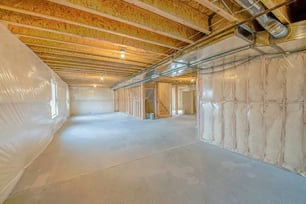
- Finish or refinish the lower level. Most split levels have a partially finished lower level that's underused. A proper rec room, home office, or guest suite adds usable square footage at a fraction of the cost of an addition.
According to David Haziza, the most common mistake homeowners make is removing a wall before confirming it's not load-bearing or part of the home's lateral bracing. In Bergen County, this work requires a structural engineer's review and a permit from the local building department.

Open Floor Plan Strategies for Split Levels
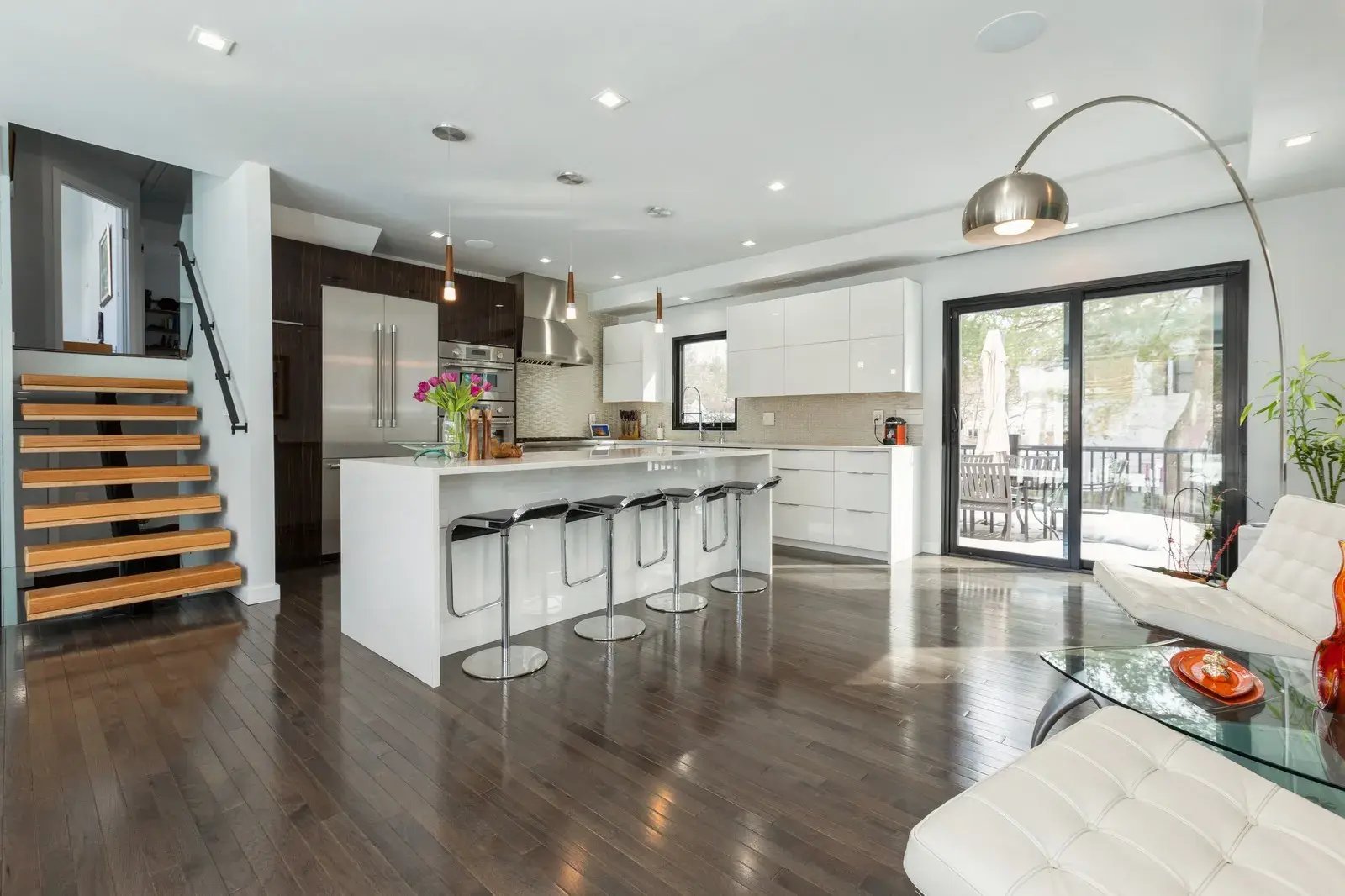
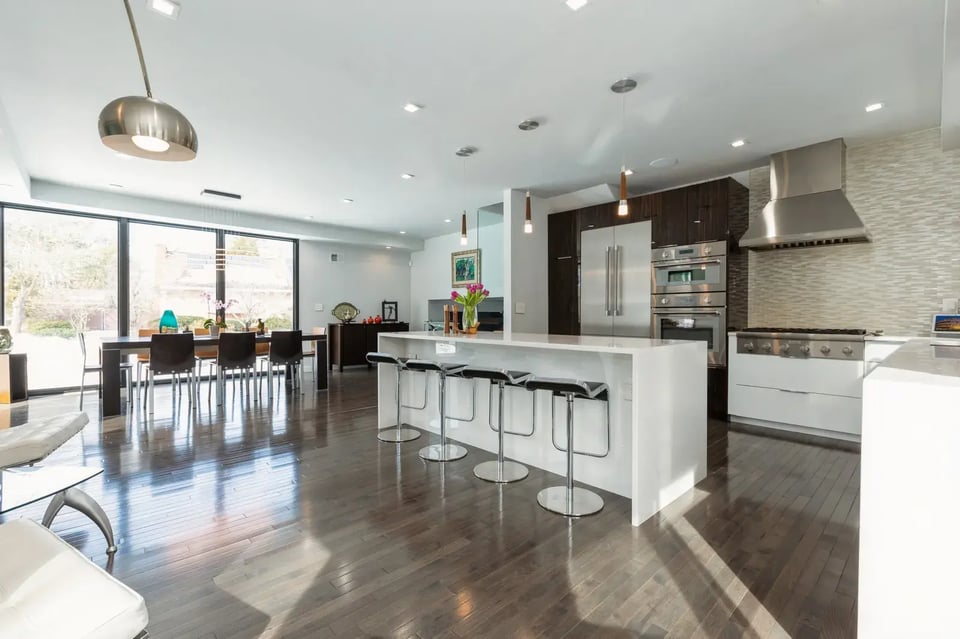
Open floor plans work in split levels, but only with a different approach than in a single-story home. Because the floors are at different elevations, removing every wall doesn't create one big room. It creates a series of stepped zones that need visual cohesion to feel intentional.
- Use one flooring material across all main-level zones. The same hardwood from the entry through the kitchen and living room ties the levels together visually.
- Define zones with rugs and lighting, not walls. A pendant cluster over the dining area and a rug under the living room sofa do the work that walls used to do.
- Keep the kitchen island parallel to the half-wall. Perpendicular layouts feel cramped on the half-step transition.
Kitchen Remodel Ideas for Split-Level Homes
Split-level kitchens are usually small, often 100 to 150 square feet, with a single doorway connecting them to the dining room. Most renovations either expand the kitchen footprint by absorbing part of the dining room or open the wall entirely for a single eat-in space. A typical kitchen remodel in Bergen County for a split-level runs $40,000 to $80,000 for mid-range finishes and $80,000 to $150,000 for high-end work.
Common upgrades include:
- Quartz or quartzite counters
- Shaker or flat-panel cabinets in white, navy, or natural wood
- A peninsula or small island where space allows
- Energy-efficient appliances, often paneled to match cabinetry
- Under-cabinet lighting to compensate for the limited window area
Bathroom Remodel Ideas for Split-Level Homes
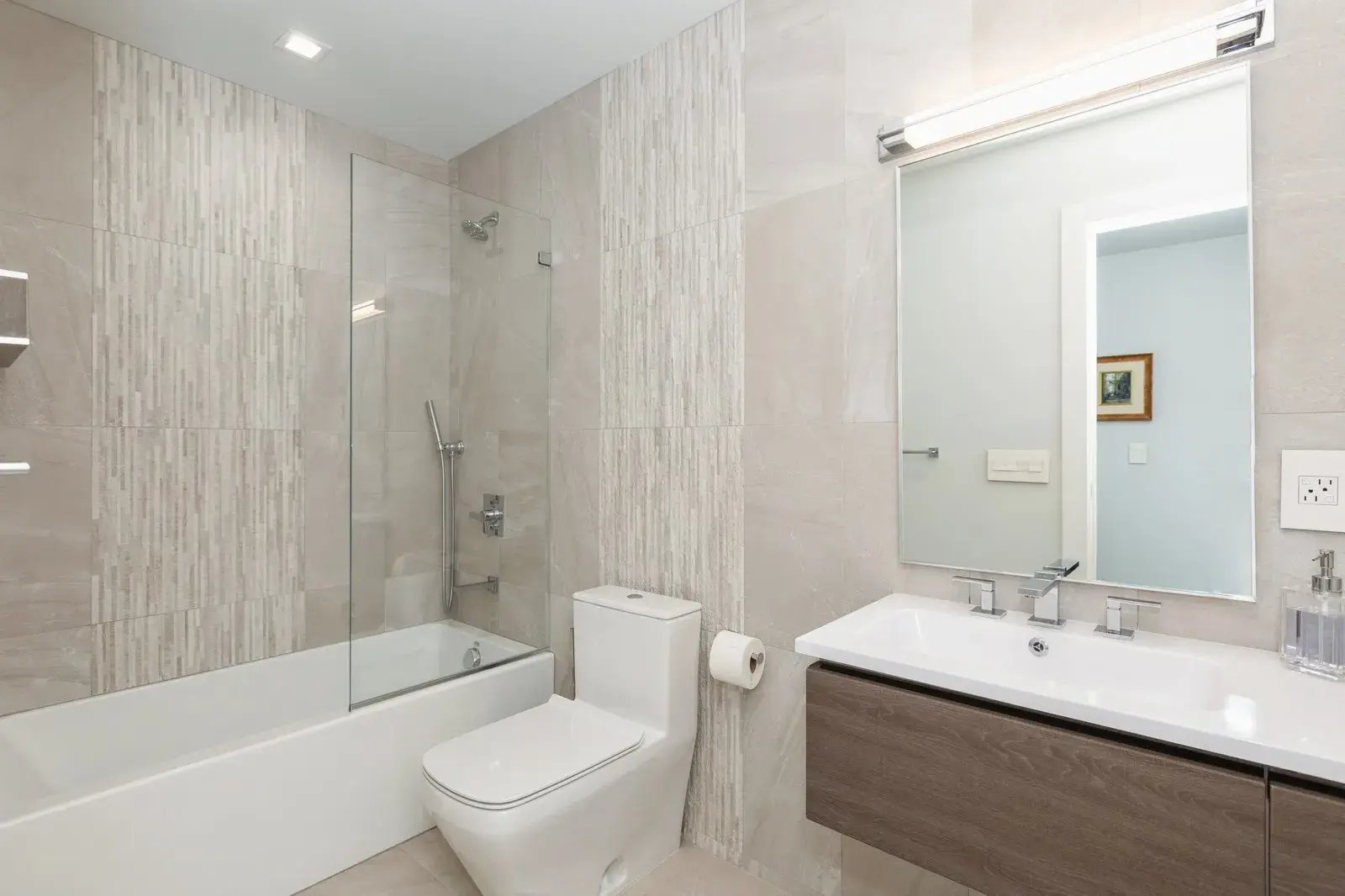
Most split levels have two or three bathrooms: a primary or shared bath on the upper level, a powder room near the entry, and sometimes a bath on the lower level. Each one has different constraints. A full bathroom remodel in Bergen County costs between $20,000 and $40,000 for the upper-level bath and $12,000 to $25,000 for a powder room or basement bath.
Things to plan for:
- Upper-level baths share plumbing walls with bedrooms, so layout changes are limited unless you're willing to rework the wall.
- Lower-level baths need waterproofing and proper ventilation, especially in homes built before 1980.
- Powder rooms can often be relocated to free up better space on the main level.
- Walk-in showers replace tub-shower combos in most modern remodels, though keep at least one tub in the home for resale.
Smart Design & Energy Efficiency
Energy upgrades pair well with any split-level remodel. Energy-efficient windows, LED lighting, and smart thermostats save money over time and qualify for some New Jersey utility rebates. If you're already opening walls or replacing siding, this is the right time to add insulation and upgrade the electrical panel.Split Level Remodel Before and After

Real Project Examples
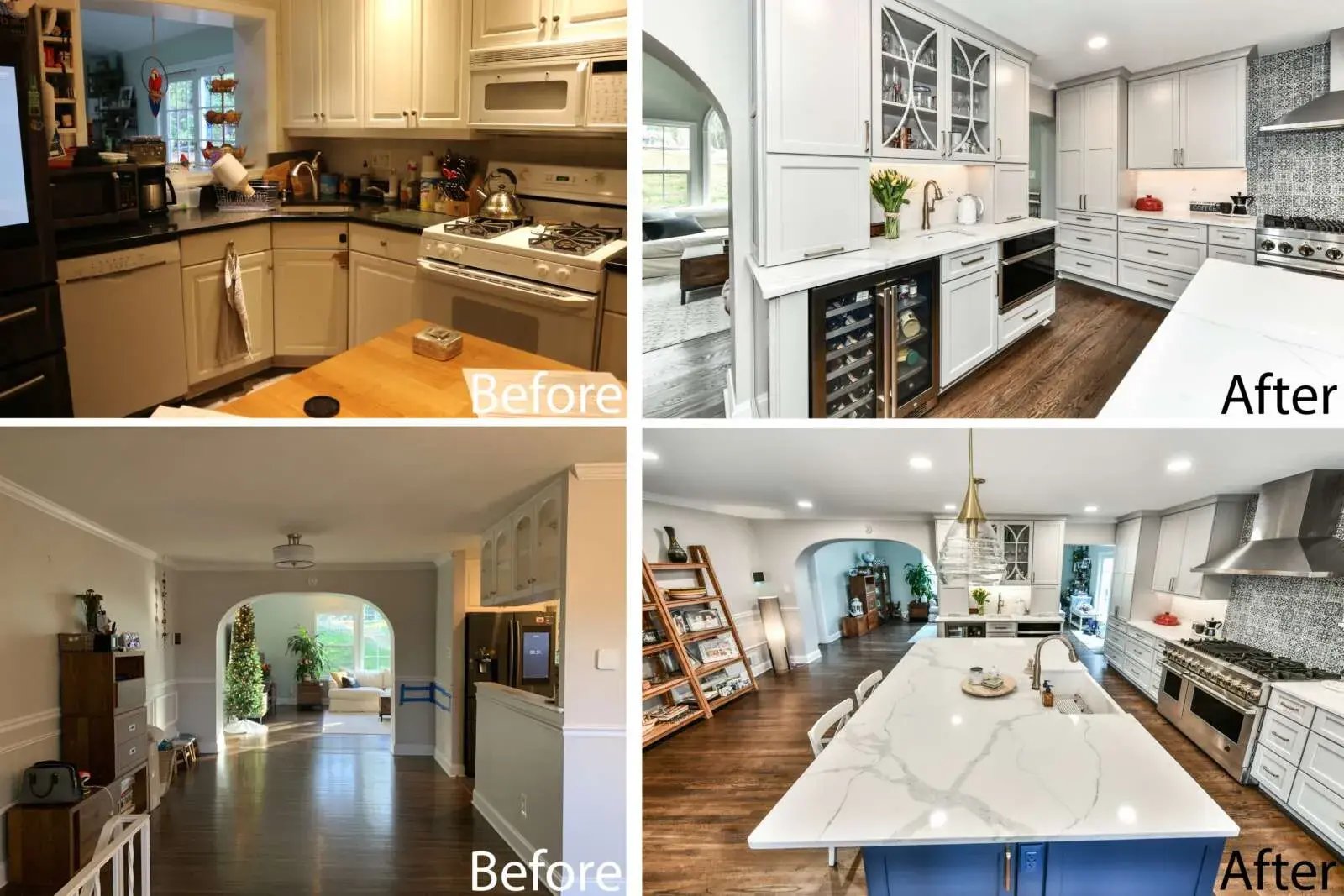
Before-and-after photos tell a remodel story better than any cost table. The most common A2Z split level projects share three improvements:
- Opened-up main levels that connect kitchen, dining, and living areas with a half-wall removal and a refinished staircase.
- Refreshed exteriors that use a darker upper cladding, a brighter front door, and updated garage doors to modernize the silhouette.
- Finished lower levels turned into rec rooms, guest suites, or home offices.
Practical Tips From a Contractor
David Haziza has the following standing advice for anyone starting a split-level remodel:
- Confirm load-bearing walls before demo. Removing the wrong wall can damage the structure and double the project cost.
- Pull permits for structural and electrical work. Bergen County inspectors check for this on resale, and unpermitted work has to be redone or disclosed.
- Plan for HVAC zoning early. Split levels need either a second zone or a mini-split for the lower level. Adding it later means cutting drywall twice.
- Stage the work in two phases if budget is tight. Start with structural and exterior changes, then come back for kitchen and bath finishes once the layout is set.
- Order long-lead items the day you sign the contract. Cabinets, windows, and tile often run six to ten weeks. Waiting puts the project behind before it starts.
Conclusion & Next Steps
A split-level remodel costs more than a typical home renovation because of the structural work the layout often needs, but the payoff is a house that feels and functions like a modern home without losing the original square footage.
The biggest wins come from opening up the main level, modernizing the staircase and railings, and finishing the lower level. For an estimate on your project, contact A2Z Construction Management for a no-obligation site visit.