


A staircase remodel typically costs $300 to $8,000 for most projects, from refinishing and new railings to a full replacement in the same footprint. A floating staircase runs $15,000 to $30,000 or more. Moving a staircase to a new spot in the house costs $50,000 to $100,000 or more.
A banister renovation alone costs $800 to $8,000, depending on whether you refinish the railing, replace the handrail and balusters, or install a custom metal or glass system. This guide breaks down cost by scope, part, and step. It also covers repairs, building codes, permits, and who manages the work.
Key Takeaways
- Scope sets the price. Refinishing starts near $300, a full replacement runs $3,500 to $8,000, floating stairs run $15,000 to $30,000+, and moving stairs runs $50,000 to $100,000+.
- Material and layout choices, including wood treads, metal balusters, glass railing, and floating or curved designs, change both cost and the amount of structural work.
- Codes set limits for riser height, tread depth, railing height, and guard openings. Structural work that misses them fails inspection, and permits and inspections usually apply.
- On complex builds, labor often matches material cost.
- A licensed general contractor sequences the trades and handles permits and inspections.
How Much Does It Cost to Remodel Stairs?
There is no single average cost to remodel a staircase, because refinishing and a floating staircase installation are different projects. They involve different trades, permit processes, and timelines. The table shows what each scope includes and what it typically costs.
Prices vary by region. High-cost markets such as New Jersey and New York often run 15 to 25% above national averages because of higher labor rates, permit costs, and older housing stock. Homes in lower-cost areas often price toward the low end of each range.
Painting, Refinishing, and Minor Updates
Painting or refinishing existing stairs is the lowest-cost option. Professional painting of a standard residential staircase typically runs $300 to $600, depending on step count and whether the handrail and balusters are included.
Refinishing hardwood runs $4.50 to $8 per square foot, including labor. Adding a stair runner costs $500 to $2,000, depending on the material and the number of steps. These updates improve appearance and usually don’t need a permit.
How Much Does It Cost to Replace a Stair Banister?
Replacing individual parts sits in the mid-range of stair costs. New balusters run $1,200 to $1,600. Replacing treads and risers averages $1,800 to $2,500 for parts and labor, and handrail replacement alone averages around $900. Skilled carpenters typically charge $50 to $100 per hour.
The cost to replace a banister and spindles depends on the material and layout. A basic wood refinish costs far less than wrought iron or fabricated metal. A straight wood handrail replacement on a standard staircase runs $800 to $1,500, including the newel post if it stays in place.
Switching from wood to wrought-iron balusters, often called spindles, on a 14-step staircase costs $1,500 to $3,000. The price depends on the baluster design and whether the newel posts need replacing.
The cost to redo a staircase railing with a full custom metal system, including newel posts and a continuous handrail, runs $3,000 to $8,000 or more for high-end designs.
Tread and riser replacement typically costs $125 to $250 per step for materials and labor, depending on wood species and local labor rates. On a 14-step staircase, that works out to about $1,750 to $3,500. If the subfloor or stringer needs repair, expect added cost.
New Staircase Cost: Full Replacement and Floating Stairs
A full staircase replacement within the existing footprint averages $3,500 to $8,000 for a standard layout, depending on materials and step count. A floating staircase typically costs $15,000 to $30,000 or more, depending on the tread material, railing system, and structural work.
Demolition and disposal of the old stairs typically adds $500 to $1,500. On complex builds, labor can match material cost.
Knowing how much to redo stairs from scratch takes bids from licensed contractors. The total varies by location, design, and materials.
How Much Does Stair Repair Cost?
Stair repair cost stays far below remodel cost when the damage is limited. Squeaky treads, loose balusters, and a wobbly newel post are small jobs a carpenter can price by the hour, usually $50 to $100. Replacing a single tread and riser falls near the per-step range of $125 to $250, and a new newel post runs $200 to $600.
Damage to a stringer or the framing under the stairs is a structural repair. It needs an inspection before anyone can price it, and it adds cost on top of the per-step figures.
When damage runs through the stringers, the framing, or more than a few treads, repair stops making sense. The cost to rebuild stairs then follows the full replacement range of $3,500 to $8,000 for a standard layout.
How Much Does It Cost to Move a Staircase in a House?
Moving a staircase from one part of the floor plan to another is a different category of project. It is not an upgrade to your existing stairs. It is a structural renovation.
The floor framing is opened, modified, and re-supported. The old stair opening is closed in with new subfloor, framing, and finish flooring. A new opening is framed where the stairs will land, which affects the ceiling below and the framing above.
Electrical, HVAC, and plumbing may need rerouting, depending on what runs through the affected areas. The work requires a structural engineer, architectural drawings, a building permit, and inspections at several stages.
The cost to move stairs in a house typically runs $50,000 to $100,000 or more, depending on what else must change to tie the project together. Foyer floor repairs, adjacent wall work, ceiling repairs below, and finish materials all add to the total. Projects with heavy structural work or high-end finishes can exceed this range.
If you want to change how your stairs look rather than where they sit, a cosmetic update or a railing replacement delivers most of the visual impact at a fraction of the cost.
How to Lower Stair Remodel Costs
- Keep the staircase in its current footprint. Relocation is the biggest cost driver.
- Refinish or paint treads that are structurally sound instead of replacing them.
- Update the railing first. New balusters and a new handrail drive much of the visual change.
- Schedule stair work alongside other flooring or renovation work so the trades overlap.
- Compare bids from licensed contractors using the same written scope.
What a Staircase Remodel Actually Involves
The Main Parts of a Staircase
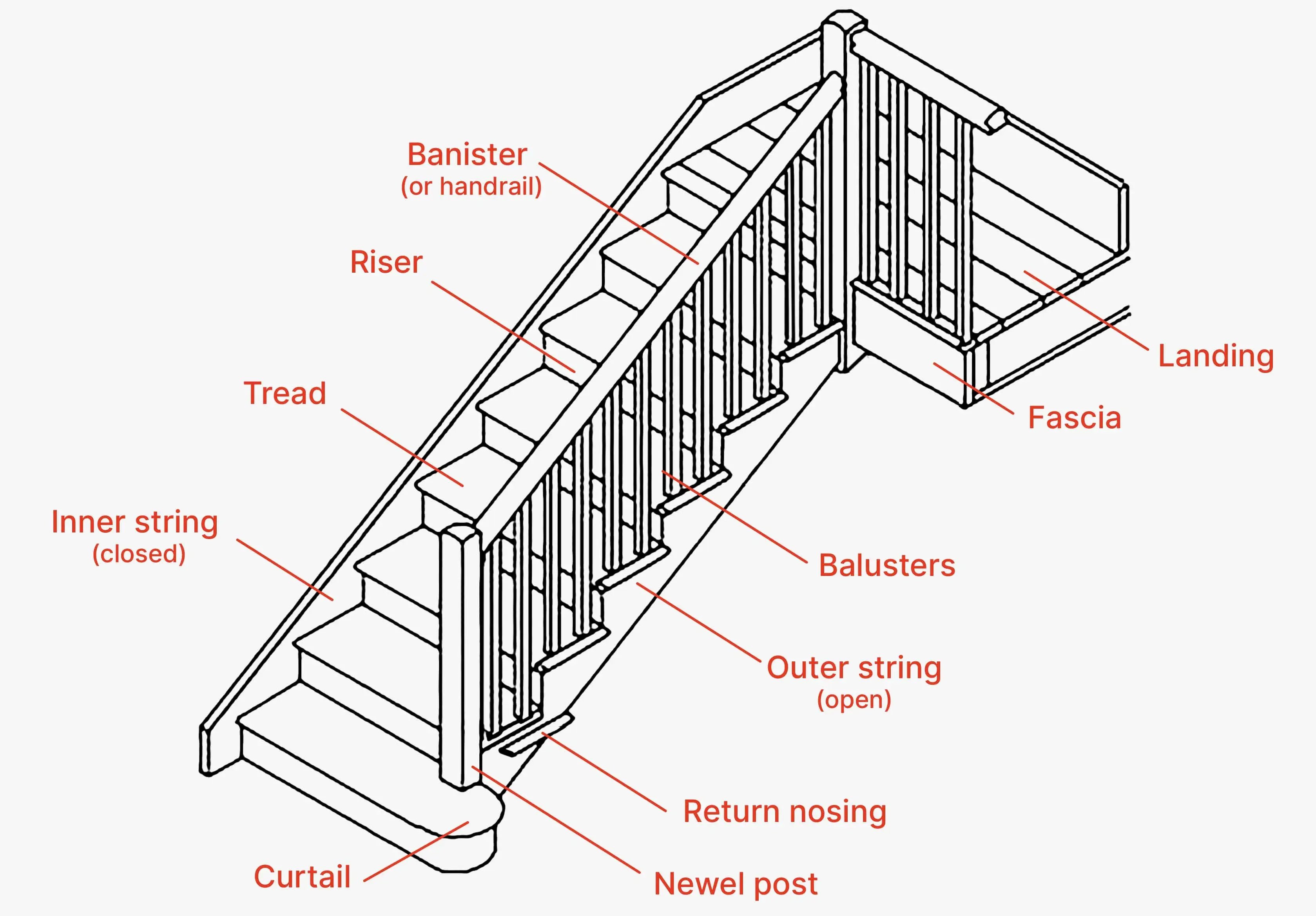
Each part of the staircase affects how the staircase looks and works. The stair tread is the flat surface you step on. Stair risers are the vertical panels between each step. The stair railing runs along the open side for safety, supported by balusters and anchored by newel posts at the top, bottom, and at any turn. Stair nosing is the front edge of each tread. It improves grip and makes each step easier to see.
Cosmetic Updates vs. Structural Changes
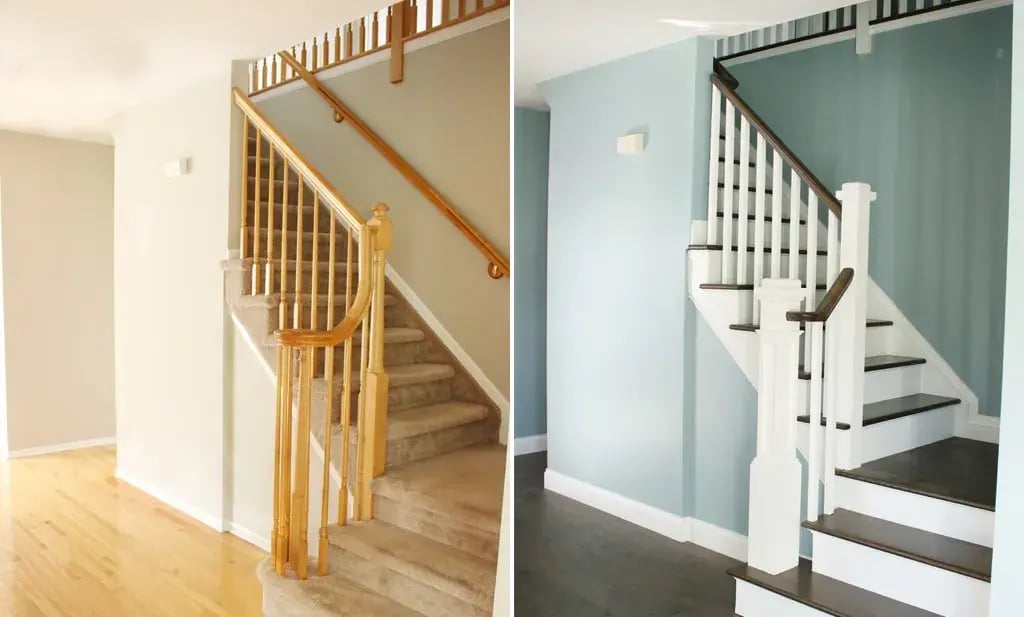
Cosmetic updates include painting, staining, adding a stair runner, or replacing balusters. These changes affect the look without touching load-bearing parts.
Structural changes involve replacing treads and risers, modifying the railing, or changing the staircase layout. This work almost always requires permits, inspections, and a licensed contractor.
A cosmetic update example:
A structural change example: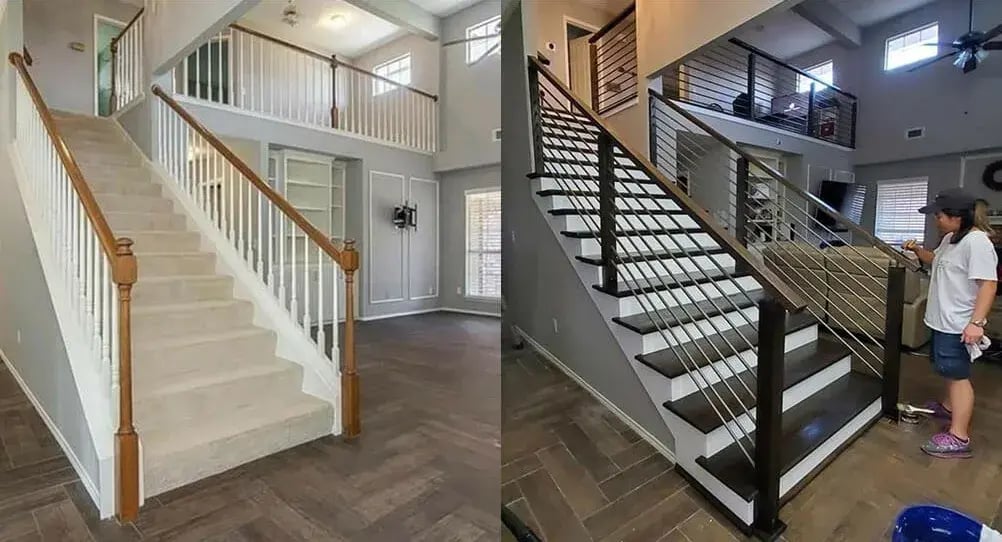
DIY vs. Hiring a Staircase Remodel Contractor
Painting or adding a runner are tasks many homeowners can do themselves. Doing the work yourself saves the labor portion, which for painting is the difference between paying for materials and paying a professional $300 to $600.
Structural work carries real risk. Improper tread depth, low railing height, or wide baluster gaps can fail inspection and create safety hazards. On structural jobs, DIY savings rarely outweigh the cost of a failed inspection or a redo.
A licensed contractor knows the code requirements and manages the tradespeople involved. If you haven’t hired one before, this guide on how to find a contractor for a remodeling project is a useful starting point.
Staircase Design Ideas and Material Options
Choosing staircase design ideas early helps you match your budget to what your space can support. If the staircase is part of a broader project, knowing where to start when remodeling your home helps you sequence the work correctly.
Configurations: Straight, L-Shaped, Curved, and Floating
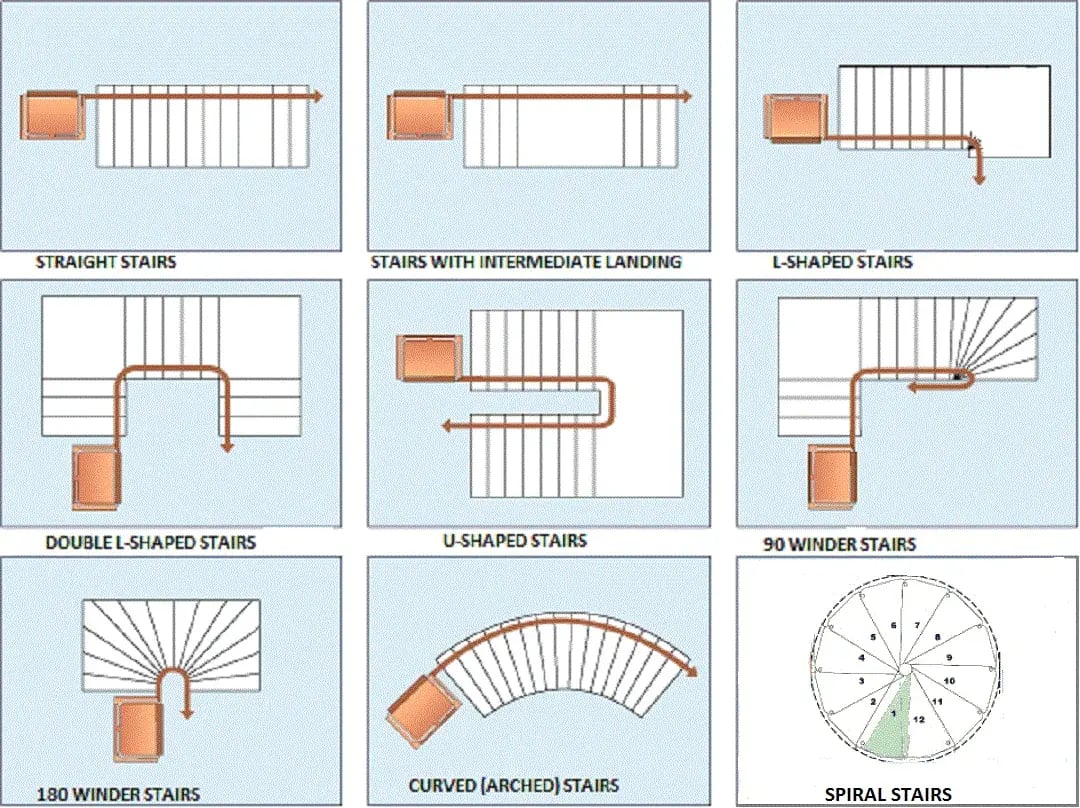
The shape of your staircase depends on your floor plan and available space. Straight stairs are the most common and the least expensive to update. L-shaped and U-shaped stairs fit tighter spaces and include a landing at the turn.
In homes with limited square footage, small house renovations often prioritize these configurations or spiral staircases to preserve usable floor area.
A curved staircase needs custom work and suits larger entryways. Floating stairs fit well in open-plan homes. Spiral staircases save space but are less practical for daily use.
Wood, Metal, Glass, and Concrete: 2026 Trends
Wood is still the top choice for treads and risers. White oak and walnut are popular, and sustainably sourced wood is increasingly common among homeowners focused on eco-friendly home remodeling.
Black metal balusters have replaced wood spindles in many modern stair updates. Glass railing systems open up a space and suit clean, current styles. Concrete treads are durable but cost more in labor. Mixed materials are common, with wood treads paired with black metal or glass railing.
Staircase Remodel Before and After: What Changes Most
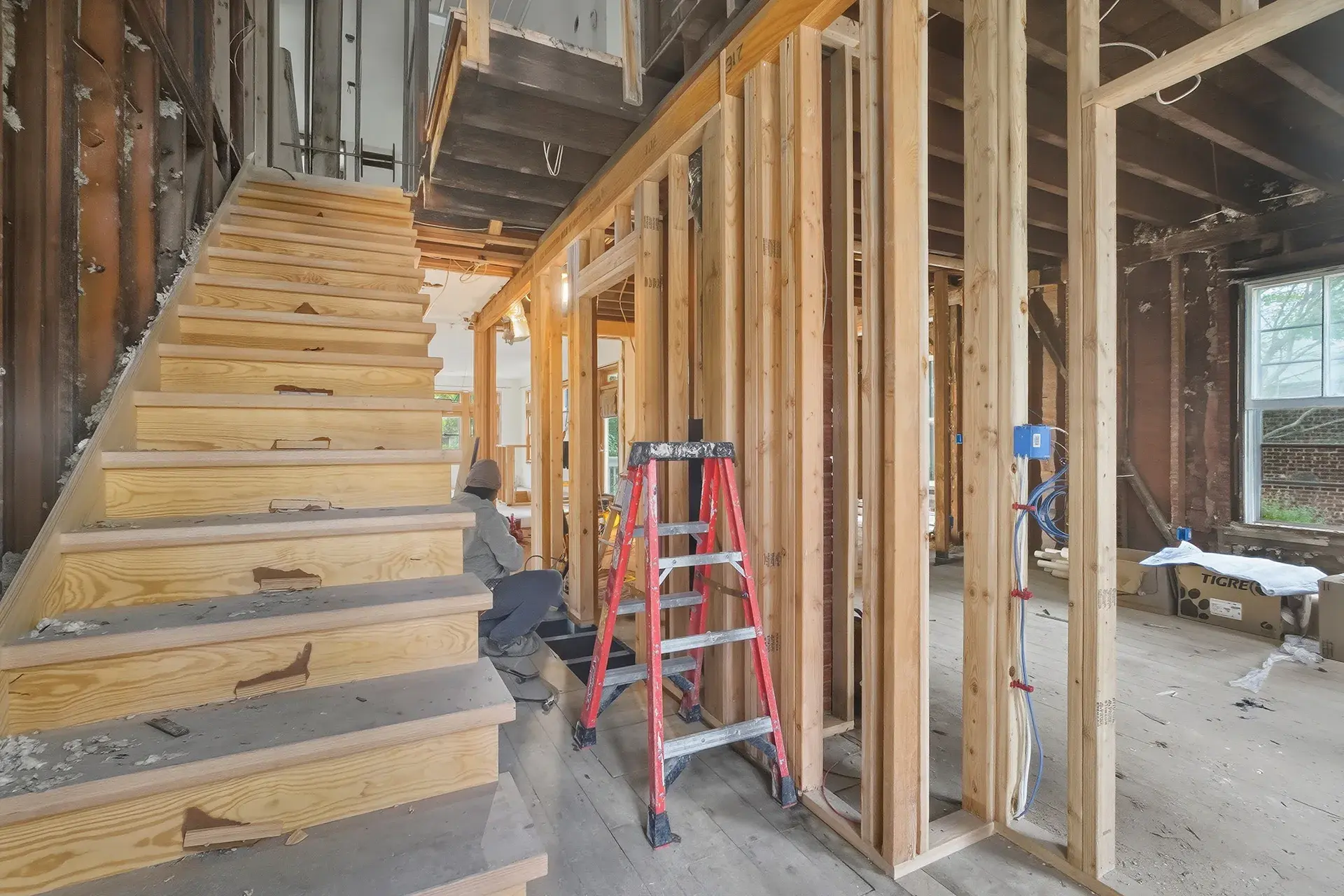
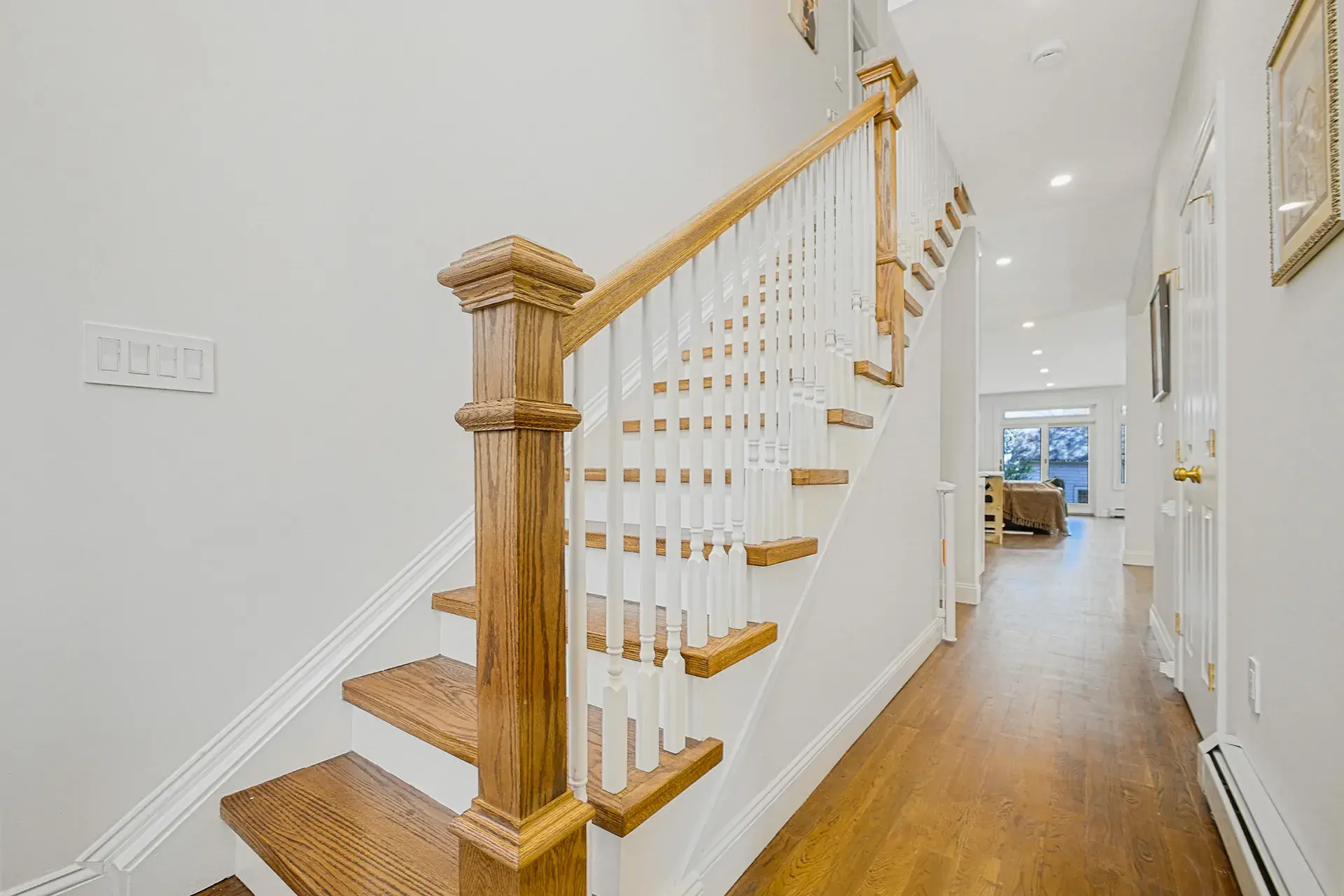
The biggest visual changes come from new materials and an updated railing system. Replacing carpet with wood treads, switching to metal balusters, or opening closed risers changes how the whole staircase looks. A glass railing or open-riser design also changes how light moves through the space.
Building Codes, Safety, and Permits
What Is the 17/18 Rule for Stairs?
The 17/18 rule is a comfort guideline, not a code requirement. It says one riser plus one tread should measure 17 to 18 inches. A 7-inch riser with a 10.5-inch tread totals 17.5 inches and feels natural to climb.
Building codes set their own limits. The International Residential Code (IRC) caps riser height at 7¾ inches and sets a minimum tread depth of 10 inches. Within one flight, riser heights and tread depths can vary by no more than ⅜ inch. Any remodel that changes step dimensions must meet these limits.
Railing Height and Baluster Spacing Requirements
Handrails must sit 34 to 38 inches above the stair nosings. Under the IRC, a handrail is required on at least one side of any flight with four or more risers.
Guard openings must be small enough that a 4-inch sphere cannot pass through. On the open side of a stair, the IRC allows up to 4⅜ inches, so confirm the limit with your local building department. The rule protects young children.
These limits also apply when you switch from wood balusters to cable or glass panels.
Permits and Inspections for Stair Projects
Structural staircase work usually requires a building permit, and cosmetic work like painting does not. Most jurisdictions base their residential codes on the IRC and add local amendments, so rules vary by city and county.
A local building official inspects permitted work to confirm it meets code. Skipping a permit on structural work can create problems during a home sale and put liability on the homeowner.
Does a Staircase Remodel Add Home Value?
Whether a stair upgrade adds resale value depends on what you change and why.
Cosmetic updates, such as refinishing treads, replacing balusters, and updating the railing, improve how buyers perceive the entry and main living area. Buyers see the staircase as soon as they walk in. A dated or worn staircase can color their view of the rest of the home, even when the rooms are well finished.
Updating a staircase for $2,000 to $3,500 makes sense in a home that shows well everywhere else.
Structural changes are different. Replacing the entire staircase or converting to a floating design improves looks but carries a weaker return in most markets. A high-end floating staircase rarely comes back dollar for dollar at resale. These projects make sense when the home’s price point, finish level, and buyer pool justify the cost.
Relocating a staircase almost never delivers a positive return on its own. Buyers who never saw the original layout cannot see the improvement, and the cost of $50,000 to $100,000 or more is rarely recovered in the sale price. This project is usually driven by how you want to live in the space, not by resale math.
The most reliable return comes from keeping stairs safe, code-compliant, and consistent with the rest of the home’s finish level.
How a Staircase Remodel Contractor Manages the Work
Project Sequencing, Timeline, and What to Expect
A stair project follows a set order. Demolition comes first, then structural work if needed. After that come finish carpentry, tread and riser installation, railing work, and painting or staining. A mid-range remodel on a standard home staircase takes one to two weeks.
Larger projects, such as installing a floating staircase or converting to a curved staircase, involve more trades and take longer. A licensed general contractor oversees each phase to keep the work on schedule, code-compliant, and coordinated with other renovation work in the home.
Permit review speed varies by municipality, and older homes often reveal hidden framing, electrical, or plumbing problems once floors and walls open up. Both can extend the schedule.
A general contractor handles most staircase projects, but some require additional professionals before construction begins.
A structural engineer is required when the project changes the staircase’s load path, relocates it, converts from a closed stringer to open treads, or installs floating stairs. The engineer assesses whether the floor framing can support the new design and produces the drawings the building department requires for permit approval. A structural engineering assessment typically costs $300 to $800 for a residential staircase project.
An architect or designer becomes necessary when the project involves layout changes that affect the floor plan, entry, or adjacent rooms. This is common when a homeowner wants to move a staircase to a different part of the foyer or shift the stair opening. Architectural drawings for a staircase relocation typically run $150 to $300 per hour, and the design phase alone can take several weeks before a permit can be submitted.
If your project stays within its current footprint, replacing treads, balusters, and railings without touching the structure, you generally do not need either professional. Your GC or a licensed finish carpenter can handle it directly.
Frequently Asked Questions About Staircase Remodels
How much does a staircase remodel cost?
Most projects run $300 to $8,000, covering refinishing, partial component updates, and full replacement in the same footprint. Floating staircases run $15,000 to $30,000 or more, and moving a staircase runs $50,000 to $100,000 or more.
Do I need a permit to remodel my stairs?
Cosmetic updates like painting, staining, or adding a stair runner typically don’t require a permit. Work that changes the structure, alters railing systems, or modifies tread and riser dimensions does. Check with your local building department before starting structural work.
How long does a staircase remodel take?
Cosmetic updates take one to two days. A mid-range remodel replacing treads, risers, and balusters on a standard home staircase typically takes one to two weeks. Full replacements and floating staircase installations run longer depending on structural work.
Can I remodel my stairs without replacing the entire staircase?
Yes. Replacing balusters, refinishing treads, adding a stair runner, or updating newel posts can change the look of existing stairs without touching the structure. These partial updates are often the most cost-effective approach.
What is the safest material for stair treads?
Wood with a matte or satin finish offers good grip and is easy to maintain. Carpet provides the most traction and suits households with young children or older adults. Polished stone and smooth painted surfaces are more slippery and usually need non-slip nosing strips.
What is the difference between balusters and spindles?
They refer to the same part. Both terms describe the vertical posts that support the handrail along the staircase. Baluster is standard in technical and code contexts; spindle is the more informal term.
How do I know if my staircase meets current building codes?
The main checkpoints are riser height (7¾ inches maximum), tread depth (10 inches minimum), handrail height (34 to 38 inches above the nosing), and guard openings (a 4-inch sphere cannot pass through; up to 4⅜ inches on the open side of a stair). A remodel is a practical opportunity to bring an older staircase into compliance.